01Revolt in Braj
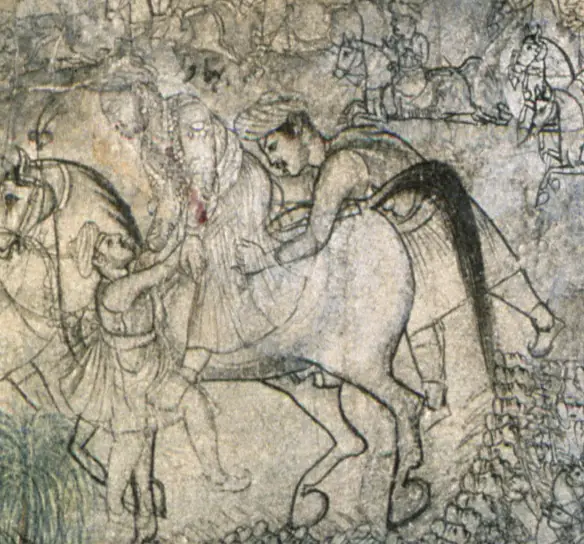
In 1669, the year Aurangzeb ordered temples pulled down across his empire, Gokula of Tilpat led the Jats of Mathura against the faujdar Abdun Nabi, who was killed. Gokula was taken at Tilpat in 1670 and executed at Agra. Rajaram of Sinsini kept the revolt going, and in 1688 his men raided Akbar’s tomb at Sikandra. His nephew Churaman built forts in the ravines and survived as a power until 1721. The temple of Keshav Dev at Mathura had been demolished on Aurangzeb’s order in 1670, as the Maasir-i-Alamgiri records; the Jat rising grew out of the same years and the same country.
02Suraj Mal
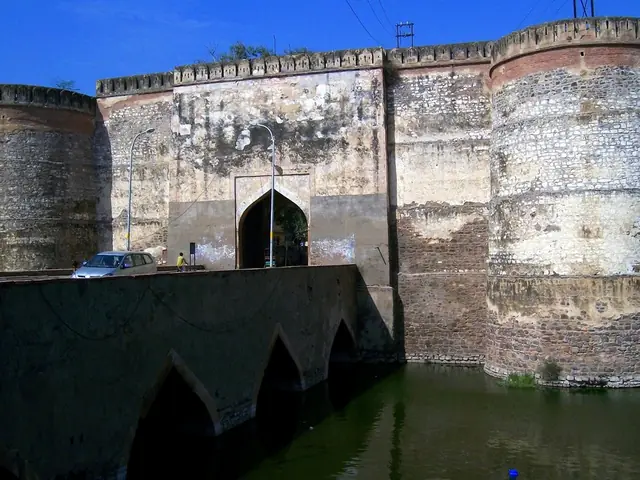
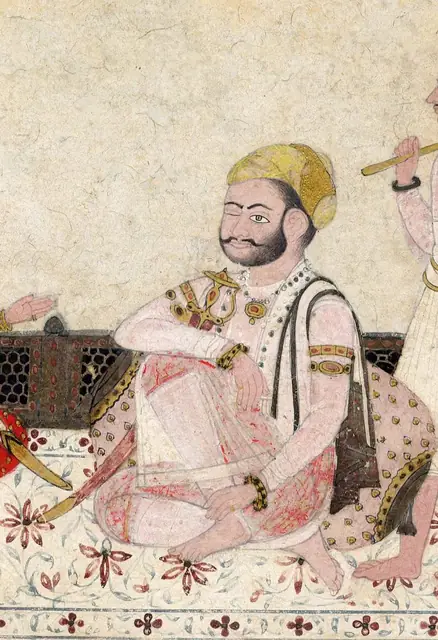
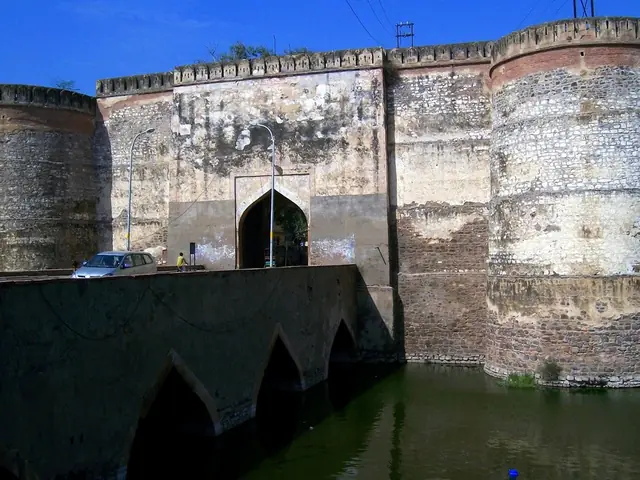
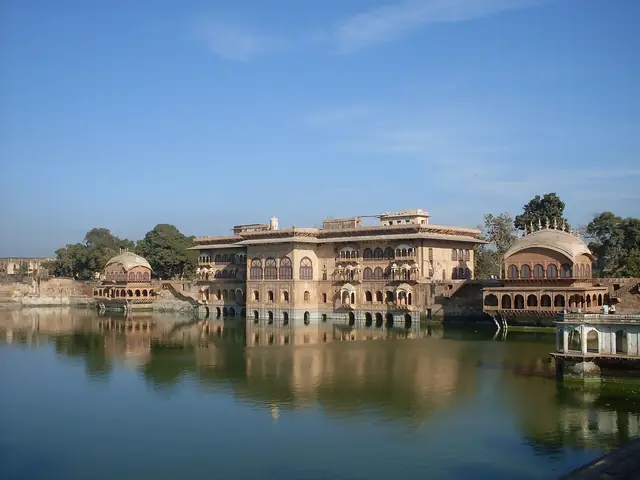
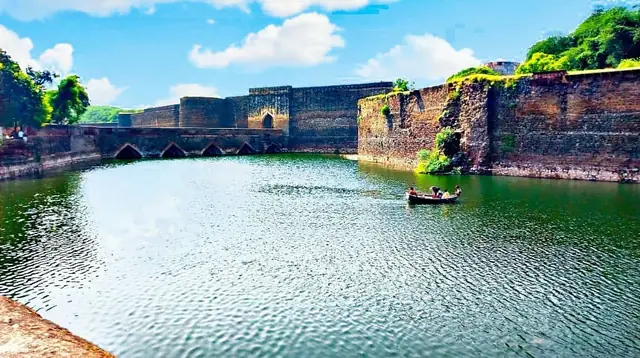
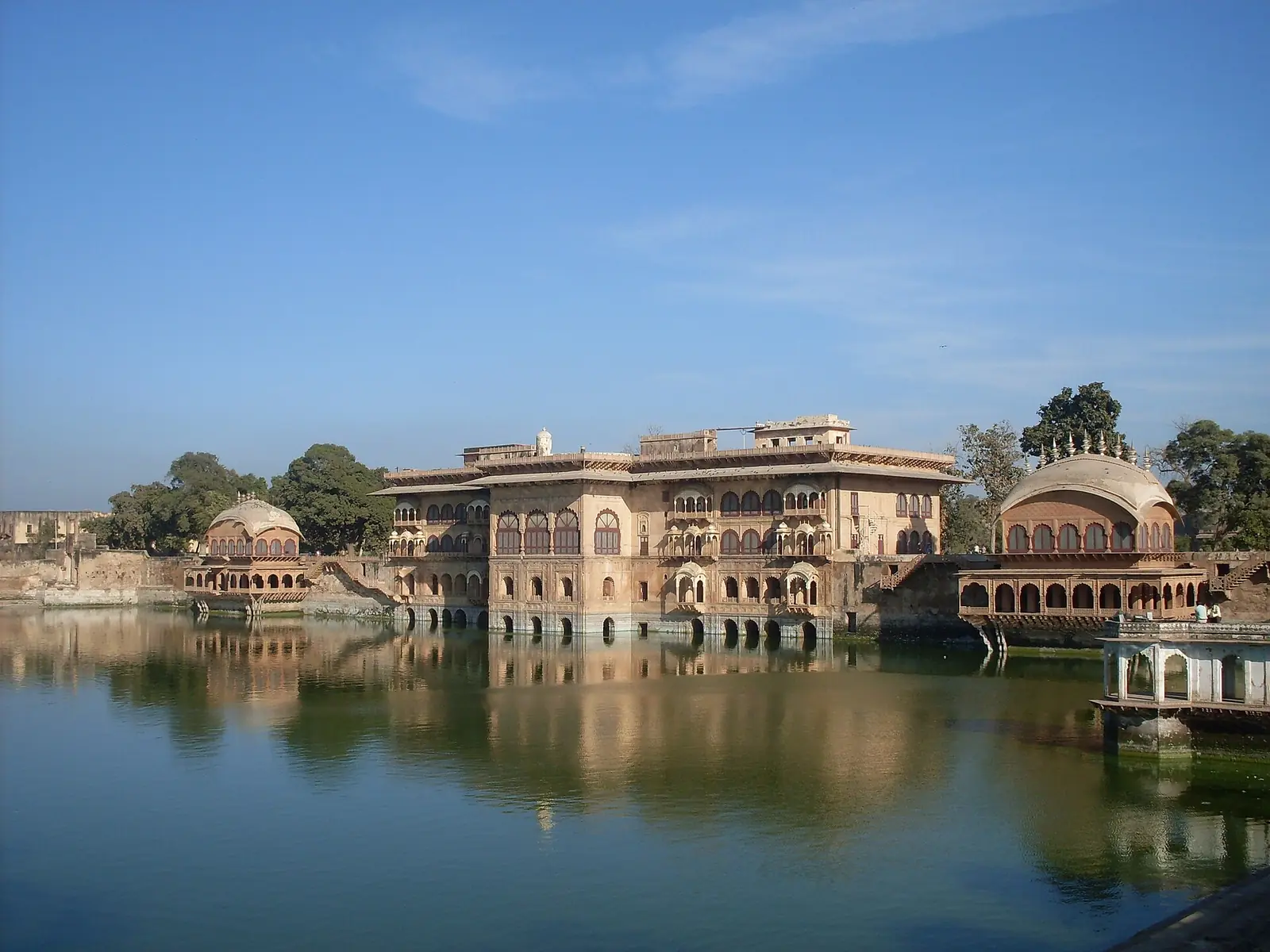
Badan Singh, Churaman’s nephew, made peace with Jaipur, took the title of Raja, and built palaces at Deeg. His son Suraj Mal began the fort of Bharatpur in 1733, ringed by a wide moat and thick walls of packed earth that swallowed cannon shot. He ruled in his own name from 1756, took Agra in 1761, and is remembered in the court poet Sudan’s Sujan Charit. Before Panipat he advised Sadashivrao Bhau to leave the heavy baggage and fight a mobile war; when his advice was refused he withdrew, and after the defeat he sheltered and fed the Maratha survivors. He was killed in a skirmish on the Hindon near Delhi in December 1763.
03The siege of 1805
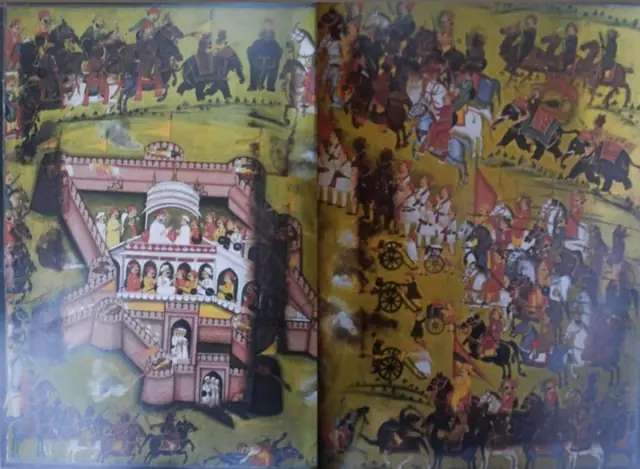
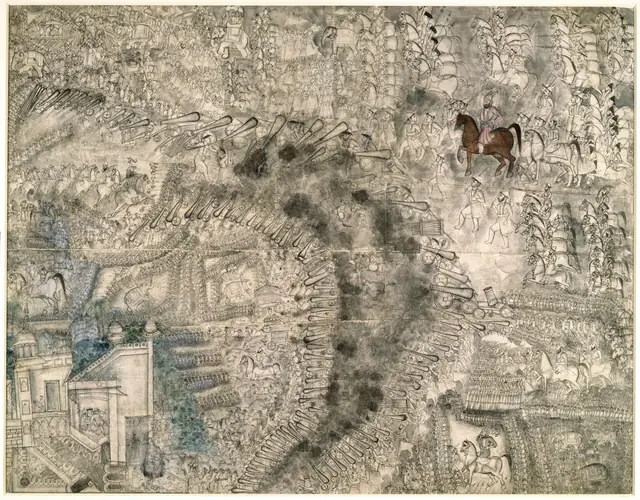
Ranjit Singh of Bharatpur gave shelter to Yashwantrao Holkar in 1804. General Gerard Lake besieged Lohagarh from January to April 1805 and launched four assaults, all thrown back with heavy British losses, before a treaty was made. The fort was finally taken by Lord Combermere in January 1826, after mines were dug under its walls. Bharatpur stayed a princely state, and in 1948 it merged into the Matsya Union and then Rajasthan.
The rulers
- 1GokulaLed the rising of 1669; executed at Agra1669–1670
- 2Rajaram of Sinsinic. 1685–1688
- 3Churamanc. 1695–1721
- 4Badan SinghFirst Raja; palaces at Deeg1722–1756
- 5Suraj MalBuilt Lohagarh; took Agra 17611756–1763
- 6Jawahar Singh1763–1768
- 7Ratan Singh1768–1769
- 8Ranjit SinghHeld Bharatpur against Lake, 18051776–1805
- 9Brijendra SinghLast ruler; merged into the Matsya Union1929–1948
What they left
- Lohagarh, the fort of Bharatpur
- The palaces and water gardens of Deeg
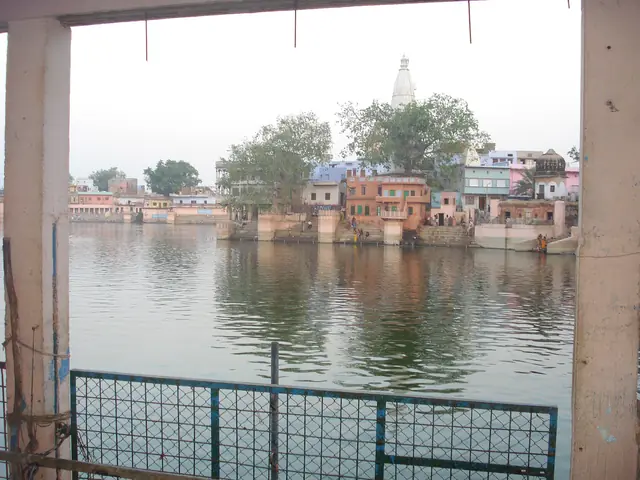
- Suraj Mal’s chhatri at Kusum Sarovar, Govardhan
- Sujan Charit, the Braj Bhasha epic of Suraj Mal’s wars