
Srinivasa Nayaka was a rich trader in gold and jewels, and a miser. The Haridasa tradition tells that a poor Brahmin came to his shop day after day asking for help with his son's thread ceremony, and was sent away every time. The Brahmin went to Srinivasa's wife Saraswathi, and she, having nothing else of her own, gave him her diamond nose-ring. Soon the Brahmin was back at the shop, offering that very nose-ring for sale. Srinivasa locked it in his box and ran home to demand that his wife show him hers. In fear she was about to drink poison, and found the nose-ring in her cup. When Srinivasa returned to his shop, the box was empty and the Brahmin was gone. He understood who had come to him, gave away everything he owned, and took to the road with his family as a singer of Hari's name.
He became the disciple of Vyasatirtha, the great Madhva teacher at Vijayanagara, who gave him the name Purandara Vittala, the mudra that ends every one of his songs. The tradition counts 4,75,000 songs; about a thousand survive. He sang in plain Kannada for everyone: the market, the kitchen, the road.
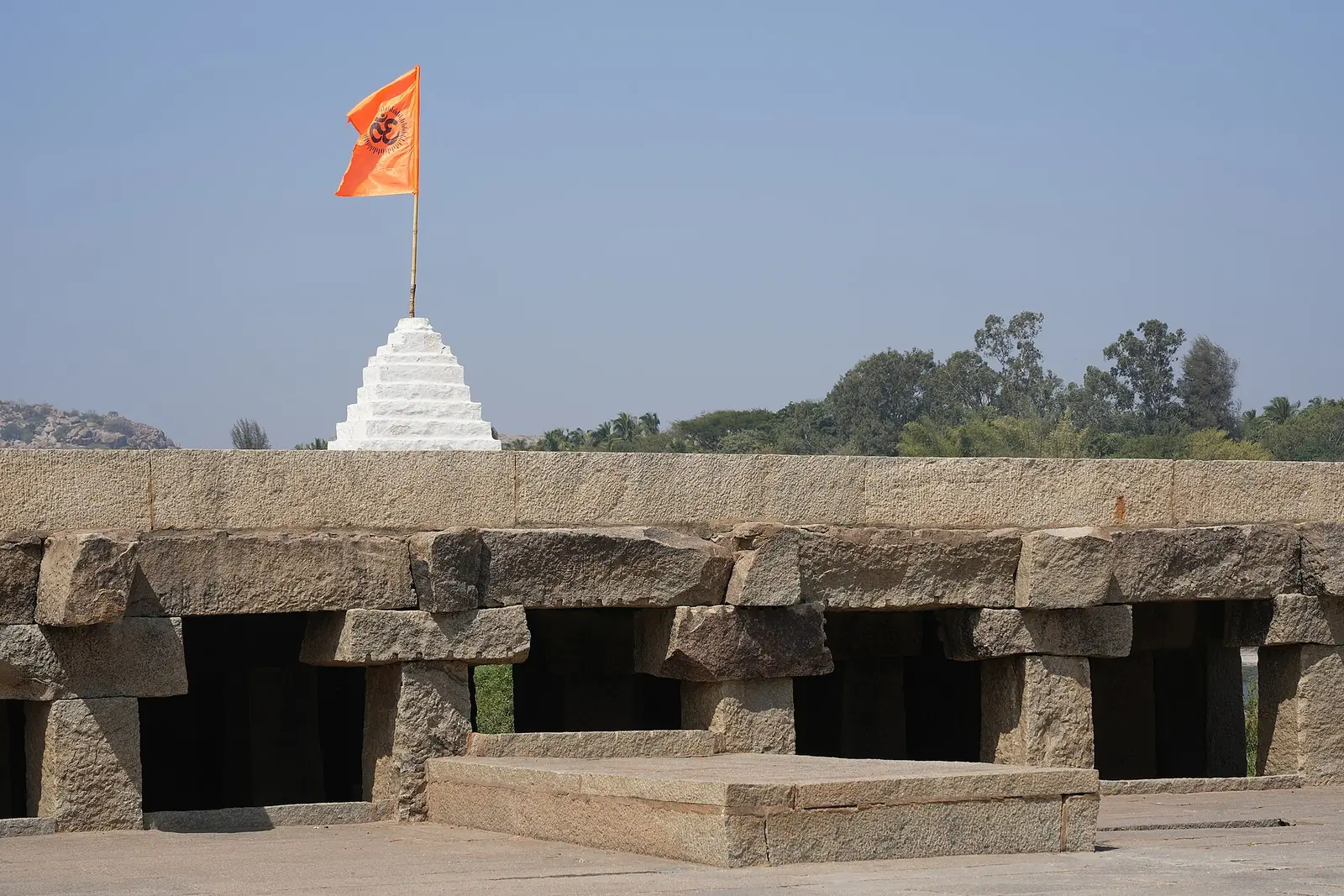
He is called the Pitamaha, grandfather, of Carnatic music, because he laid down the way it is taught to this day: the raga Mayamalavagowla for beginners, the sarali varisai, the alankaras, and simple geetams such as Lambodara. Every child who learns Carnatic music begins with him. A mandapa on the Tungabhadra at Hampi bears his name.
Works
- Devaranamas and kirtanas in Kannada, signed Purandara Vittala
- The graded lessons of Carnatic music: sarali varisai, alankaras, geetams