
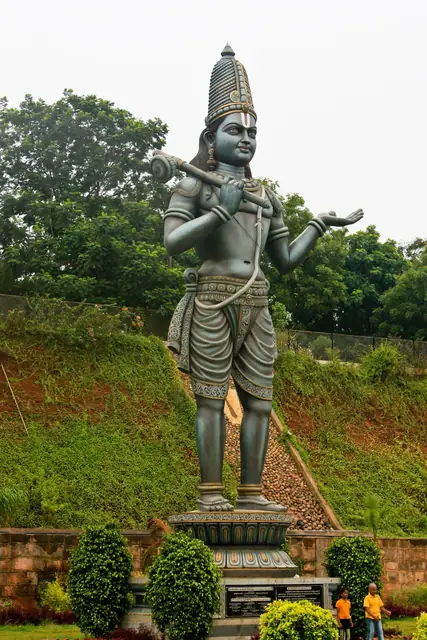
ముద్దుగారే యశోద ముంగిటి ముత్యము వీడు
దిద్దరాని మహిమల దేవకీ సుతుడు
అంత నింత గొల్లెతల అరచేతి మాణిక్యము
పంతమాడే కంసుని పాలి వజ్రము
కాంతుల మూడు లోకాల గరుడ పచ్చ బూస
చెంతల మాలో నున్న చిన్ని కృష్ణుడు
రతికేళి రుక్మిణికి రంగు మోవి పగడము
మితి గోవర్ధనపు గోమేధికము
సతమై శంఖ చక్రాల సందుల వైడూర్యము
గతియై మమ్ము గాచేటి కమలాక్షుడు
కాళింగుని తలలపై గప్పిన పుష్యరాగము
యేలేటి శ్రీ వేంకటాద్రి యింద్రనీలము
పాల జలనిధి లోన బాయని దివ్య రత్నము
బాలునివలె దిరిగీ పద్మ నాభుడు
मुद्दुगारे यशोद मुंगिटि मुत्यमु वीडु
दिद्दरानि महिमल देवकी सुतुडु
अंत निंत गॊल्लॆतल अरचेति माणिक्यमु
पंतमाडे कंसुनि पालि वज्रमु
कांतुल मूडु लोकाल गरुड पच्च बूस
चॆंतल मालो नुन्न चिन्नि कृष्णुडु
रतिकेळि रुक्मिणिकि रंगु मोवि पगडमु
मिति गोवर्धनपु गोमेधिकमु
सतमै शंख चक्राल संदुल वैडूर्यमु
गतियै मम्मु गाचेटि कमलाक्षुडु
काळिंगुनि तललपै गप्पिन पुष्यरागमु
येलेटि श्री वेंकटाद्रि यिंद्रनीलमु
पाल जलनिधि लोन बायनि दिव्य रत्नमु
बालुनिवलॆ दिरिगी पद्म नाभुडु
muddugārē yaśōda muṅgiṭi mutyamu vīḍu
diddarāni mahimala dēvakī sutuḍu
anta ninta golletala aracēti māṇikyamu
pantamāḍē kaṁsuni pāli vajramu
kāntula mūḍu lōkāla garuḍa pacca būsa
centala mālō nunna cinni kṛṣṇuḍu
ratikēḷi rukmiṇiki raṅgu mōvi pagaḍamu
miti gōvardhanapu gōmēdhikamu
satamai śaṅkha cakrāla sandula vaiḍūryamu
gatiyai mammu gācēṭi kamalākṣuḍu
kāḷiṅguni talalapai gappina puṣyarāgamu
yēlēṭi śrī vēṅkaṭādri yindranīlamu
pāla jalanidhi lōna bāyani divya ratnamu
bālunivale dirigī padma nābhuḍu
Meaning
Pallavi: This one is the pearl in Yashoda’s courtyard, overflowing with sweetness; Devaki’s son, whose glories none can set right or measure.
1. The ruby in the palms of the cowherd women here and there; the diamond in the lot of Kamsa who quarrelled with him; the emerald bead whose light fills the three worlds; little Krishna who stays close among us.
2. The coral of the coloured lips for Rukmini in love’s play; the hessonite of mighty Govardhana; the cat’s-eye ever set between the conch and the discus; the lotus-eyed one who is our refuge and protects us.
3. The topaz that covered the heads of Kaliya; the sapphire of Shri Venkatadri which he rules; the divine gem that never leaves the ocean of milk: Padmanabha roams about like a little child.
About this bhajan
Annamacharya counts out the navaratnas, the nine gems, and finds every one of them in Krishna: pearl in Yashoda’s courtyard, ruby in the gopis’ hands, diamond to Kamsa, emerald, coral, hessonite, cat’s-eye, topaz on Kaliya’s hoods, and the sapphire of Venkatadri. The last gem is the Lord himself, who never leaves the milk ocean and yet runs about as a child. The copper plates on which his family had his songs engraved name the raga Salanganata; today it is sung in Kurinji, a raga of lullabies, and mothers in Andhra and Karnataka sing it to children at bedtime.
Telugu text: te.wikisource.org, ‘ముద్దుగారే యశోద ముంగిటి ముత్యము వీడు’ (అన్నమయ్య పాటలు; raga సాళంగనాట); checked against karnatik.com c1182 (Kurinji)