
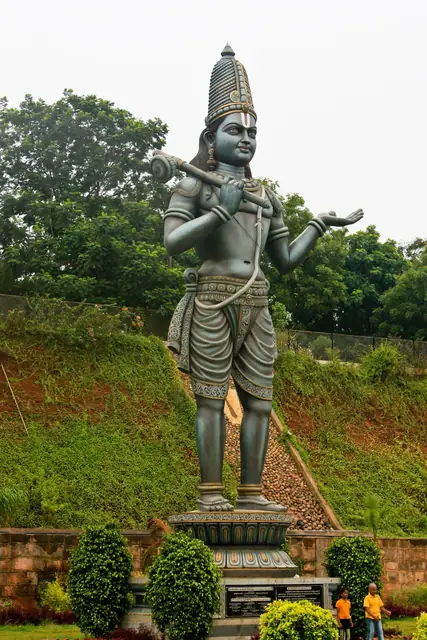
అదివో అల్లదివో శ్రీహరివాసము
పదివేల శేషుల పడగలమయము
అదె వేంకటాచల మఖిలోన్నతము
అదివో బ్రహ్మాదుల కపురూపము
అదివో నిత్యనివాస మఖిలమునులకు
అదె చూడుడదె మ్రొక్కుడానందమయము
చెంగట నల్లదివో శేషాచలము
నింగి నున్నదేవతల నిజవాసము
ముంగిట నల్లదివో మూలనున్నధనము
బంగారు శిఖరాల బహు బ్రహ్మమయము
కైవల్యపదము వేంకటనగమదివో
శ్రీ వేంకటపతికి సిరులైనవి
భావింప సకలసంపదరూపమదివో
పావనములకెల్ల పావనమయము
अदिवो अल्लदिवो श्रीहरिवासमु
पदिवेल शेषुल पडगलमयमु
अदॆ वेंकटाचल मखिलोन्नतमु
अदिवो ब्रह्मादुल कपुरूपमु
अदिवो नित्यनिवास मखिलमुनुलकु
अदॆ चूडुडदॆ म्रॊक्कुडानंदमयमु
चॆंगट नल्लदिवो शेषाचलमु
निंगि नुन्नदेवतल निजवासमु
मुंगिट नल्लदिवो मूलनुन्नधनमु
बंगारु शिखराल बहु ब्रह्ममयमु
कैवल्यपदमु वेंकटनगमदिवो
श्री वेंकटपतिकि सिरुलैनवि
भाविंप सकलसंपदरूपमदिवो
पावनमुलकॆल्ल पावनमयमु
adivō alladivō śrīharivāsamu
padivēla śēṣula paḍagalamayamu
ade vēṅkaṭācala makhilōnnatamu
adivō brahmādula kapurūpamu
adivō nityanivāsa makhilamunulaku
ade cūḍuḍade mrokkuḍānandamayamu
ceṅgaṭa nalladivō śēṣācalamu
niṅgi nunnadēvatala nijavāsamu
muṅgiṭa nalladivō mūlanunnadhanamu
baṅgāru śikharāla bahu brahmamayamu
kaivalyapadamu vēṅkaṭanagamadivō
śrī vēṅkaṭapatiki sirulainavi
bhāvimpa sakalasampadarūpamadivō
pāvanamulakella pāvanamayamu
Meaning
Pallavi: There it is, there, yonder: the dwelling of Shri Hari, made of the hoods of ten thousand Sheshas.
1. That is Venkatachala, highest of all; there, the rare treasure of Brahma and the devas; there, the eternal home of all the munis. Look at it, bow to it: it is all bliss.
2. There, close by, is Seshachala, the true dwelling of the devas who live in the sky. There, before us, is the wealth hidden at the root, the golden peaks, Brahman in abundance.
3. There is the Venkata hill, the state of kaivalya, the riches of Shri Venkatapati. If you contemplate it, there is the form of every treasure; it is the holiest of all holy things.
About this bhajan
Pilgrims climbing from Alipiri on foot often break into this song when the gopuram first shows through the trees. Annamacharya (1408–1503) sang about 32,000 sankirtanas to Venkateshvara, tradition says, and this is the song of arrival: the seven hills seen as the coils and ten thousand hoods of Adishesha, with Hari resting on them. ‘Adivo’ means ‘there it is’, and the whole song points. Seshachala and Venkatachala are two of the seven hills of Tirumala. Set in Madhyamavati, an auspicious raga for endings and blessings, it is sung at the Brahmotsavam processions and by devotees on Vaikuntha Ekadashi.
Telugu text: te.wikisource.org, ‘అదివో అల్లదివో’ (అన్నమయ్య పాటలు; మధ్యమావతి, ఆది); checked against karnatik.com c1577