
गणाधीश जो ईश सर्वां गुणांचा। मुळारंभ आरंभ तो निर्गुणाचा॥
नमूं शारदा मूळ चत्वार वाचा। गमूं पंथ आनंत या राघवाचा॥१॥
मना सज्जना भक्तिपंथेचि जावें। तरी श्रीहरी पाविजेतो स्वभावें॥
जनीं निंद्य तें सर्व सोडूनि द्यावें। जनीं वंद्य तें सर्व भावें करावें॥२॥
प्रभातें मनीं राम चिंतीत जावा। पुढें वैखरी राम आधीं वदावा॥
सदाचार हा थोर सांडूं नये तो। जनीं तोचि तो मानवी धन्य होतो॥३॥
मना वासना दुष्ट कामा न ये रे। मना सर्वथा पापबुद्धी नको रे॥
मना धर्मता नीति सोडूं नको हो। मना अंतरीं सार वीचार राहो॥४॥
मना पापसंकल्प सोडूनि द्यावा। मना सत्यसंकल्प जीवीं धरावा॥
मना कल्पना ते नको वीषयांची। विकारें घडे हो जनीं सर्व ची ची॥५॥
नको रे मना क्रोध हा खेदकारी। नको रे मना काम नाना विकारी॥
नको रे मना लोभ हा अंगिकारूं। नको रे मना मत्सरु दंभ भारू॥६॥
मना श्रेष्ठ धारिष्ट जीवीं धरावें। मना बोलणें नीच सोशीत जावें॥
स्वयें सर्वदा नम्र वाचे वदावें। मना सर्व लोकांसि रे नीववावें॥७॥
देहे त्यागितां कीर्ति मागें उरावी। मना सज्जना हेचि क्रीया धरावी॥
मना चंदनाचे परी त्वां झिजावें। परी अंतरीं सज्जना नीववावें॥८॥
नको रे मना द्रव्य तें पूढिलांचें। अति स्वार्थबुद्धी नुरे पाप सांचें॥
घडे भोगणें पाप तें कर्म खोटें। न होतां मनासारिखें दुःख मोठें॥९॥
सदा सर्वदा प्रीति रामीं धरावी। दुःखाची स्वयें सांडि जीवीं करावी॥
देहेदुःख तें सूख मानीत जावें। विवेकें सदा स्वस्वरूपीं भरावें॥१०॥
Ganadhish jo Ish sarvan gunancha, mularambh arambh to nirgunacha,
namun Sharada mul chatvar vacha, gamun panth anant ya Raghavacha.
Mana sajjana bhaktipanthechi jave, tari Shrihari pavijeto svabhave,
jani nindya te sarva soduni dyave, jani vandya te sarva bhave karave.
Prabhate mani Ram chintit java, pudhe vaikhari Ram adhi vadava,
sadachar ha thor sandu naye to, jani tochi to manavi dhanya hoto.
Mana vasana dushta kama na ye re, mana sarvatha papabuddhi nako re,
mana dharmata niti sodu nako ho, mana antari sar vichar raho.
Mana papasankalp soduni dyava, mana satyasankalp jivi dharava,
mana kalpana te nako vishayanchi, vikare ghade ho jani sarva chi chi.
Nako re mana krodh ha khedakari, nako re mana kam nana vikari,
nako re mana lobh ha angikaru, nako re mana matsaru dambh bharu.
Mana shreshtha dharishta jivi dharave, mana bolane nich soshit jave,
svaye sarvada namra vache vadave, mana sarva lokansi re nivavave.
Dehe tyagita kirti mage uravi, mana sajjana hechi kriya dharavi,
mana chandanache pari tvan jhijave, pari antari sajjana nivavave.
Nako re mana dravya te pudhilanche, ati svarthabuddhi nure pap sanche,
ghade bhogane pap te karma khote, na hota manasarikhe dukh mothe.
Sada sarvada priti Rami dharavi, dukhachi svaye sandi jivi karavi,
dehedukh te sukh manit jave, viveke sada svasvarupi bharave.
Meaning
I bow to Ganadhisha, Lord of all virtues, the first beginning of the formless; I bow to Sharada, source of the four levels of speech; and I set out on the endless path of Raghava.
O good mind, walk the path of devotion, and Shri Hari will be reached naturally. Give up everything people rightly condemn; do with your whole heart everything people rightly honour.
At dawn, think of Rama in your mind; then let your speech say “Rama” before anything else. Never give up this great good conduct; the person who keeps it is blessed among people.
O mind, evil desire is of no use; O mind, never let sinful thinking in. O mind, do not leave dharma and right conduct; O mind, let the essential reflection stay within.
O mind, give up sinful resolves; O mind, hold true resolves in your heart. O mind, do not fancy sense-pleasures; through such cravings comes everything people scorn.
Do not, O mind, keep anger, which brings grief; do not, O mind, keep desire with its many disorders; do not, O mind, take up greed; do not, O mind, carry the load of envy and pride.
O mind, hold the best kind of courage in your heart; O mind, bear patiently the mean words of others. Always speak humbly yourself; O mind, bring calm to all people.
When the body is left, a good name should remain behind; O good mind, hold fast to such deeds. O mind, wear yourself away like sandalwood, which as it is ground cools others; so cool the hearts of good people.
O mind, do not want the wealth of others; excessive selfishness piles up sin that does not end. Wrong deeds must be paid for in suffering, and when things do not go our way, great sorrow follows.
Always, at every moment, keep love for Rama; let go of sorrow in your heart by your own effort. Take the body’s pains as happiness; with discernment, always rest in your own true Self.
About this bhajan
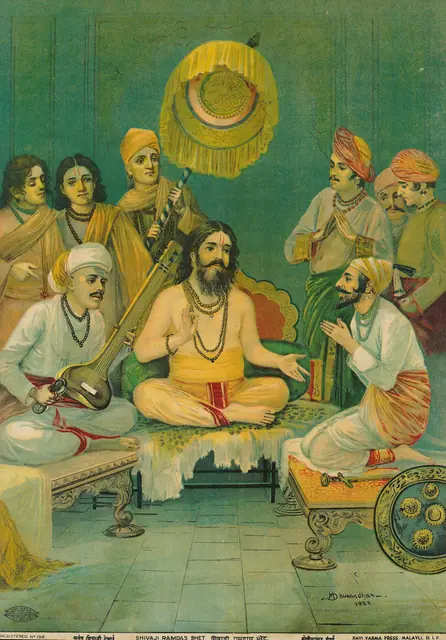
Samarth Ramdas wrote 205 Manache Shlok, verses addressed to his own mind, “mana sajjana”, O good mind. They were meant for ordinary households, and for three centuries Marathi children have recited them at dusk after the lamp is lit. The first ten give the whole programme in brief: start the day with Rama’s name, give up anger and envy, bear harsh words, and wear yourself out like sandalwood so that others are cooled. The bhujangaprayata metre gives them a firm marching beat.
Samarth Ramdas, Manache Shlok, shlokas 1–10 (Marathi Wikisource)