
जगदानन्दकारक जय जानकीप्राणनायक
गगनाधिपसत्कुलज राजराजेश्वर
सुगुणाकर सुरसेव्य भव्यदायक सदा सकल
अमरतारकनिचयकुमुदहित परिपूर्णानघ सुरसुरभूज
दधिपयोधिवासहरण सुन्दरतरवदन सुधामयवचोबृन्द
गोविन्द सानन्द मावराजराप्त शुभकरानेक
निगमनीरजामृतजपोषकानिमिषवैरिवारिदसमीरण
खगतुरङ्ग सत्कविहृदालयागणितवानराधिपनताङ्घ्रियुग
इन्द्रनीलमणिसन्निभापघन चन्द्रसूर्यनयनाप्रमेय
वागीन्द्रजनक सकलेश शुभ्र नागेन्द्रशयन शमनवैरिसन्नुत
पादविजितमौनिशाप सवपरिपाल वरमन्त्रग्रहणलोल
परमशान्तचित्त जनकजाधिप सरोजभववरदाखिल
सृष्टिस्थित्यन्तकारकामितकामितफलदासमानगात्र
शचीपतिनुताब्धिमदहरानुरागरागराजितकथासारहित
सज्जनमानसाब्धिसुधाकर कुसुमविमान
सुरसारिपुकराब्जलालितचरणावगुणासुरगणमदहरण सनातनाजनुत
ओङ्कारपञ्जरकीर पुरहरसरोजभवकेशवादिरूप
वासवरिपुजनकान्तक कलाधरकलाधराप्त घृणाकर
शरणागतजनपालन सुमनोरमण निर्विकार निगमसारतर
करधृतशरजालासुरमदापहरणावनीसुरसुरावन
कवीनबिलजमौनिकृतचरित्रसन्नुत श्रीत्यागराजनुत
पुराणपुरुष नृवरात्मजाश्रितपराधीन
खरविराधरावणविरावणानघ
पराशरमनोहराविकृत त्यागराजसन्नुत
अगणितगुण कनकचेल सालविदलनारुणाभसमानचरणापारमहिमाद्भुत
सुकविजनहृत्सदन सुरमुनिगणविहित कलशनीरनिधिजारमण
पापगजनृसिंह वर त्यागराजादिनुत
jagadānandakāraka jaya jānakīprāṇanāyaka
gaganādhipasatkulaja rājarājeśvara
suguṇākara surasevya bhavyadāyaka sadā sakala
amaratārakanicayakumudahita paripūrṇānagha surasurabhūja
dadhipayodhivāsaharaṇa sundarataravadana sudhāmayavacobṛnda
govinda sānanda māvarājarāpta śubhakarāneka
nigamanīrajāmṛtajapoṣakānimiṣavairivāridasamīraṇa
khagaturaṅga satkavihṛdālayāgaṇitavānarādhipanatāṅghriyuga
indranīlamaṇisannibhāpaghana candrasūryanayanāprameya
vāgīndrajanaka sakaleśa śubhra nāgendraśayana śamanavairisannuta
pādavijitamauniśāpa savaparipāla varamantragrahaṇalola
paramaśāntacitta janakajādhipa sarojabhavavaradākhila
sṛṣṭisthityantakārakāmitakāmitaphaladāsamānagātra
śacīpatinutābdhimadaharānurāgarāgarājitakathāsārahita
sajjanamānasābdhisudhākara kusumavimāna
surasāripukarābjalālitacaraṇāvaguṇāsuragaṇamadaharaṇa sanātanājanuta
oṅkārapañjarakīra puraharasarojabhavakeśavādirūpa
vāsavaripujanakāntaka kalādharakalādharāpta ghṛṇākara
śaraṇāgatajanapālana sumanoramaṇa nirvikāra nigamasāratara
karadhṛtaśarajālāsuramadāpaharaṇāvanīsurasurāvana
kavīnabilajamaunikṛtacaritrasannuta śrītyāgarājanuta
purāṇapuruṣa nṛvarātmajāśritaparādhīna
kharavirādharāvaṇavirāvaṇānagha
parāśaramanoharāvikṛta tyāgarājasannuta
agaṇitaguṇa kanakacela sālavidalanāruṇābhasamānacaraṇāpāramahimādbhuta
sukavijanahṛtsadana suramunigaṇavihita kalaśanīranidhijāramaṇa
pāpagajanṛsiṁha vara tyāgarājādinuta
Meaning
Pallavi: Giver of joy to the world, victory to you, Lord of Janaki’s life!
Anupallavi: Born in the noble line of the Lord of the sky, the Sun; King of kings; mine of virtues; served by the devas; ever the giver of every good thing.
1. Moon to the lilies that are the hosts of devas and stars; full and sinless; wish-granting tree of the devas; who dwells on the ocean of milk; of most beautiful face, whose words are nectar; Govinda, ever blissful, Lord of Lakshmi, ageless, the true friend, doer of good, of many forms.
2. Nourisher of the nectar born of the lotus of the Vedas; the wind that scatters the clouds which are the enemies of the devas; whose mount is Garuda; who dwells in the hearts of true poets; whose two feet are bowed to by countless vanara chiefs.
3. Whose body is like the sapphire; whose eyes are the Moon and the Sun; immeasurable; father of Brahma, lord of speech; Lord of all; pure; who rests on the king of serpents; praised by Shiva, foe of Yama.
4. Whose feet overcame the curse laid by the sage; protector of the yajna; eager to receive the great mantras; of supremely calm mind; Lord of Janaka’s daughter; giver of boons to Brahma; all-pervading.
5. Cause of creation, preservation and dissolution; giver of countless fruits that are wished for; of form beyond compare; praised by Indra; who humbled the pride of the ocean; whose katha, shining with love and music, is the highest good.
6. Moon to the ocean of good people’s minds; whose vimana is Pushpaka; whose feet are caressed by the lotus hands of Hanuman, conqueror of Surasa; who crushed the pride of the wicked asuras; eternal; praised by Brahma.
7. Parrot in the cage of Omkara; who takes the forms of Shiva, Brahma and Keshava; slayer of Ravana, father of Indra’s foe; dear to Shiva who wears the crescent; full of compassion; protector of those who take refuge; delight of the good; changeless; the very marrow of the Vedas.
8. Holding a host of arrows in your hand; who took away the pride of the asuras; protector of brahmins and devas; whose life was sung by the sage born of the anthill, the sun among poets; praised by Shri Tyagaraja.
9. Ancient Purusha; son of the best of kings; who places himself under the will of those who seek refuge; who made Khara, Viradha and Ravana cry out; sinless; delight of Parashara’s heart; unchanging; praised by Tyagaraja.
10. Of countless virtues; clad in gold; who split the sala trees; whose feet glow like the dawn; of boundless, wondrous glory; dwelling in the hearts of good poets; worshipped by devas and munis; beloved of Lakshmi born of the milk ocean; lion to the elephant of sin; best one, praised by Tyagaraja and others.
About this bhajan
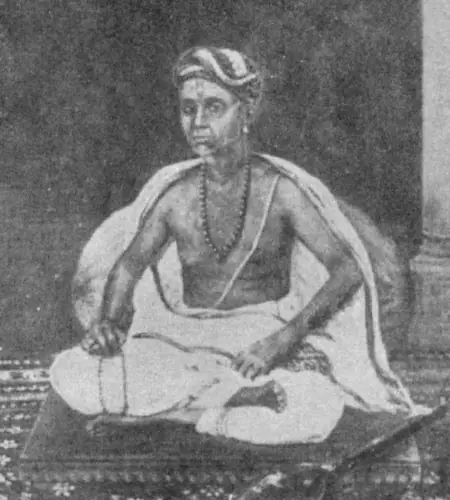
The Aradhana at Thiruvaiyaru begins with this kriti in Nata, sung by every voice on the riverbank at once. It is in Sanskrit, and almost every line is a chain of names for Rama: the Ahalya episode, the guarding of Vishvamitra’s yajna, Hanuman’s hands on his feet, the sala trees split for Sugriva. Tyagaraja (1767–1847) set the long charanams so that each ends by returning to the pallavi, and the singer must carry the compound words in a single breath. Students learn it as the first of the five Pancharatnas, and it remains a test of breath, diction and laya.
karnatik.com c1011 (Nata, Adi; ten charanams), cross-checked with te.wikisource ‘జగదానంద కారకా’; Devanagari spelling normalised by the editor