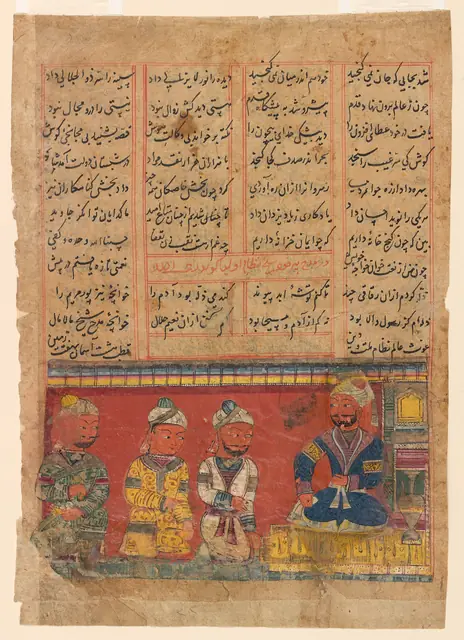
After the outer wall fell, Prataparudra submitted, handed over a great treasure and agreed to pay yearly tribute; Warangal stayed in Kakatiya hands.
01Two walls
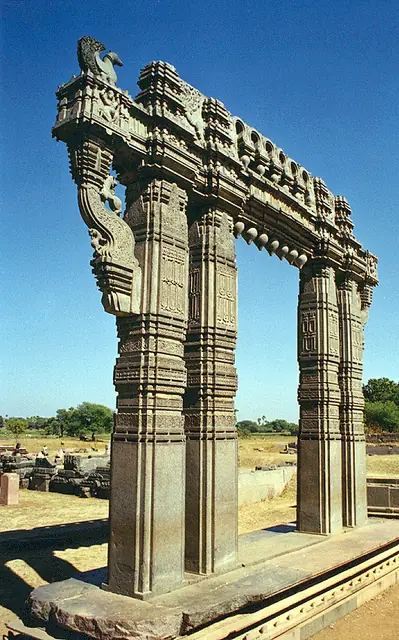
Warangal had an outer wall of earth and an inner wall of dressed stone, with the four great Kakatiya toranas inside. Malik Kafur marched from Delhi late in 1309, drew supplies from the Yadava king Ramachandra at Devagiri, and reached Warangal in January 1310. He ringed the city with a stockade and pressed the outer wall for weeks until his men broke through. Amir Khusrau, who wrote the Khaza’in-ul-Futuh for Alauddin, describes the siege and the fire-arrows and stones thrown on both sides.
02Submission, not surrender
With the outer wall gone and the stone fort under threat, Prataparudra sent envoys. He gave up elephants, horses and a store of jewels and gold that Khusrau describes at length, and promised yearly tribute. Malik Kafur took the treasure back to Delhi on a long train of camels. The Kakatiya king kept his throne and his city. When later tribute lapsed, Delhi came back, and in 1323 Ulugh Khan, the future Muhammad bin Tughlaq, took Warangal and ended the dynasty.
The 1310 siege made the Kakatiyas tributaries of Delhi and set the course that ended in the fall of Warangal in 1323.