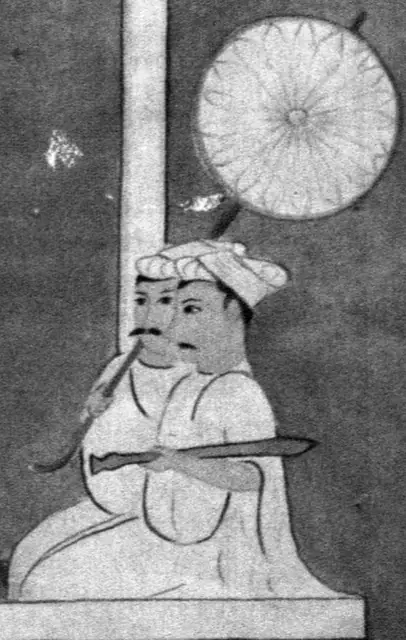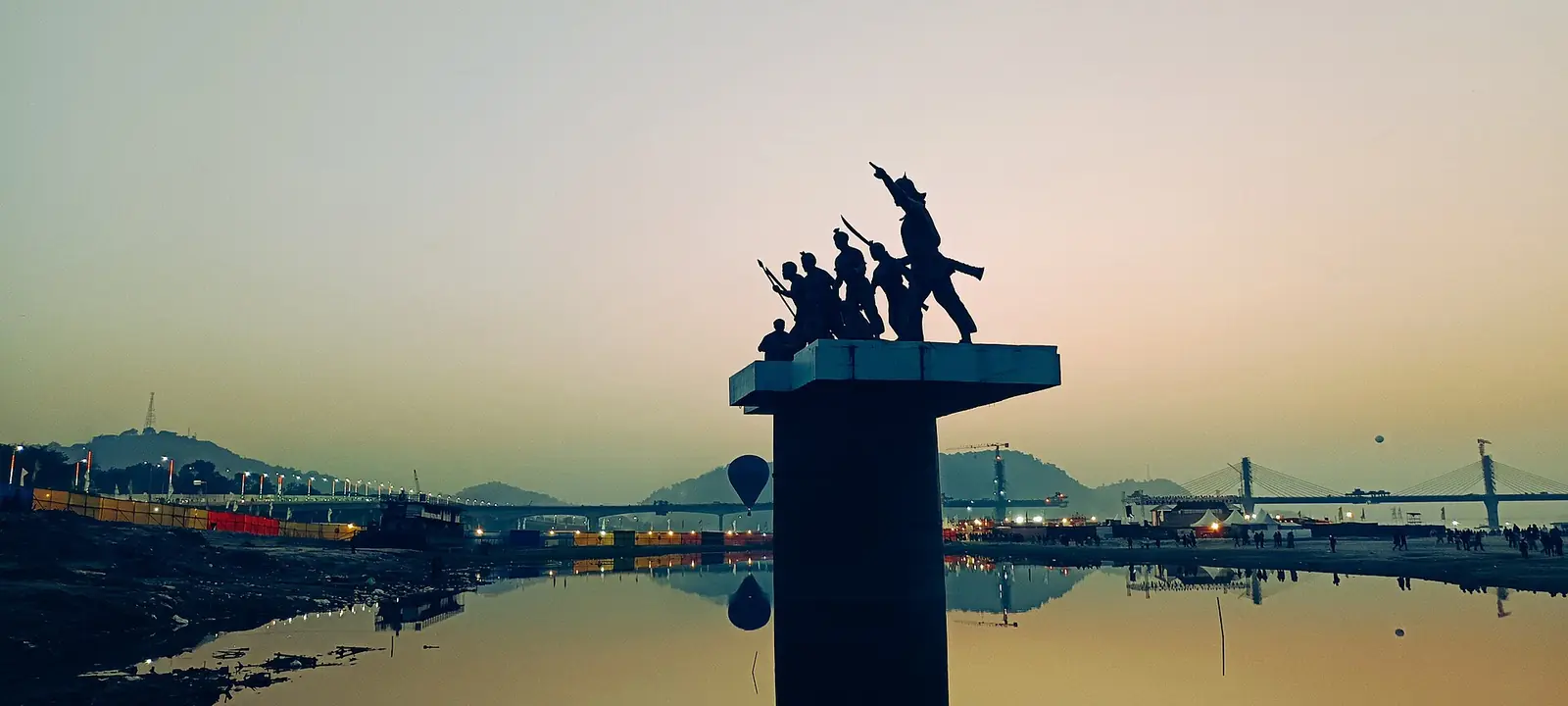
The Ahom boats broke the Mughal fleet in the narrows; Munnawar Khan was killed and Ram Singh withdrew from Assam.
01Where the river narrows
At Guwahati the Brahmaputra squeezes between the hills of Kamakhya and Itakhuli on one bank and Aswakranta on the other. Lachit had built earthen ramparts on both banks so that the Mughal army could only come by water. Assamese tradition holds that he beheaded his own maternal uncle for slackness on the ramparts, saying the country came before kin. In March 1671 the Mughal fleet pushed up the river and at first the Ahom line gave way.
02Lachit on the water
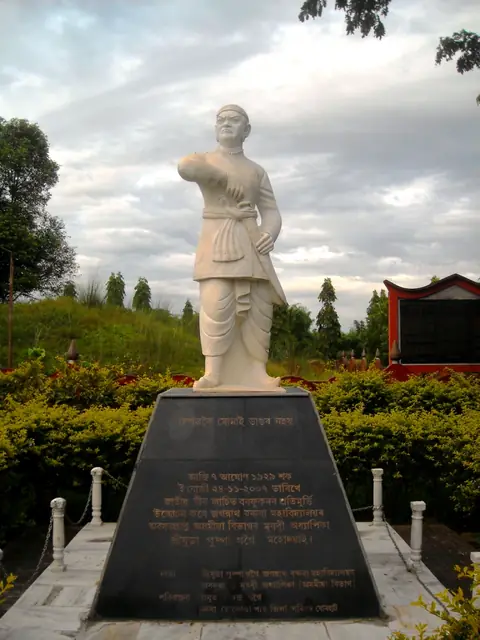
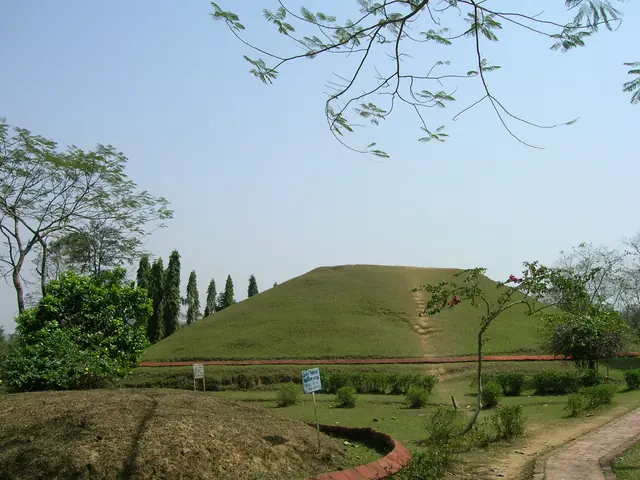
Lachit was in fever and could hardly stand. He had his boat rowed into the front and the retreat stopped. Small, quick Ahom boats got among the heavy Mughal craft in the narrows, and the Mughal admiral Munnawar Khan was shot dead. The fleet broke. Ram Singh fell back to Rangamati and left Assam soon after. Lachit died about a year later at Kaliabor. His maidam stands at Hollongapar near Jorhat, and 24 November, Lachit Divas, is kept across Assam.
Saraighat ended the last great Mughal bid for Assam; the Ahom kingdom kept its independence until the Burmese invasions of the 1810s.