
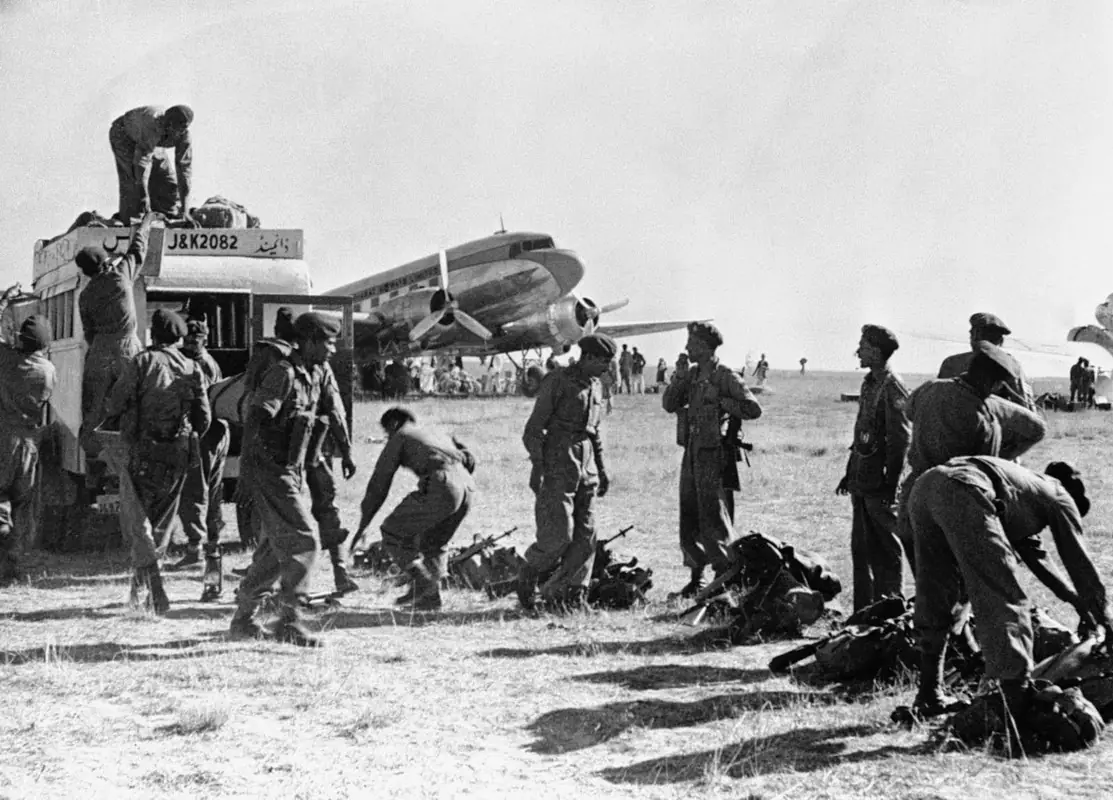
India saved Srinagar, the Valley, Jammu and Ladakh; a ceasefire on 1 January 1949 left the rest under Pakistani occupation.
01Accession and the airlift
On 22 October 1947 thousands of armed tribesmen crossed into the state and took Muzaffarabad, killing and looting as they came. Brigadier Rajinder Singh of the state forces held them at Uri for two days and died there. At Baramulla they sacked the town. Maharaja Hari Singh signed the Instrument of Accession to India on 26 October. On 27 October the 1st Sikh landed at Srinagar airfield, a day now kept as Infantry Day. On 3 November Major Somnath Sharma’s company held off the lashkar at Badgam; he was killed and became the first recipient of the Param Vir Chakra.
02Tanks at Zoji La
The Indian Army beat the lashkar at Shalateng on 7 November and retook Baramulla and Uri. The war spread to Jammu, Naushera, Jhangar and Poonch, which was besieged for a year and supplied by air. Pakistan’s regular army entered the fighting in 1948. In November 1948 Indian Stuart tanks were taken over the Zoji La pass at about 3,500 metres to clear the way to Kargil and Leh, and Poonch was relieved the same month. The ceasefire came into force on 1 January 1949 under the United Nations.
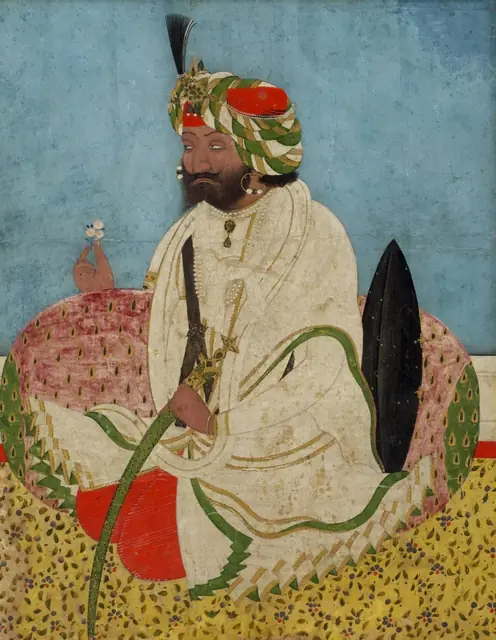
The first war of independent India decided that the Valley, Jammu and Ladakh would remain in India, and left the dispute over the occupied part that continues today.