
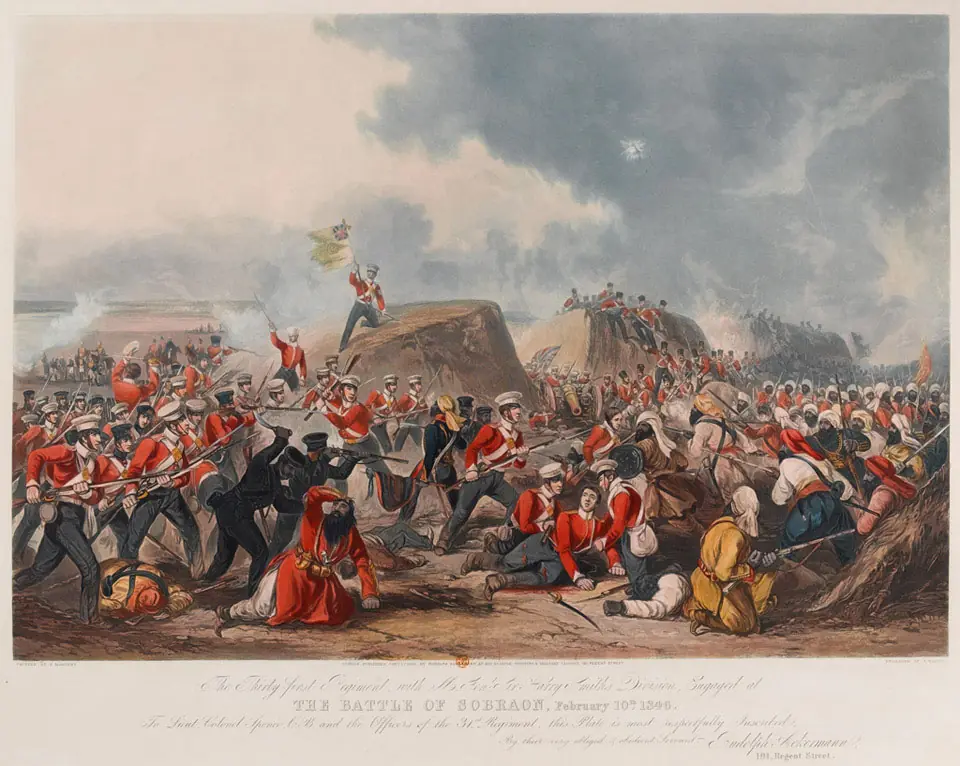
The Company won at Sobraon on 10 February 1846 and by the Treaty of Lahore took the Jalandhar Doab and a heavy indemnity.
01Four battles in eight weeks
The Khalsa crossed the Sutlej on 11 December 1845. At Mudki on 18 December the Company held a hard evening fight. At Ferozeshah on 21–22 December the Sikh entrenchments and gunners came near to breaking Gough’s army; British officers wrote that the night was one of the worst they had known. Yet Tej Singh, arriving with fresh troops, withdrew without pressing home. Ranjodh Singh was beaten at Aliwal on 28 January 1846. At Sobraon on 10 February the Sikhs fought with the river at their backs; the bridge of boats broke, and thousands died in the Sutlej. The old general Sham Singh Attariwala, dressed in white, fell leading a last charge.
02The Treaty of Lahore
By the Treaty of Lahore of 9 March 1846 the boy Maharaja Duleep Singh kept his throne, but the Punjab lost the Jalandhar Doab, its army was cut down, and a British Resident sat at Lahore. The Company demanded an indemnity of one and a half crore rupees. Unable to pay it all, the Darbar ceded Kashmir and the hill country, which the Company sold to Raja Gulab Singh of Jammu by the Treaty of Amritsar a week later for 75 lakh rupees. That sale created the state of Jammu and Kashmir.
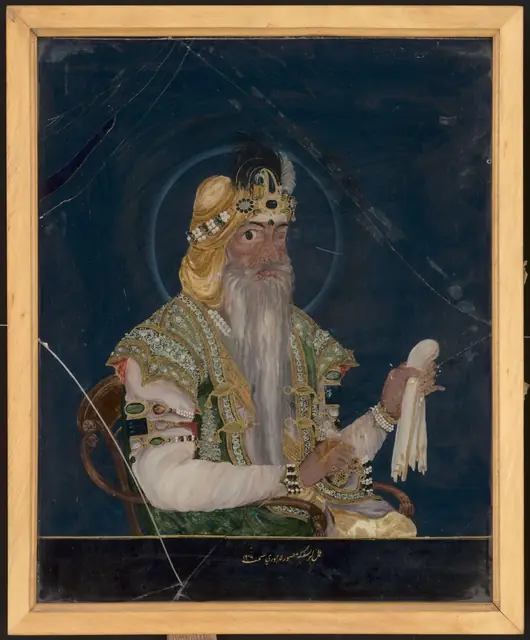
The war broke the independence of the Sikh empire and opened the Punjab, the last great Indian power, to the Company.