
Staunton’s detachment held the village through the day, and the Peshwa’s force moved off as General Smith’s column approached.
01A day in the village
Bajirao II had broken with the Company in November 1817, and after Khadki he was moving across the Deccan with his army. Captain Staunton, marching from Shirur to reinforce Pune, found the Peshwa’s host across the Bhima on the morning of 1 January 1818. He seized the walled village of Koregaon. Arab and Maratha infantry stormed in again and again; the fight went house to house, the Company’s two guns were taken and retaken, and many officers fell. The detachment had no water through the day. By night the attacks stopped, and the Peshwa’s army withdrew as General Smith’s force came up.
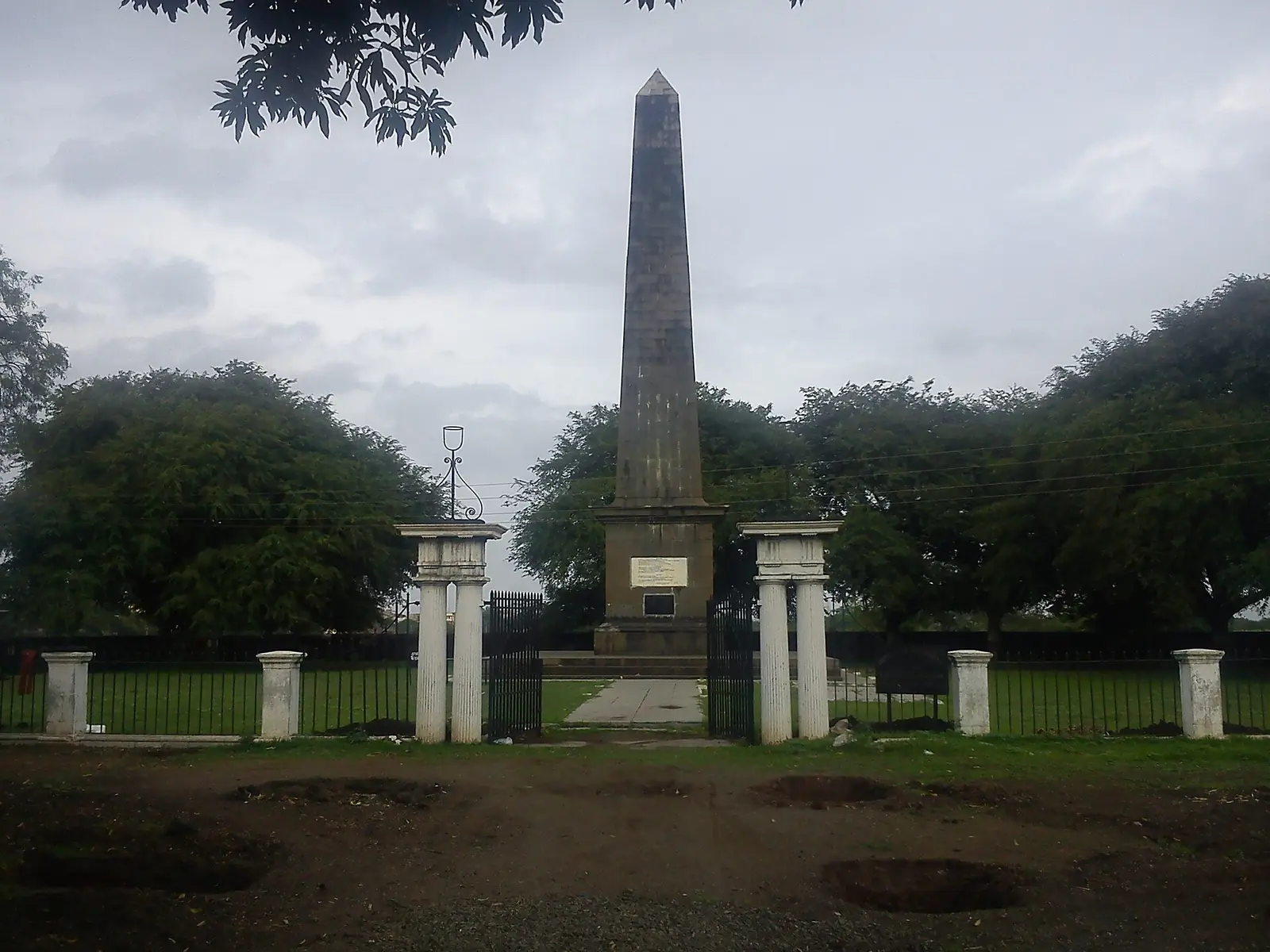
02The obelisk
The Company raised an obelisk at Koregaon in 1822 with the names of its dead, many of them Mahar soldiers of the Bombay army. Six months after the battle Bajirao II surrendered to Sir John Malcolm and was sent to Bithur on a pension, and the Peshwai ended. In 1927 Dr B. R. Ambedkar visited the pillar to honour the Mahar soldiers, and since then many gather there each 1 January. The battle is remembered in different ways by different people today; this page records what the sources say of the fighting.
Koregaon was one of the last actions of the Peshwa’s army before the fall of the Peshwai in June 1818, which left the Company master of western India.