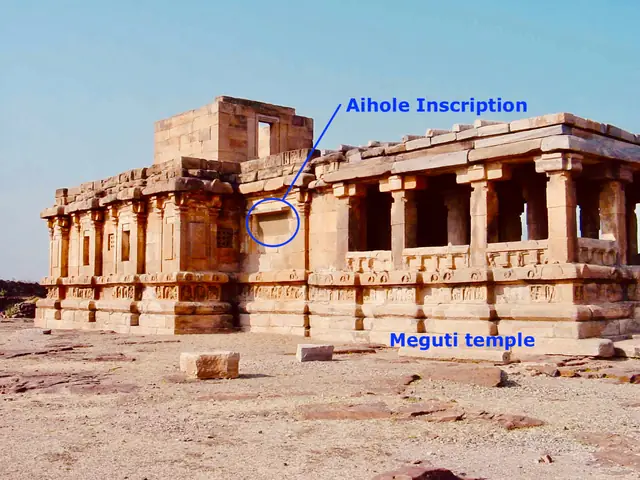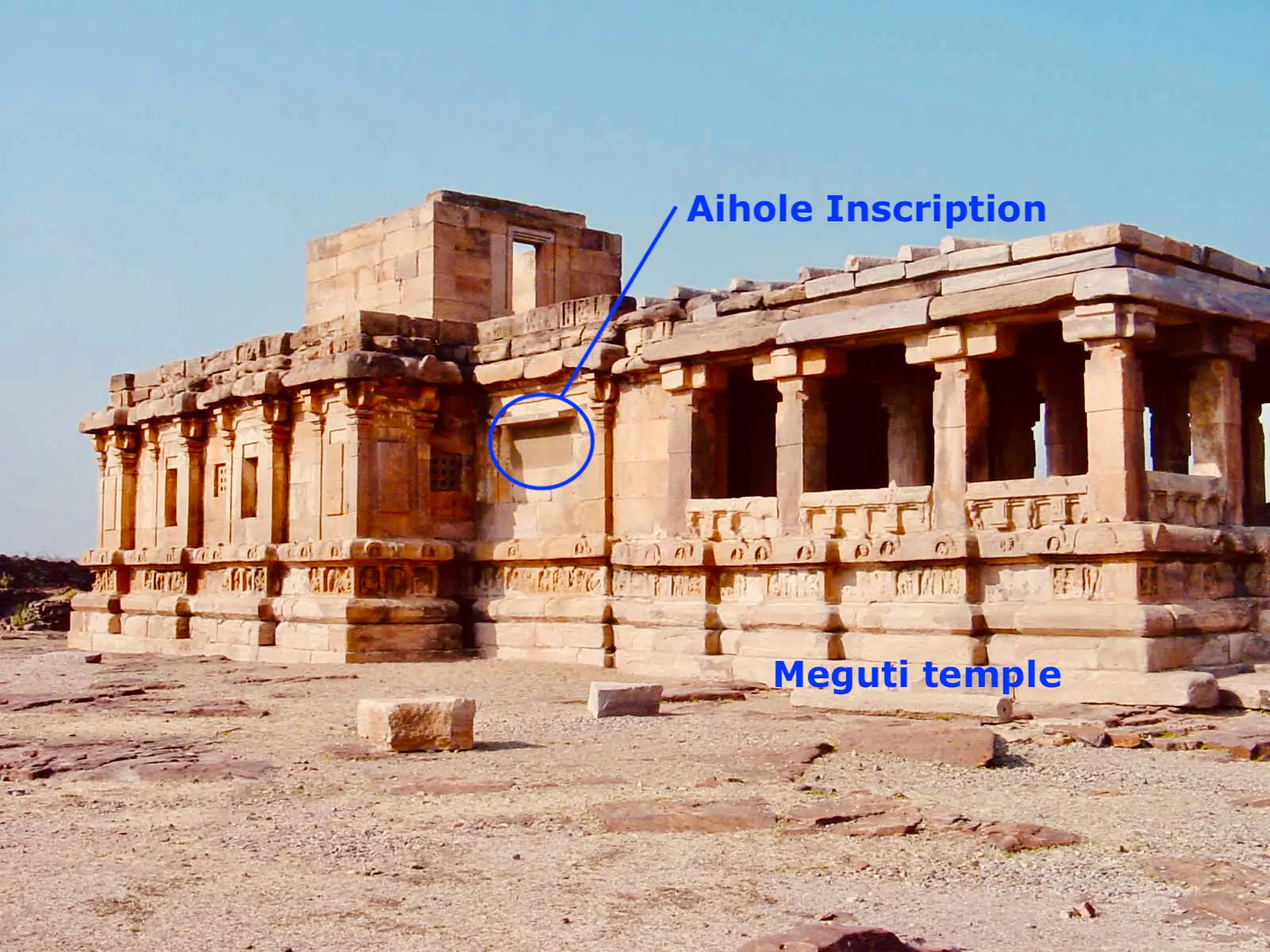
Each side claimed the day: Pallava plates say Mahendravarman destroyed his foes at Pullalur, the Aihole inscription says Pulakeshin drove him behind the walls of Kanchi.
01Two inscriptions, two victories
Nothing of Pullalur survives in a chronicle. It lives in two royal records that do not agree. Ravikirti’s Aihole inscription of 634 CE, written for Pulakeshin, says the Chalukya king made the Pallava lord, who had opposed the rise of his power, hide behind the ramparts of Kanchipuram, his glory dimmed by the dust of the Chalukya army. More than a century later the Kasakudi plates of the Pallava king Nandivarman II recall that Mahendravarman destroyed his chief enemies at Pullalur. Both may be true in part: Kanchi did not fall, and the Chalukyas took the Pallava lands to the north, in Vengi.
02The feud it began
Pullalur opened a war of three generations. Mahendravarman’s son Narasimhavarman I answered it in 642, when his army took Vatapi itself and Pulakeshin died in the fighting. The Chalukyas came back under Vikramaditya II in the next century and entered Kanchi as guests of its temples rather than as looters, leaving a Kannada inscription in the Kailasanatha temple. Between these wars both houses built some of the finest early stone temples of Bharat, at Mamallapuram, Kanchi, Badami, Aihole and Pattadakal.
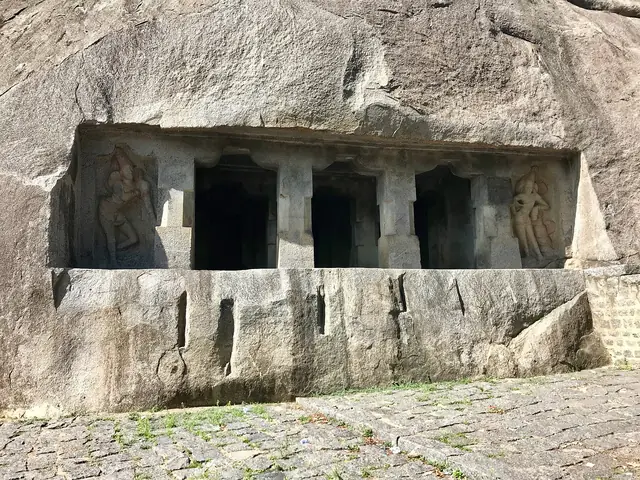
Pullalur set the Chalukyas and Pallavas against each other for over a century, a rivalry that shaped the politics and the temple art of the Deccan and the Tamil country.