
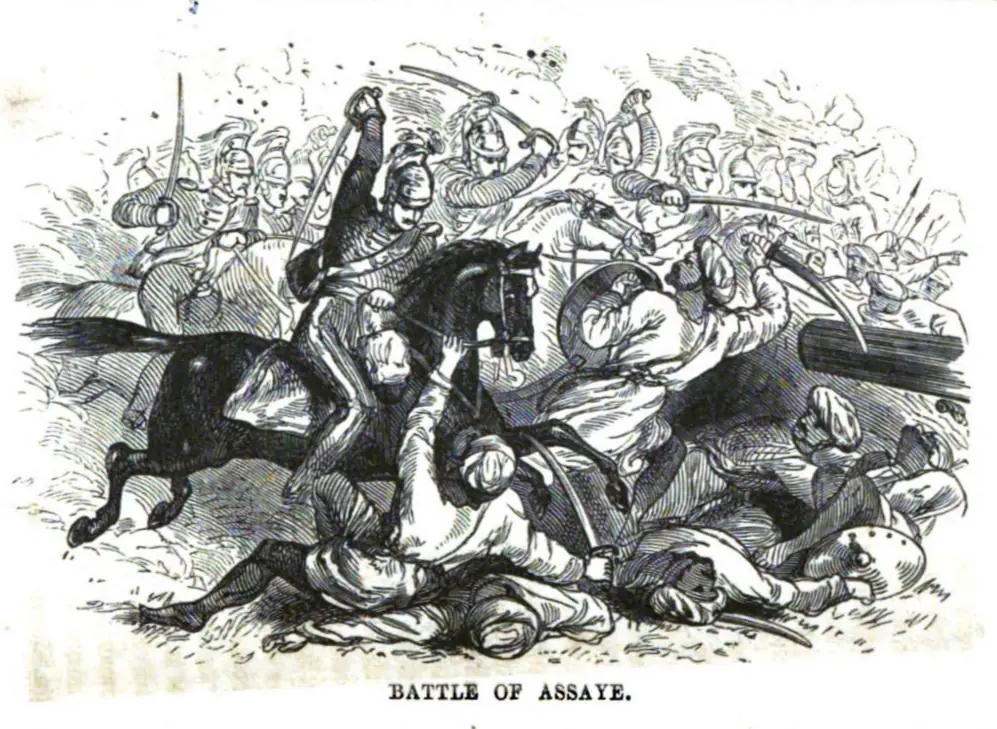
Wellesley’s much smaller army drove the Marathas from the field, at very heavy cost to itself.
01The Treaty of Bassein
In 1802 Peshwa Bajirao II, driven out of Pune by Yashwantrao Holkar, signed the treaty of Bassein and put himself under British protection. Scindia and the Bhonsle of Nagpur would not accept it, and war followed. Wellesley found their combined camp at Assaye, in the fork of two rivers, and attacked at once rather than wait for his second column.
02The guns of Scindia
Wellesley crossed the Kelna at an unguarded ford and swung against the Maratha flank. Scindia’s gunners stood by their pieces and cut down whole companies, and some fired again on the British from behind after being overrun. The Company lost over a third of the men engaged. But the Maratha infantry gave way, the cavalry did little, and by evening the field and nearly a hundred guns were Wellesley’s. Years later, as Duke of Wellington, he called Assaye the best thing he ever did in the way of fighting.
Assaye broke Scindia’s army in the Deccan and began the end of Maratha power in the south.