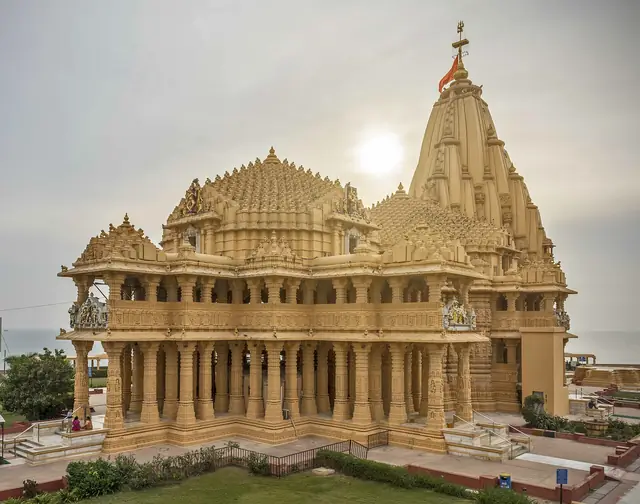
Ayodhya is an ancient city attested in inscriptions and texts, Hindus have worshipped at the Janmabhoomi site for centuries, the ASI found a large non-Islamic structure under the mosque in 2003, and the Supreme Court in 2019 awarded the site for the temple. Shri Ram’s life stands for Hindus on the Ramayana, which is Itihasa.
The proof
- ASI excavation at the site (March–August 2003, on the Allahabad High Court’s order) reported a large structure with rows of pillar bases beneath the mosque.
- Supreme Court, M. Siddiq v. Mahant Suresh Das (9 November 2019): the underlying structure was not Islamic; the court gave the site for the temple.
- The Dhanadeva inscription found at Ayodhya, of about the 1st century BCE, names a ruler of Kosala.
01The claim
The argument has two parts. One says Shri Ram is a literary hero with no more reality than a character in a novel. The other says that even if Ayodhya is old, the belief that he was born at one spot there, and that a temple stood there, was manufactured in modern times for politics. Both were pressed hard in the years of the Ayodhya dispute, in pamphlets, newspapers and court filings.
02Ayodhya through the ages
Valmiki opens the Ramayana in Ayodhya on the Sarayu, capital of the Ikshvaku kings of Kosala. The city, also called Saketa, appears in Buddhist and Jain texts and in Kalidasa’s Raghuvamsha, and the Dhanadeva inscription found in the town names a ruler of Kosala two thousand years ago. Tradition places Shri Ram in the Treta Yuga. Through the medieval centuries Ayodhya stayed a tirtha, visited by sadhus and pilgrims, and by the 16th century Tulsidas was singing of Ram’s city in the language of the people.
03What the excavation and the court found
In 2003 the Archaeological Survey of India dug at the disputed site on the High Court’s order and reported a massive structure under the mosque, with rows of pillar bases, of a kind it judged to be non-Islamic. The Supreme Court in 2019 accepted that the underlying structure was not Islamic. It also said plainly that the ASI had not established whether a temple was demolished to build the mosque, and it decided title on the whole evidence, including centuries of Hindu worship at the site recorded by travellers such as the Jesuit Joseph Tieffenthaler in the 18th century. The temple was consecrated on 22 January 2024.
04Faith and evidence, each in its place
For a Hindu, Shri Ram’s life is known from the Ramayana of Maharshi Valmiki, which the tradition calls Itihasa, thus it happened. That does not wait on a court or a trench. What history can test, it has tested: that Ayodhya is ancient, that the site was sacred to Hindus long before 1949, that a large earlier structure lay under the mosque. The 2007 affidavit denying Ram’s historicity was withdrawn by the government within days, after a public outcry. Keep the tradition stated as tradition and the evidence stated as evidence, and the case is strong.
05What to read
The Supreme Court judgment of 9 November 2019 is long but clearly written, and its sections on the ASI report and on the travellers’ accounts are worth reading in full. Read the ASI’s 2003 report itself, and the 1991 Historians’ Report to see the other side. B. B. Lal’s Rama: His Historicity, Mandir and Setu (2008) gives the case of the archaeologist who first dug at Ayodhya in the 1970s. And read the Ayodhya Kanda of the Valmiki Ramayana.
Read on
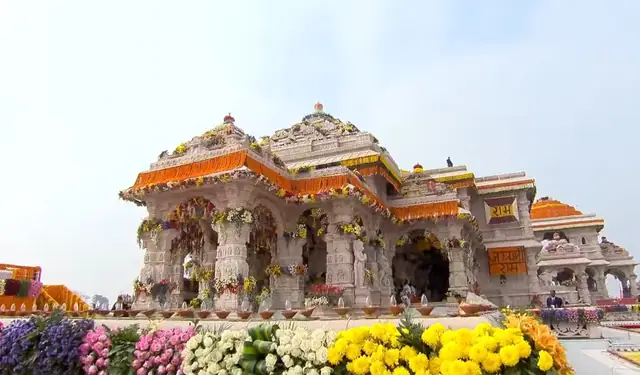
Shri Ram Janmabhoomi, Ayodhya
The birthplace of Shri Ram in Ayodhya, the capital of the Ikshvakus. A mosque stood on the spot from 1528; after five centuries of struggle and a unanimous Supreme Court judgment in 2019, a new temple was consecrated in 2024.

Ayodhya inscription of Dhanadeva
A short Sanskrit record of Dhanadeva, lord of Kosala, who set up a memorial to his father at Ayodhya.
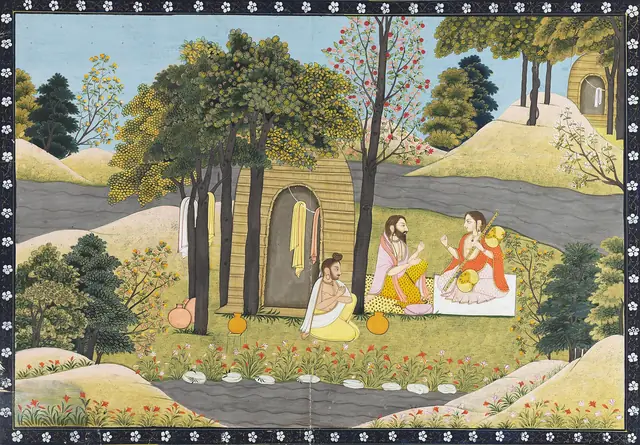
Maharshi Valmiki
Valmiki is the Adi Kavi, the first poet, whose Ramayana of about 24,000 shlokas tells the life of Shri Rama. He was a contemporary of Rama, and Sita lived in his ashram where Lava and Kusha were born.
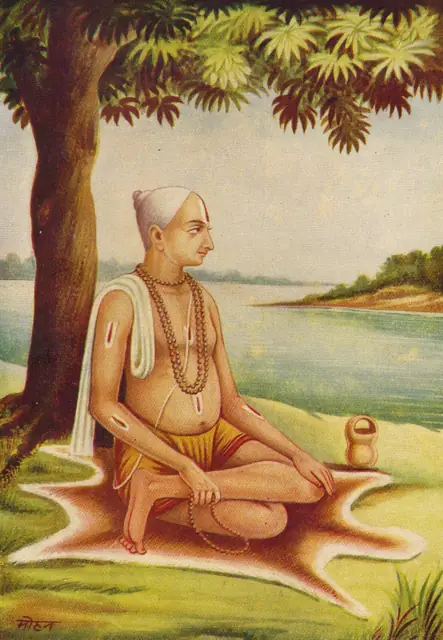
Goswami Tulsidas
Tulsidas began the Ramcharitmanas at Ayodhya on Rama Navami of Samvat 1631 (1574 CE) and gave the Ramayana to every home of the Hindi lands in Awadhi. He died at Assi Ghat, Kashi, in 1623.
Suryavansha (Ikshvaku line)
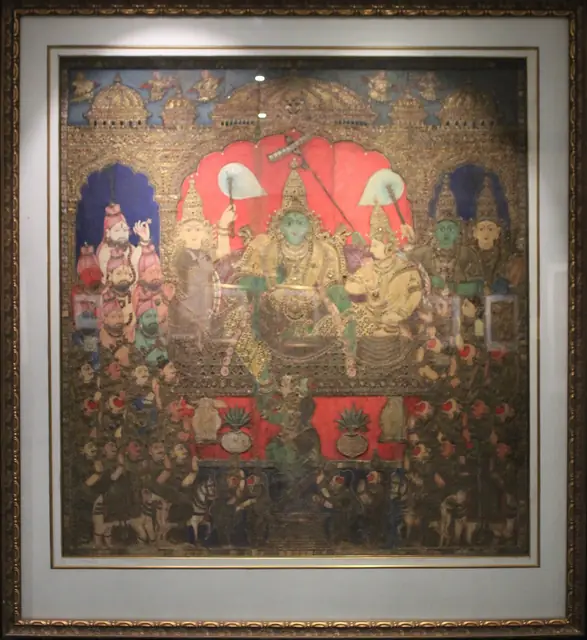
The Solar dynasty descends from Vaivasvata Manu through his son Ikshvaku and ruled from Ayodhya. Its kings include Mandhata, Harishchandra, Sagara, Bhagiratha, Raghu and Shri Rama, and the Puranas carry the line down to Sumitra in the Kali Yuga.