01Three lamps on a rainy night
Poigai Alvar, caught in a downpour at Thirukkovalur, found a small covered passage with room for one to lie down. Bhoothath Alvar came, and the two sat. Pey Alvar came, and the three stood. Then in the dark they felt a fourth press in among them, and by lightning saw a face of such beauty that they knew it was the Lord. Poigai sang: let the world be the lamp, the ocean its ghee, the sun its flame. Bhoothath sang of love as the lamp, devotion as the oil; Pey Alvar sang what he saw, Narayana with Shri, conch and discus. The three hundred verses are the Mudhal, Irandam and Moonram Thiruvandhadhi, the opening of the Iyarpa. With Thirumangai Alvar they give the temple twenty-one pasurams.
02Trivikrama in wood
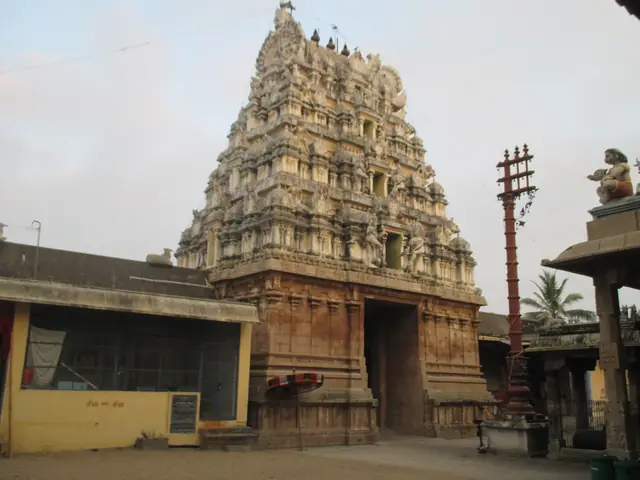
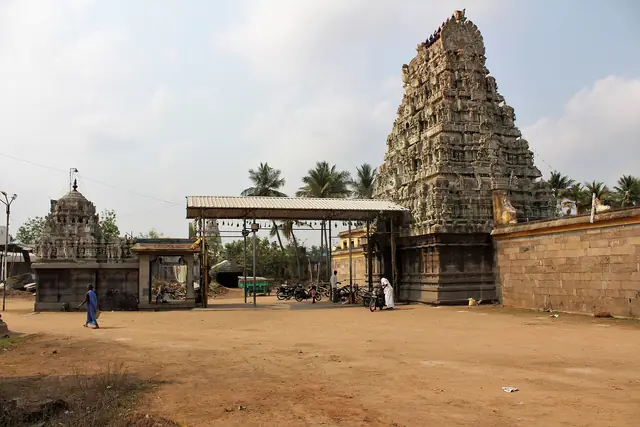
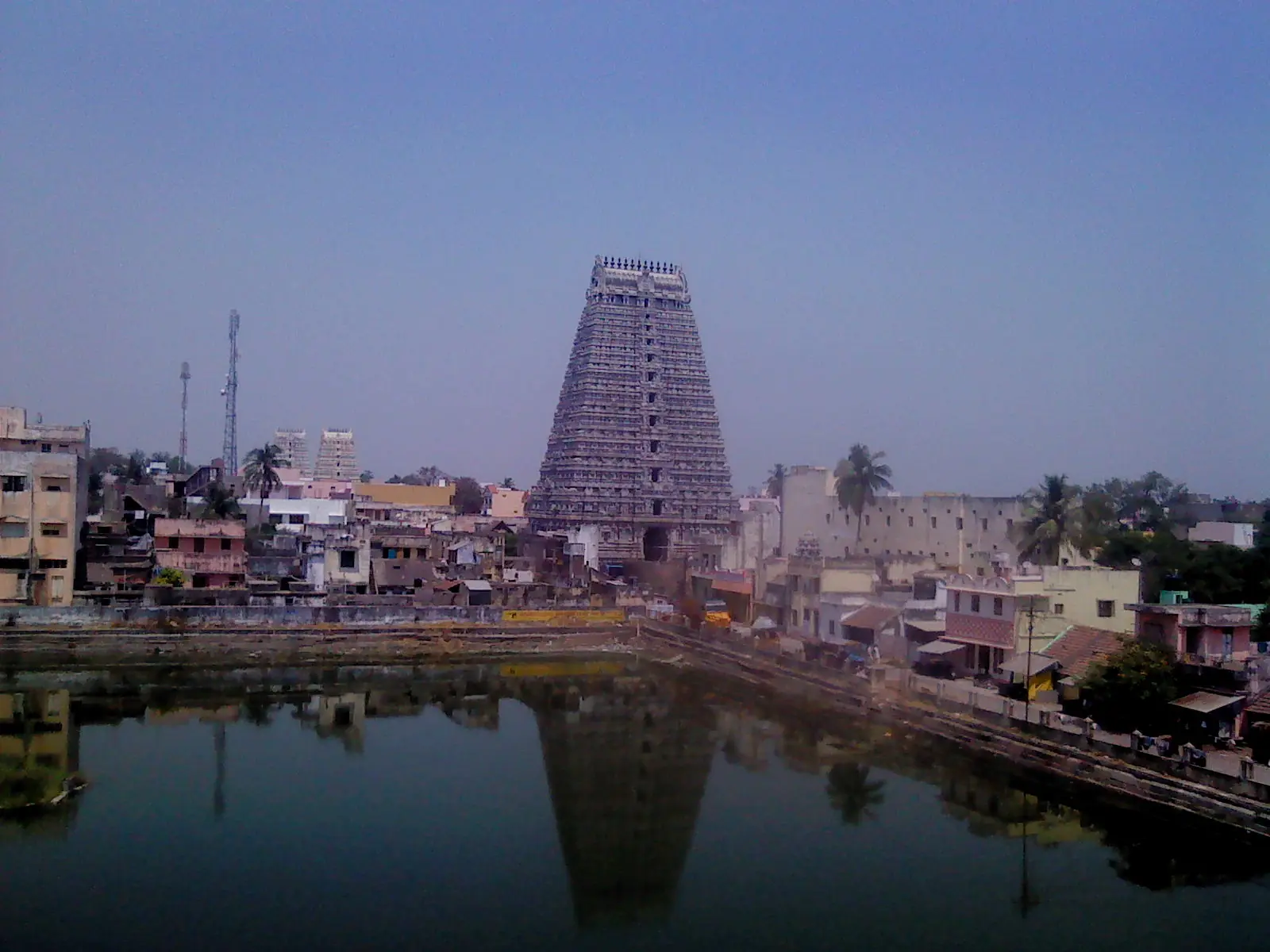
The Brahmanda Purana says Maharshi Mrikandu and his wife Mitravati did tapas here to see the Vamana avatar, and the Lord came first as a hungry brahmin and then as Trivikrama. The image is of wood, the left foot lifted, and unusually holds the conch in the right hand and the discus in the left; Mahabali, Prahlada, Shukracharya, Mrikandu and the three Alvars are with him in the sanctum, and Vishnu Durga has a place there too. The temple was of brick until Virarajendra Chola’s reign, when it was rebuilt in granite; an inscription of 1171 records a gift for reciting Nammalvar’s Tiruvaymoli. Saluva Narasimha and Sadasiva Raya of Vijayanagara added gifts. In the Carnatic wars the temple served as a fort. With Thiruvahindrapuram it is one of the two Divya Desams of Nadu Nadu.
The life of this place
- Alvar periodPoigai, Bhoothath and Pey Alvar meet here and sing the first three Thiruvandhadhis; Thirumangai Alvar sings of the temple too.
- Virarajendra Chola (1063–70)The brick shrine is rebuilt in granite.
- 1171An inscription records a lady’s gift for the Vaikasi and Aippasi festivals and the recitation of Tiruvaymoli.
- Saluva Narasimha (1485–91)Vijayanagara grants to the temple begin to be recorded.
- Sadasiva Raya (1542–70)Further Vijayanagara grants are recorded.
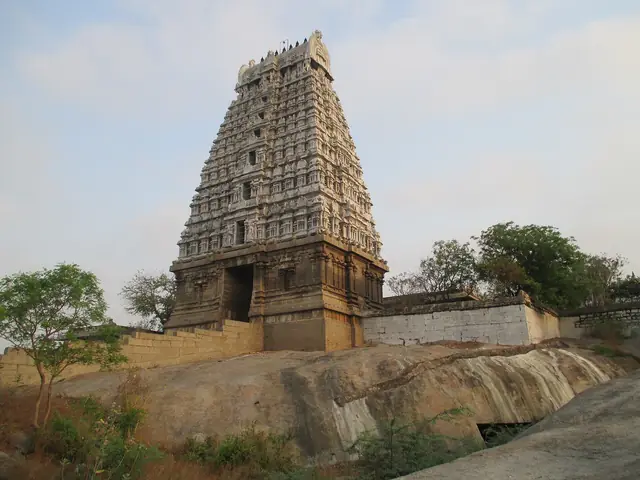
In Tirukkoyilur town on the Pennaiyar (South Pennar), about 35 km south of Tiruvannamalai. See the Mudhal Alvars in the sanctum, and Kapilar Kal, the Sangam poet’s rock, in the river.