01Aravamudhe
Sarangapani means the bearer of the Sharnga bow. The temple calls him Aravamudhan, the nectar that never cloys. Sri Vaishnava tradition tells that in the 10th century Nathamuni heard pilgrims singing eleven verses of Nammalvar beginning ‘Aravamudhe’ before this deity. The last verse spoke of a thousand. No one knew the rest. Nathamuni went to Nammalvar’s birthplace at Alwarthirunagari, sat in yoga and received the whole Nalayira Divya Prabandham. The four thousand hymns that are sung in every Vishnu temple of the Tamil land trace back to that moment.
02The chariot sanctum
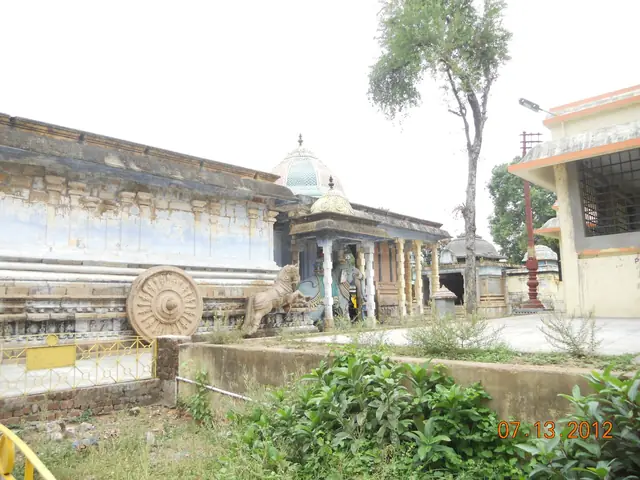
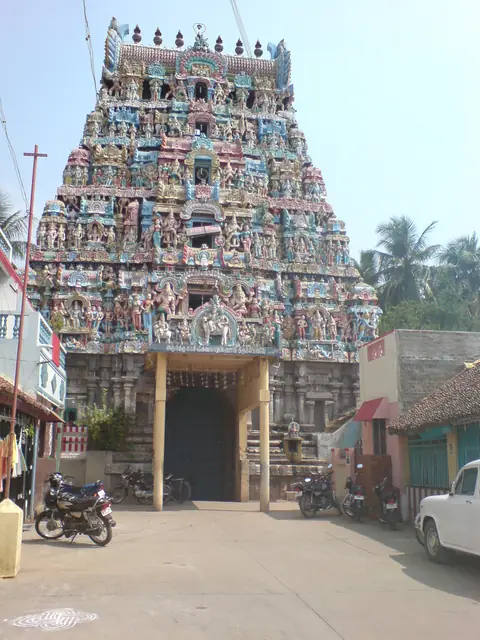
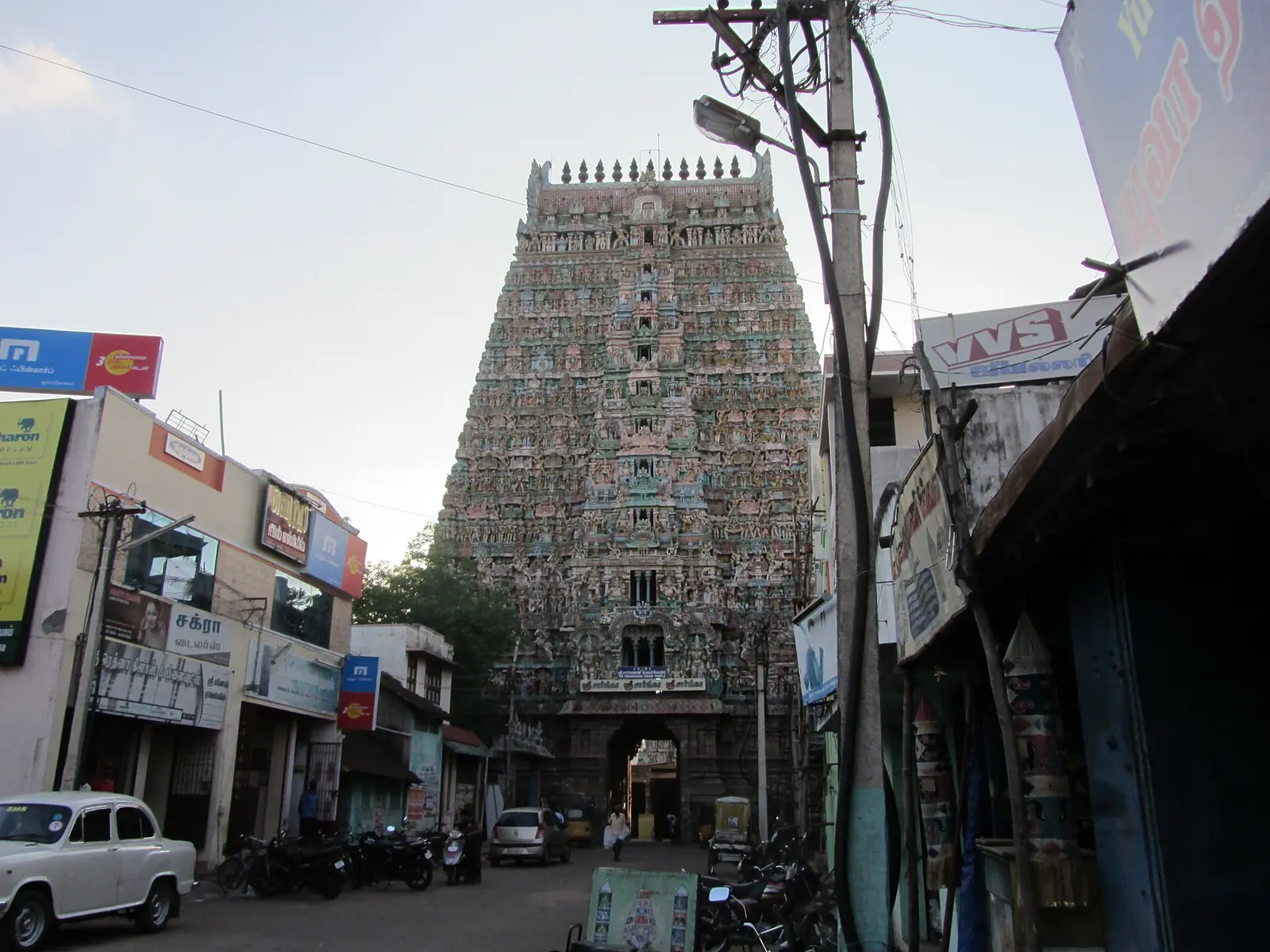
Lakshmi, the temple’s katha says, was born here as Komalavalli, daughter of the sage Hema, and Vishnu came down in a chariot to marry her. So the inner shrine is cut as a stone ratha with wheels, horses and elephants, and it has two entrances, the Uttarayana and Dakshinayana gates, opened by turn through the year. The rajagopuram, eleven tiers high, is one of the tallest in the state. Thirumangai Alvar, Periyalvar, Bhoothathalvar and others sang the temple; only Srirangam and Tirumala have more pasurams.
The life of this place
- 10th centuryNathamuni hears the Aravamudhe decad here and sets out to recover the Divya Prabandham.
- 16th–17th centuryNayaka rulers of Thanjavur enlarge the temple and its gopuram.
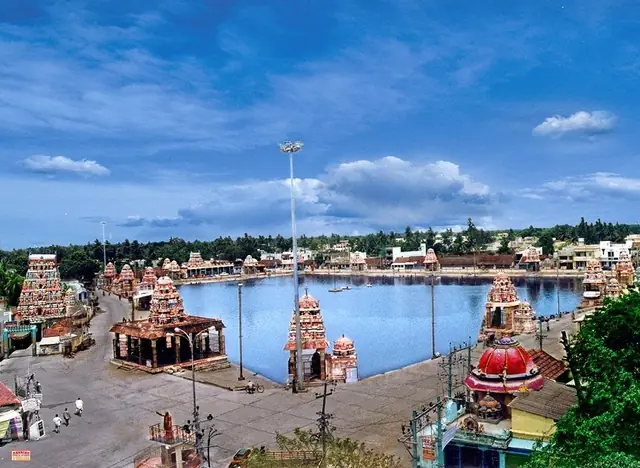
In Kumbakonam town, close to the Mahamaham tank and the Kumbeswarar temple. The twin temple cars run at the Chithirai festival.