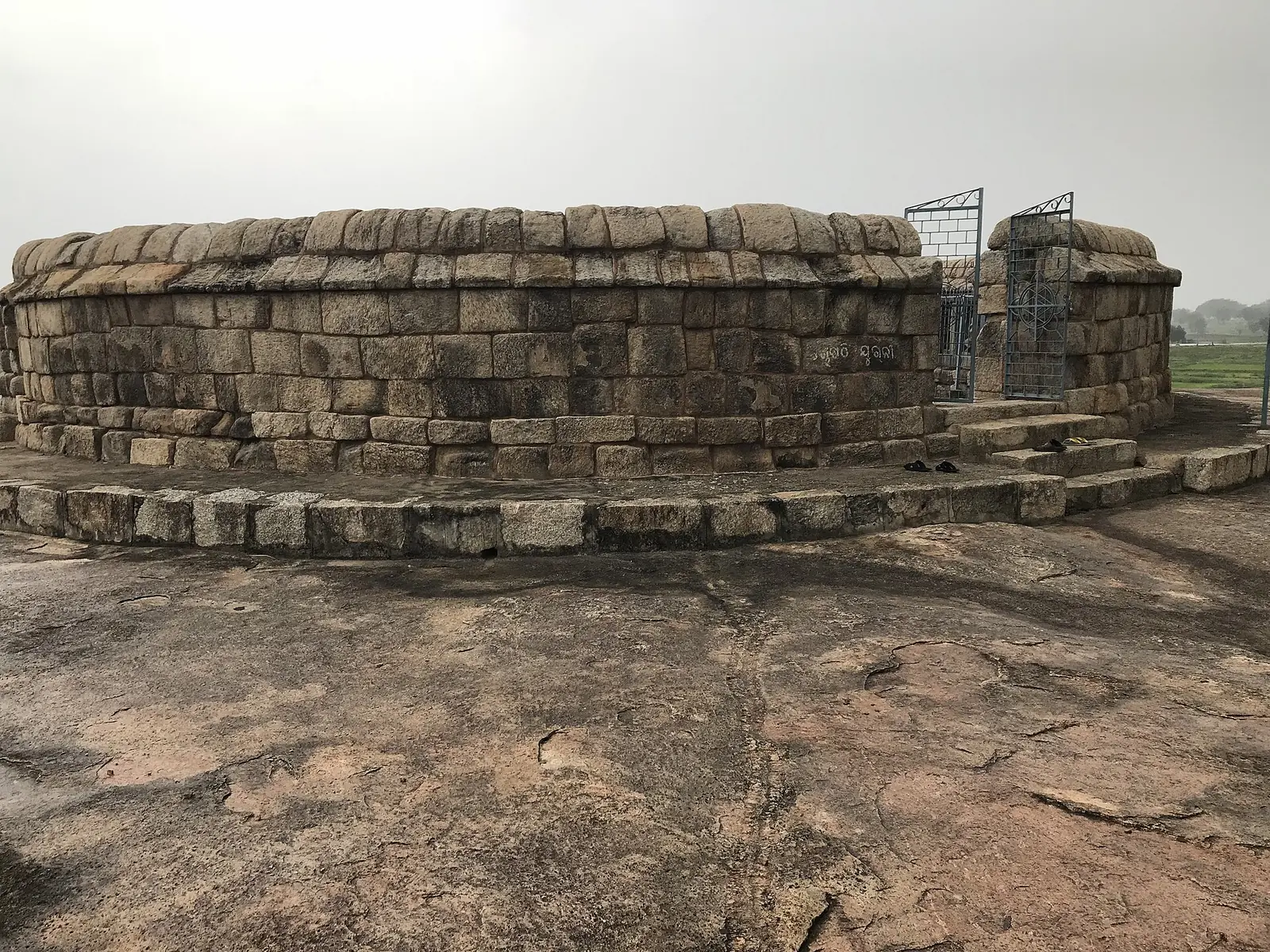
01Dancing Yoginis
Yogini temples are round and open to the sky, so that the Yoginis, Shaktis who fly, can come and go. Only a handful survive in Bharat: Hirapur near Bhubaneswar, Bheraghat and Mitaoli in Madhya Pradesh, and this one. At Ranipur-Jharial the sixty-four niches face inward around a central shrine with a dancing Shiva, and, unlike anywhere else, all the Yoginis dance too. Many images are broken or missing, but enough remain to show the circle in motion.
02Somatirtha
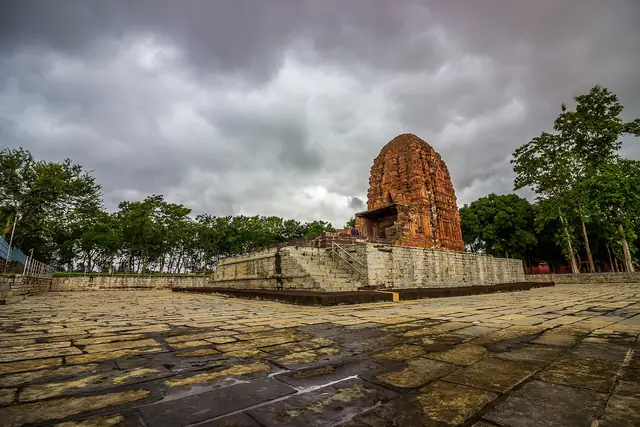
The site was known as Somatirtha, and the Shaiva ascetics of the Somavamshi age seem to have made it a centre. Besides the Yogini circle there is the Someswara Shiva temple of stone and the Indralath, a brick temple whose tower still rises some 18 metres, among the tallest early brick temples in Odisha. Water collects in rock pools on the plateau, the jharia that give the place its name.
The life of this place
- c. 9th–10th centuryThe Yogini temple and the Someswara and Indralath temples are built at Somatirtha.
About 30 km from Titlagarh in Balangir district; the plateau has little shade, so go early.