01Krishna the cowherd king
The sthala purana tells that the sages Gopila and Gopralaya did tapas here and asked to see Krishna’s leelas of Dwaraka; Krishna showed them all thirty-two, and in the last stood as Rajagopala. The utsava murti is a young cowherd wearing a single cloth, with an earring in one ear, a whip in hand and a calf beside him. Krishna is dressed in a different form for each day of the eighteen-day Panguni festival. The temple is held as an abhimana sthalam, cherished by Sri Vaishnavas though not among the 108 Divya Desams.
02Chola start, Nayaka scale
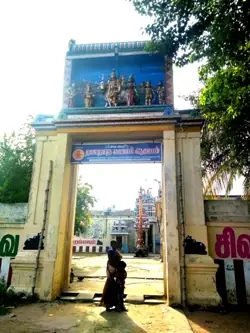
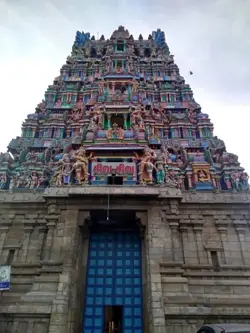
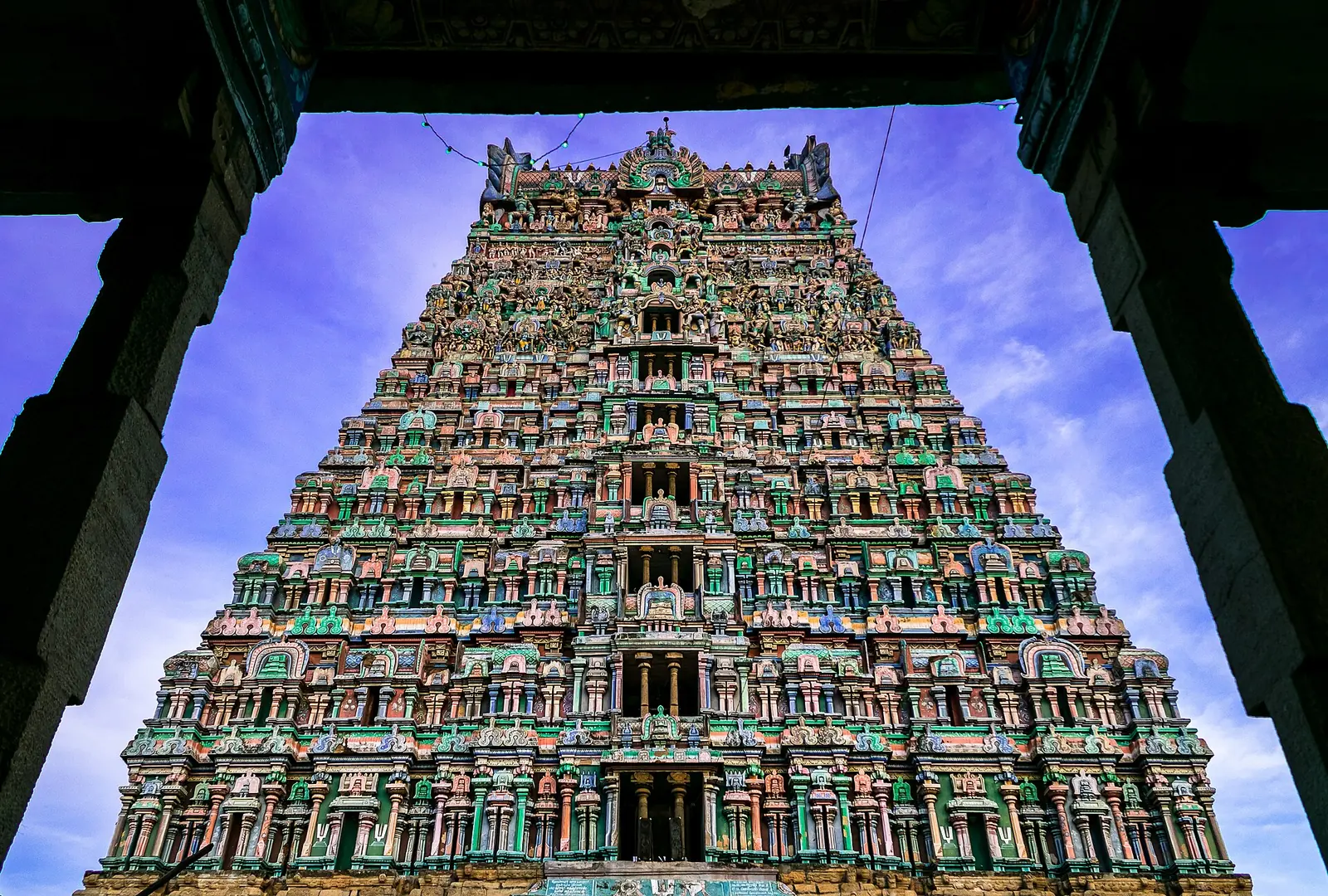
The temple was founded under Kulottunga Chola I in the 11th century and took its present size under the Nayaka rulers of Thanjavur, chiefly Achyutappa Nayak, in the 16th and 17th centuries. The rajagopuram rises about 154 feet; in front of it stands a monolithic stone pillar about 50 feet high, topped by a small shrine of Garuda. To the east lies the Haridra Nadhi, a tank of about 23 acres, on whose island stands a small shrine reached by boat during the float festival.
The life of this place
- 11th centuryThe temple is founded under Kulottunga Chola I.
- 16th centuryAchyutappa Nayak of Thanjavur enlarges the temple and builds its great halls.
In Mannargudi town, about 40 km south of Thanjavur. The Panguni Brahmotsavam (March–April) and the float festival on the Haridra Nadhi are the great days.