01Temple of the Jaffna kings
Nallur was the royal seat of the Aryachakravarti kings of Jaffna, and their temple to Kandaswamy stood beside the palace. The Yalpana Vaipava Malai, the Tamil chronicle of Jaffna, gives 948 CE for the first shrine. When Sapumal Kumaraya took Jaffna for the Kotte kingdom around 1450, he rebuilt the temple, and his name is still recited in the daily worship. In 1620, a year after the Portuguese conquered Jaffna, Phillippe de Oliveira had the temple pulled down and a church raised on the site.
02The rebuilding of 1734
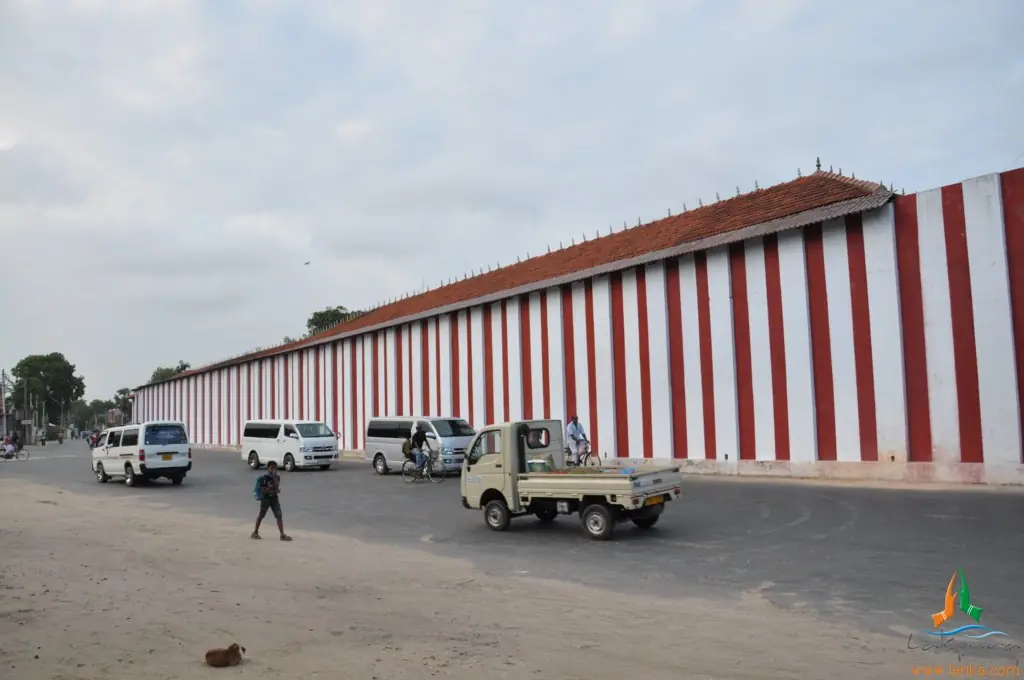
Under Dutch rule the restrictions eased. In 1734 Ragunatha Maapaana Mudaliyar, an official of the Dutch administration, built the present temple a short distance from the old site, first as a modest shrine of brick and thatch. It has grown ever since, and the golden gopurams and tall walls are largely twentieth-century work. Arumuga Navalar of Jaffna, the nineteenth-century reformer of Shaiva practice, pressed for strict Agamic worship here, and Nallur is still known for its punctual pujas.
03The Nallur festival
The festival begins in the Tamil month of Avani, in August, and runs 25 days. On the chariot day the Vel and the murtis ride out on a towering ther pulled by thousands, and devotees roll around the outer street in angapradakshinam or carry kavadi. Men enter bare-chested, as at most Jaffna temples. Through the long civil war the festival was held whenever it could be, and since 2009 the Tamil diaspora comes home for it from Toronto, London and Sydney.
The life of this place
- 948 CE (tradition)The Yalpana Vaipava Malai dates the first shrine at Nallur to this year.
- c. 1450Sapumal Kumaraya rebuilt the temple after taking Jaffna for Kotte.
- 1620The Portuguese under Phillippe de Oliveira destroyed the temple.
- 1734Ragunatha Maapaana Mudaliyar built the present temple.
Nallur is 3 km from Jaffna town. Men must remove shirts before entering; go for the 25-day festival in August–September if you can.