01The Devi and her treasure
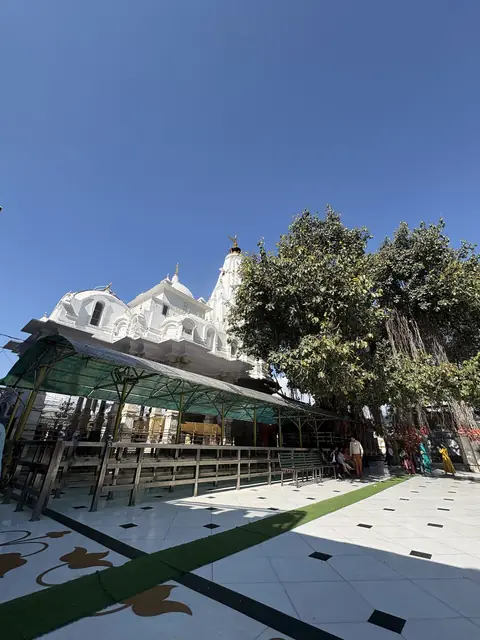
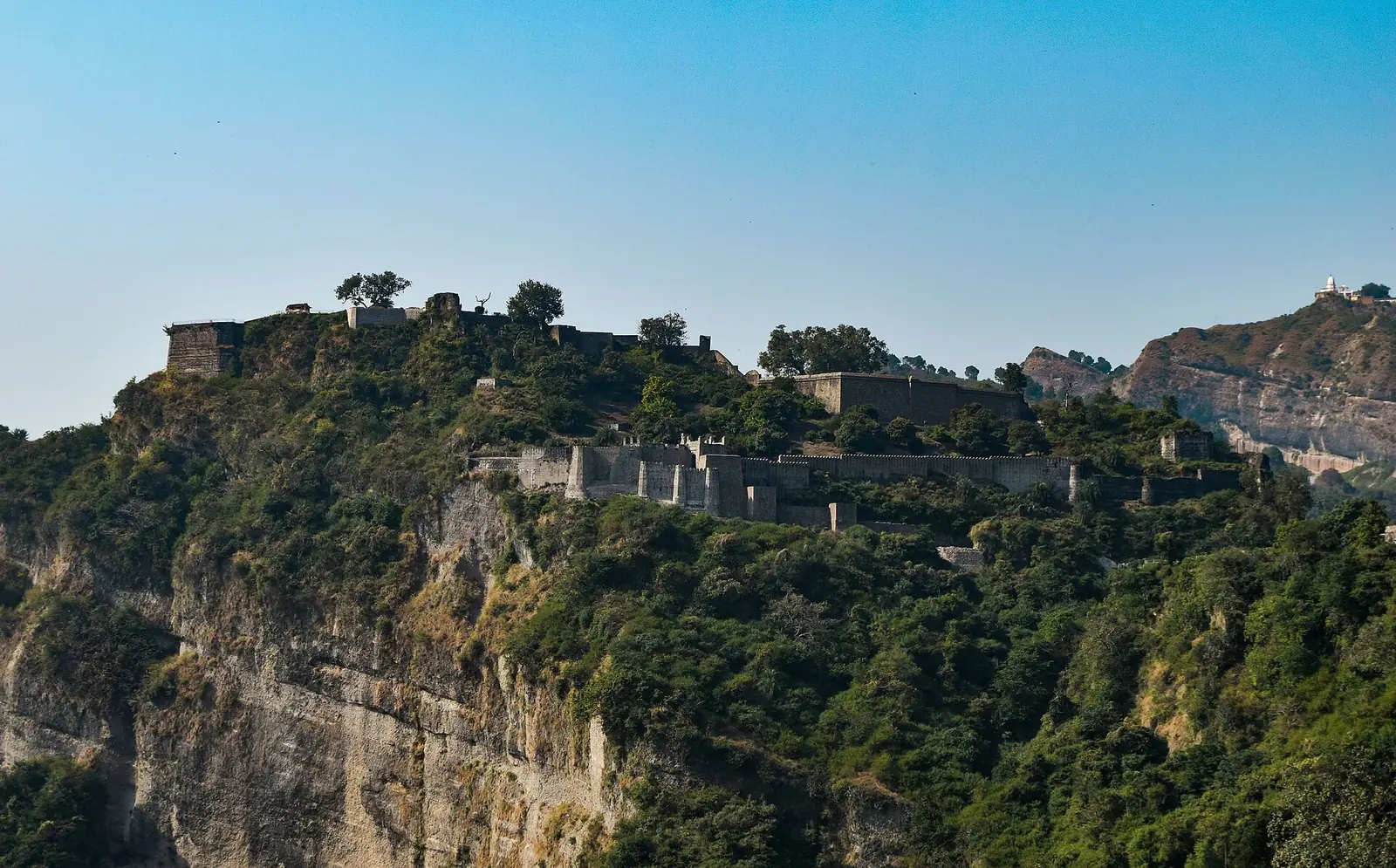
Kangra was the old Trigarta kingdom, and the Katoch rajas count their line among the oldest ruling houses of Bharat. The Vajreshwari temple in the town is held to be the Shakti Peetha where the breast of Mata Sati fell, and offerings poured into it from across the hills. In 1009 Mahmud of Ghazni marched up after defeating Anandapala. Al-Utbi, his secretary, writes of the treasure taken from the fort he calls Bhimnagar: gold, silver and jewels beyond counting, carried down on camels. Firishta records that c. 1043 a coalition of Hindu kings retook Nagarkot and set up a new image in the temple.
02Sultans, Mughals, Katoch, Sikhs
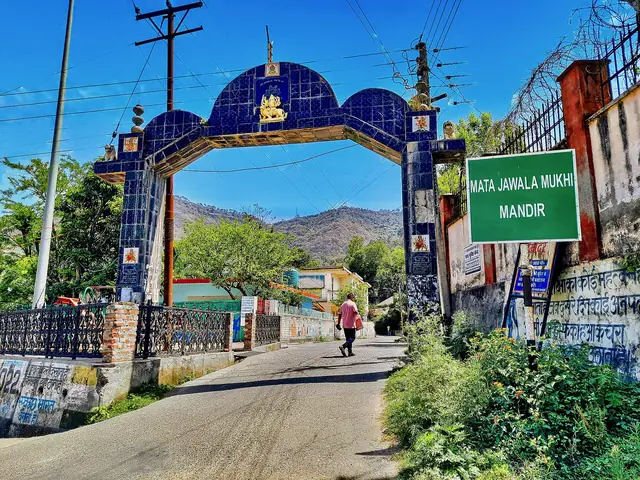
Firuz Shah Tughlaq besieged Nagarkot in 1365; from the temple of Jwalamukhi nearby his men took a library of Sanskrit books, some of which he had translated into Persian. Akbar’s generals failed to take the fort. Jahangir’s army took it in November 1620 after a siege of over a year, and he came himself to see it. The Katoch raja Sansar Chand won the fort back in 1786 and made Kangra the centre of a great school of painting. Pressed by the Gorkhas, he gave it to Ranjit Singh in 1809, and it passed to the British in 1846. The earthquake of 4 April 1905 wrecked fort and temple; Vajreshwari was rebuilt afterwards.
The life of this place
- 1009Mahmud of Ghazni takes the fort and carries off the temple treasure (Tarikh-i-Yamini).
- c. 1043Hindu kings retake Nagarkot and reconsecrate the temple (Firishta).
- 1365Firuz Shah Tughlaq besieges Nagarkot and takes books from Jwalamukhi.
- November 1620Jahangir’s army takes Kangra fort.
- 1786Raja Sansar Chand Katoch recovers the fort.
- 1809The fort passes to Maharaja Ranjit Singh.
- 4 April 1905The Kangra earthquake ruins the fort and the Vajreshwari temple.
The fort is 3 km south of Kangra town, with a museum run by the Katoch family. Vajreshwari is in the old bazaar; Jwalamukhi is 35 km away.