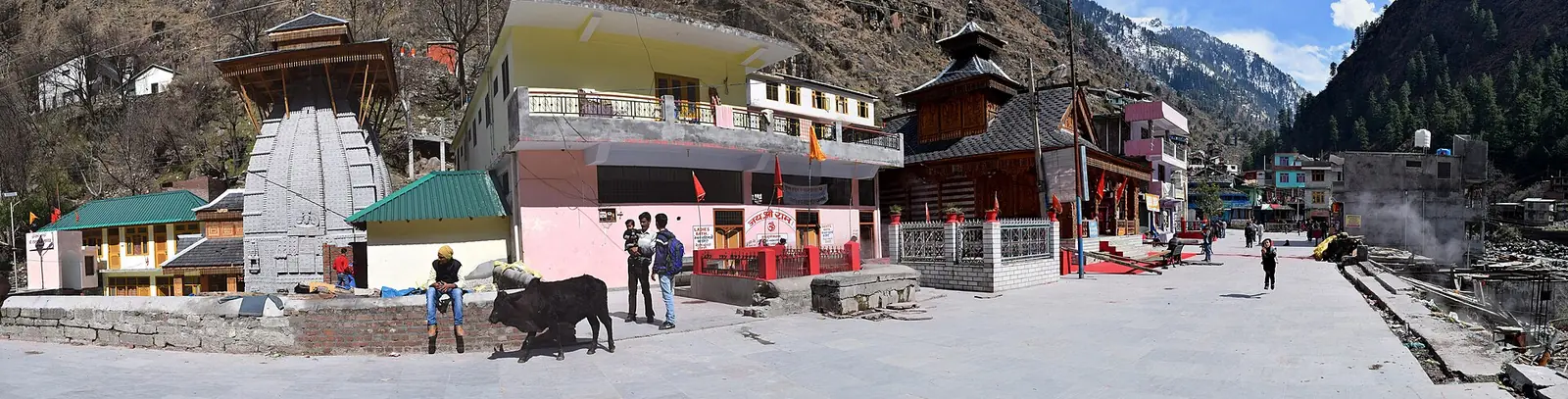
01Parvati’s earring
Bhagwan Shiva and Mata Parvati, so the katha goes, spent a long age in this valley. One day as Parvati bathed in the stream the jewel of her earring fell into the water and passed down to Sheshnag in the underworld. Shiva’s anger shook the valley; Sheshnag, frightened, hissed, and with his breath the waters boiled up out of the earth and threw out jewels, the mani among them. The springs have run hot ever since, and the place is named for the jewel of the ear, mani and karna. The river itself carries the Mother’s name.
02Rice in the spring
Along the bank stand the Shiva temple, the Ram temple raised by the Kullu rajas and the shrine of Naina Bhagwati, and pilgrims bathe in the warm tanks fed by the springs. Rice tied in cloth is lowered into the boiling water and comes out cooked. The gurdwara on the same bank honours a visit of Guru Nanak Dev, and its langar is cooked partly over the spring as well; Hindu and Sikh pilgrims share the place. In the Kullu Dussehra, the deities of the valley come down to the Raghunath temple, and Manikaran is counted among the oldest tirthas of that country.
About 35 km from Bhuntar up the Parvati valley. The spring water is scalding; bathe only in the marked tanks.