01Awadh annexed
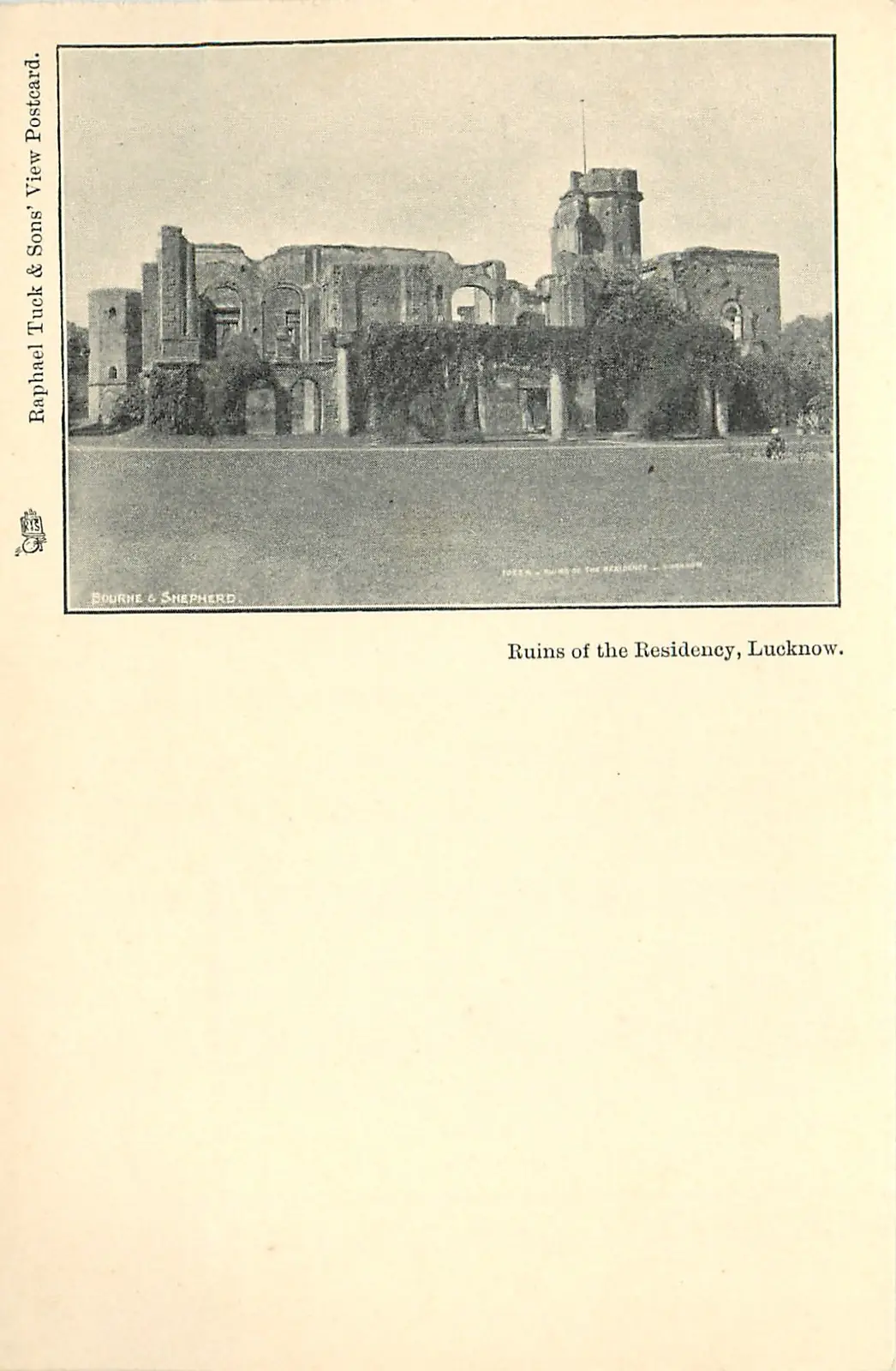
The Residency was built for the Company’s agent at the Awadh court in the last decades of the 18th century, on a rise near the Gomti. In February 1856 Dalhousie annexed Awadh and sent Nawab Wajid Ali Shah to Calcutta. The annexation touched every sepoy’s village, since much of the Bengal army was recruited in Awadh. When the rising came, Begum Hazrat Mahal, one of Wajid Ali Shah’s wives, proclaimed her young son Birjis Qadr ruler, and the taluqdars and sepoys gathered round her.
02The siege
After his defeat at Chinhat on 30 June 1857, Sir Henry Lawrence fell back into the Residency with the garrison, loyal sepoys and many civilians. He was mortally wounded by a shell on 2 July and died on 4 July. Havelock and Outram broke in on 25 September but could not break out, and the siege went on until Sir Colin Campbell’s column reached the compound in November and evacuated it. Lucknow itself was retaken only in March 1858, after hard street fighting. The British kept the ruined buildings as a memorial and flew their flag over them day and night until August 1947. The Archaeological Survey of India now looks after the site and its museum.
The life of this place
- 1780–1800The Residency buildings are raised.
- February 1856The Company annexes Awadh.
- 30 June 1857After Chinhat the siege of the Residency begins.
- November 1857Colin Campbell relieves and evacuates the Residency.
- March 1858Lucknow is retaken by the British.