01Sahil Varman’s city
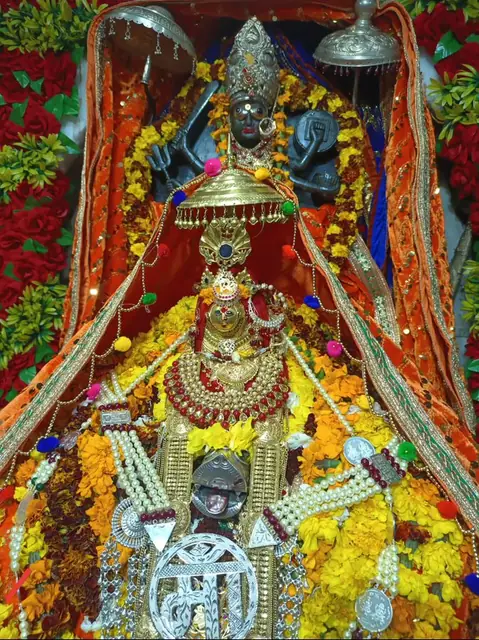
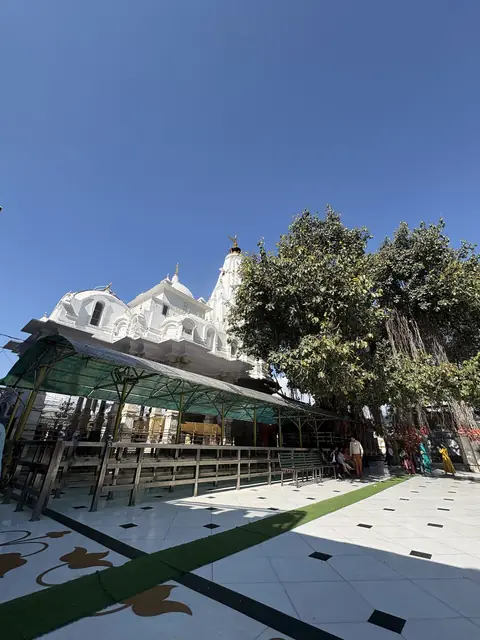
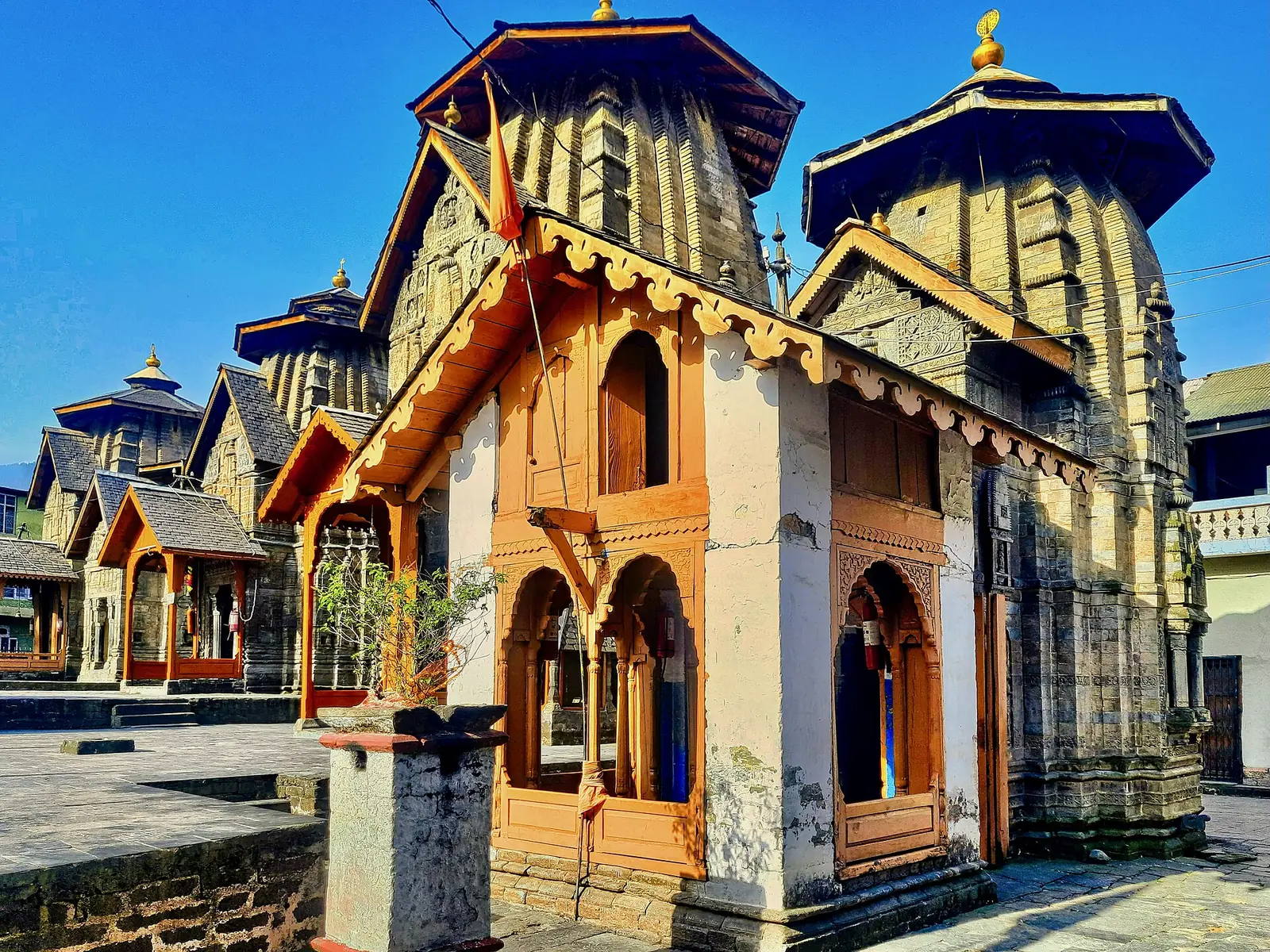
Chamba’s chronicle says that Raja Sahil Varman moved his capital down from Brahmaur to the Ravi and named the new town after his daughter Champavati, and that he raised the temple of Lakshmi Narayan here. The murti in the sanctum is a four-armed Vaikuntha form of Vishnu in white marble, which the chronicle says was carved from stone brought from the Vindhyas. Beside it, in one row, stand temples of Radha Krishna, of Shiva as Chandragupta and as Gauri Shankar, of Trimukha Shankar and of Lakshmi Damodar. The Gauri Shankar shrine holds a fine metal image of Shiva and Parvati of the early period.
02Stone towers, wooden hats
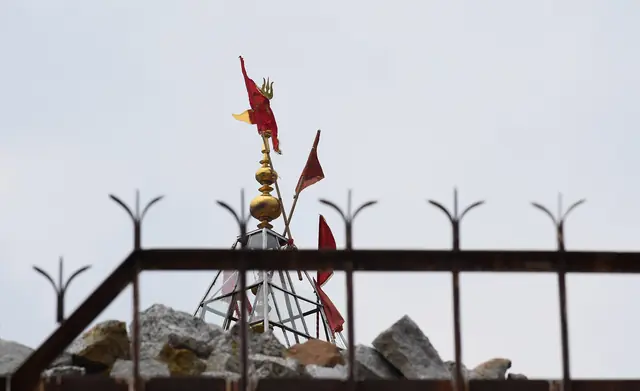
The temples are of the northern nagara type, with tall curved shikharas, but each is capped by a wooden chhatri with sloping eaves and a wheel-like roof, a hill answer to snow and rain. A metal Garuda on a pillar faces the main shrine. Chamba records say that when an order of Aurangzeb’s court came to pull the temples down, Raja Chhatar Singh instead had gilded pinnacles set on them in 1678. The rajas of Chamba remained in their capital until 1948, and the temples are still in worship.
The life of this place
- c. 920 CERaja Sahil Varman founds Chamba and the Lakshmi Narayan temple (Chamba chronicle).
- 1678Raja Chhatar Singh sets gilded pinnacles on the temples.
- 1948Chamba state merges into the Indian Union.
In Chamba town, a few minutes’ walk from the Chaugan and the Akhand Chandi palace; Chamba is about 120 km from Pathankot.