01Princess Ishvara’s prashasti
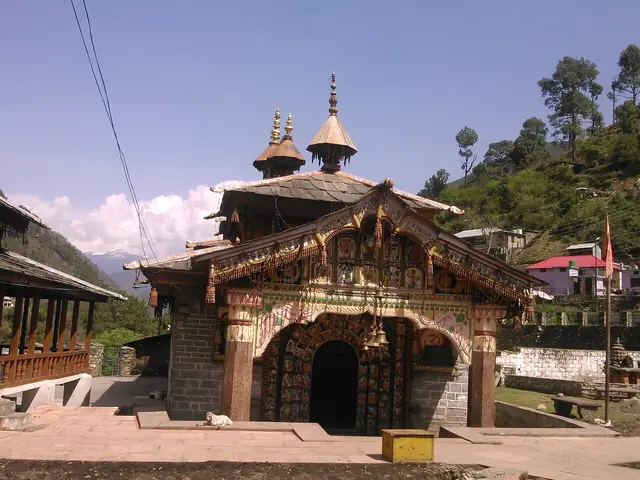
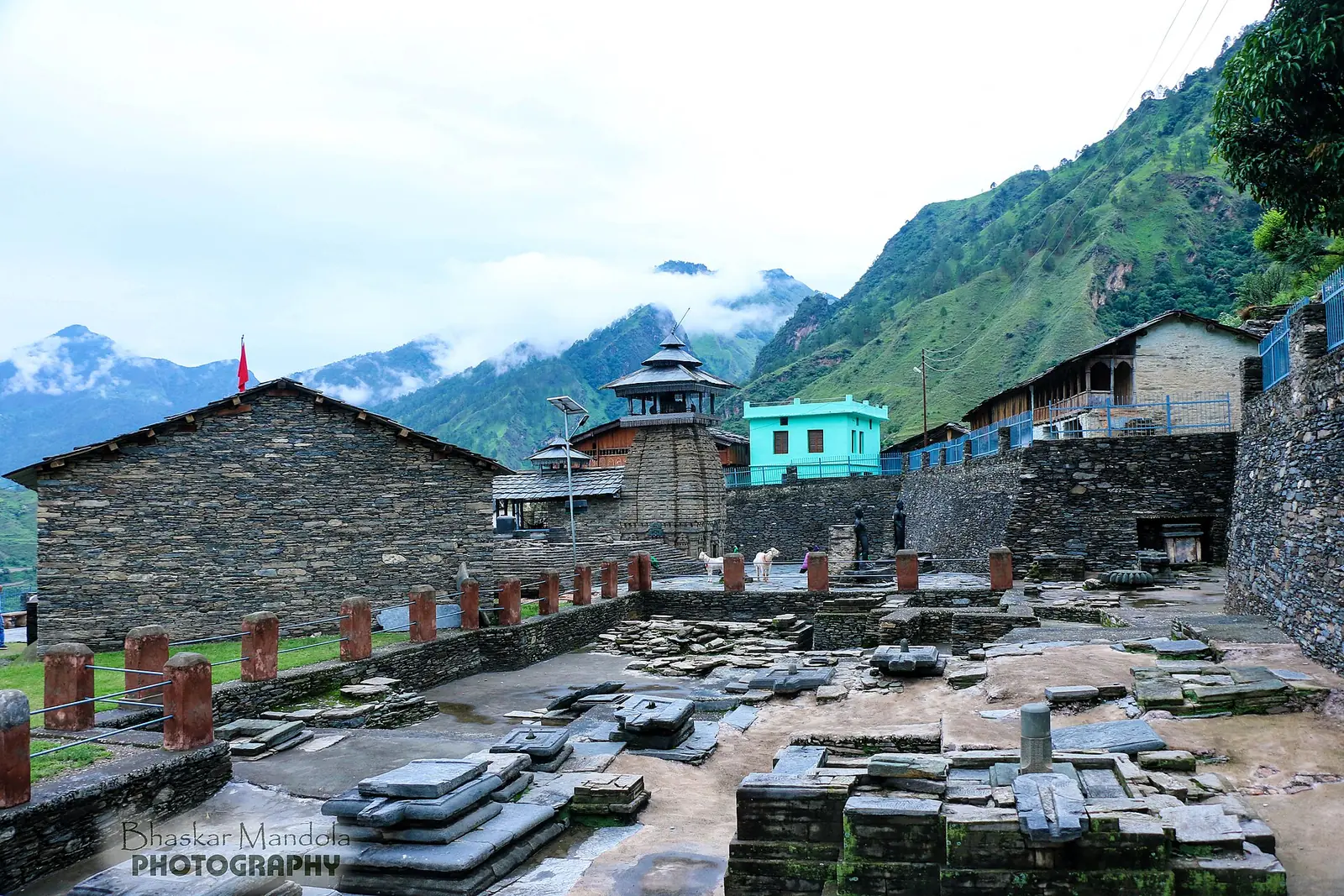
The Lakhamandal prashasti, a stone inscription found at the site, names a princess called Ishvara of the royal line of Singhapura. She had a temple of Shiva built here for the spiritual welfare of her late husband Chandragupta, a prince of Jalandhara. The script places it around the 6th or 7th century. Excavations found brick foundations of that age under the present stone temple, which was built in the Nagara style around the 12th or 13th century. Lakha mandal means a lakh of shrines, and the ground round the temple has given up so many lingas and carvings that the name hardly seems an exaggeration.
02Pandavas in Jaunsar
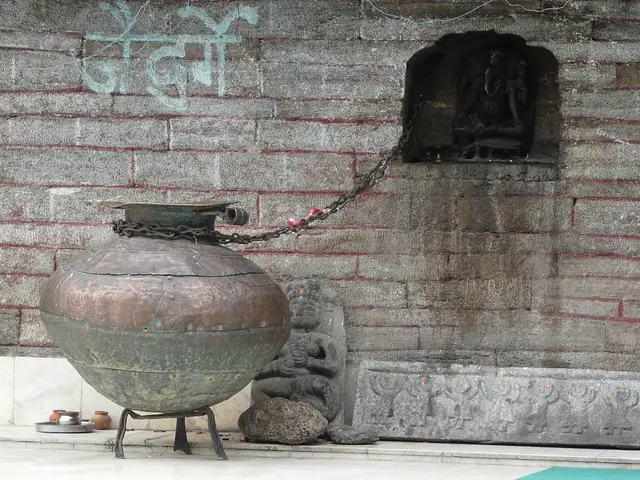
Jaunsar-Bawar keeps a strong memory of the Pandavas, and local tradition links Lakhamandal with the lakshagriha, the house of lac in which Duryodhana tried to burn them. Two large standing figures at the shrine are called by villagers after the Pandava brothers. Inside, a dark polished linga is said to show the worshipper’s face like a mirror when water is poured on it. The temple is under the ASI, and evening aarti is still performed by the village priests.
The life of this place
- c. 6th–7th centuryPrincess Ishvara of Singhapura has a Shiva temple built here, as her prashasti records.
- c. 12th–13th centuryThe present Nagara-style stone temple is built.
Lakhamandal is about 35 km from Chakrata and about 75 km from Mussoorie via Kempty Falls, on the road toward Barkot.