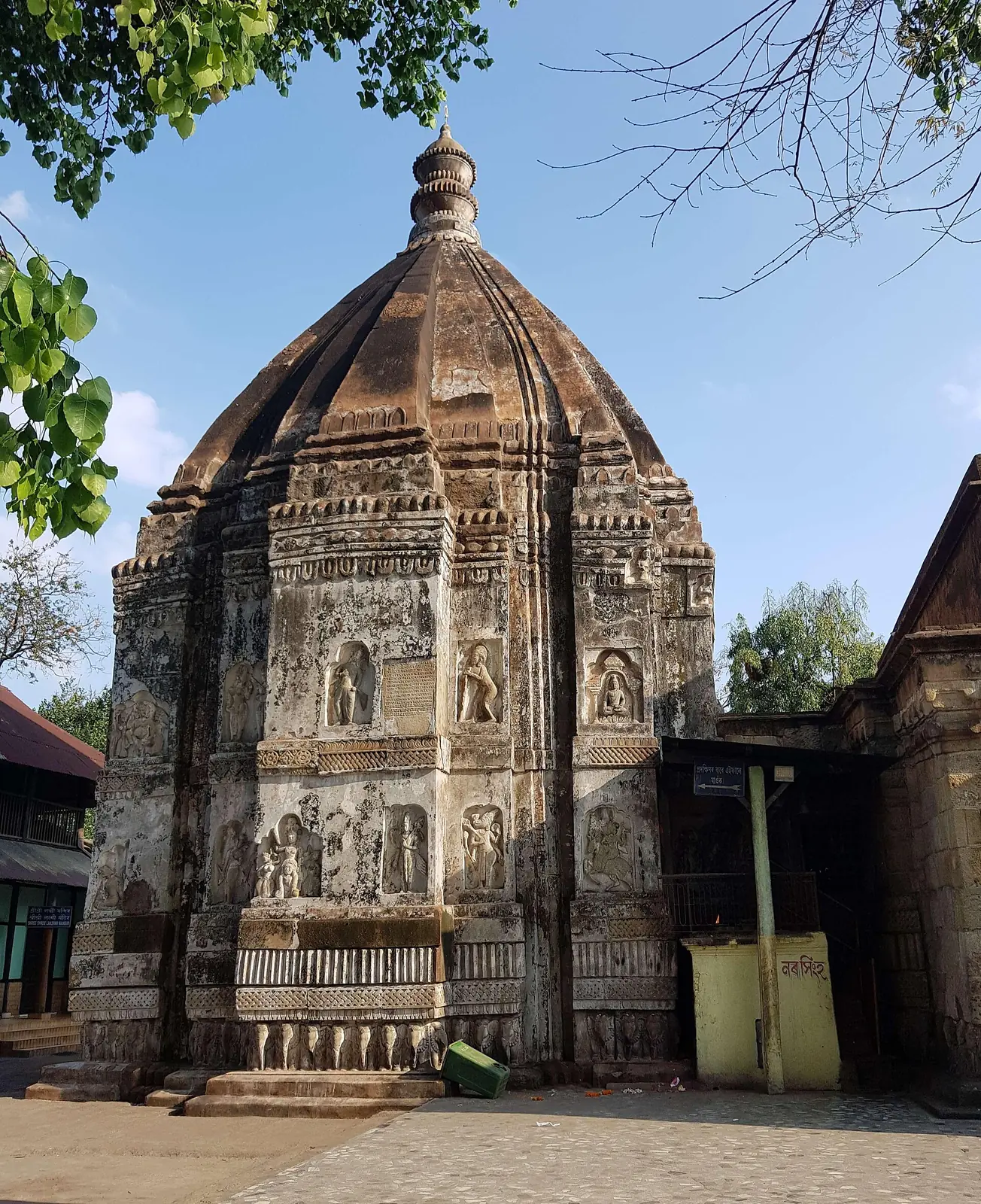
01Madhava of Manikuta
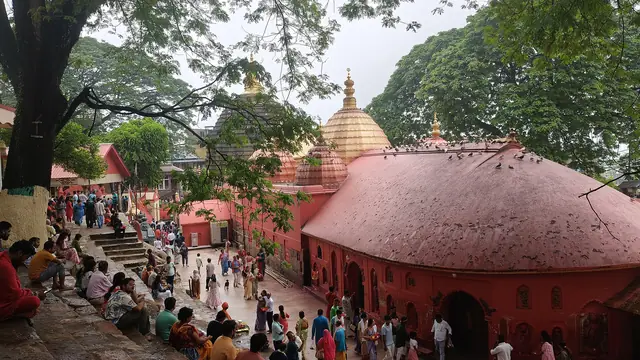
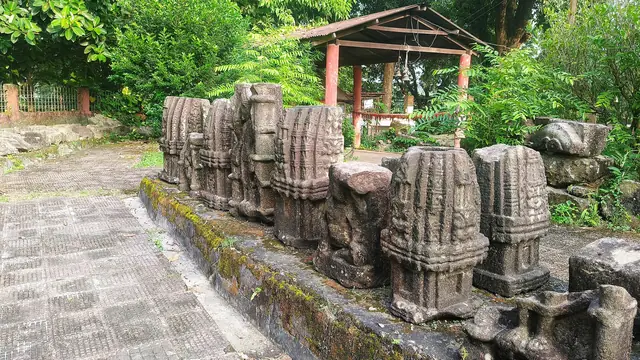
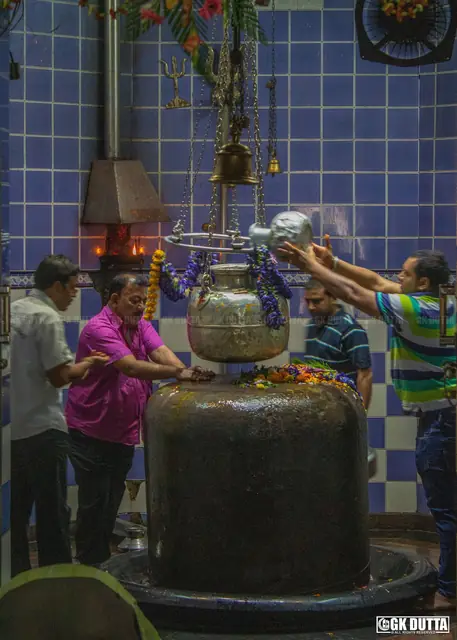
The Kalika Purana and the Yogini Tantra praise Manikuta as a Vishnu kshetra of Kamarupa. The present temple was raised in 1583 by Raghudev Narayan, the Koch king of the eastern half of the kingdom, on the base of an older shrine. A row of stone elephants runs round the lowest course, and above them panels show the ten avatars and scenes from the Ramayana and the Mahabharata. In the sanctum the murti of Madhava is in black stone, and the akhanda deep, the unbroken lamp, has burned for generations.
02Doul at Hajo
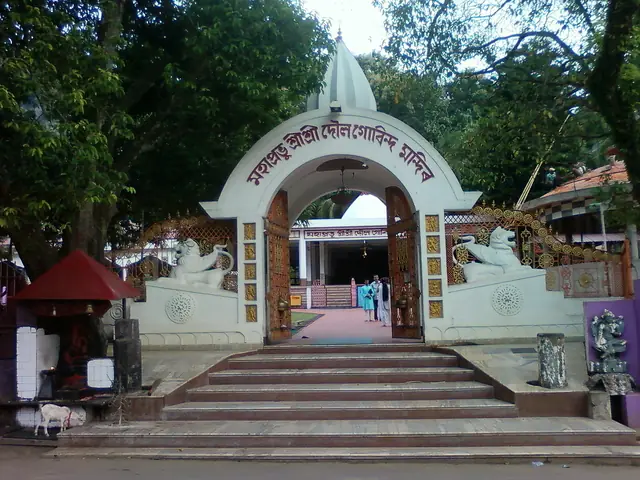
The Doul festival, the Assamese Holi, is the temple’s great time, and Janmashtami and Bihu are kept too. Bhutanese and other Himalayan Buddhists come to Hajo, holding that the Buddha passed from the world here, and they circle the same shrine. A large tank, the Madhab Pukhuri, lies below the hill. The Ahom kings later added land grants and servitors for the worship.
The life of this place
- 1583Raghudev Narayan rebuilds the temple.
Hajo is about 30 km north-west of Guwahati across the Brahmaputra; steps and a road lead up Manikuta hill.