01The great Varaha
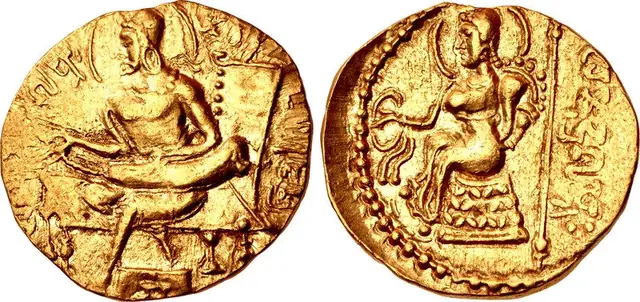
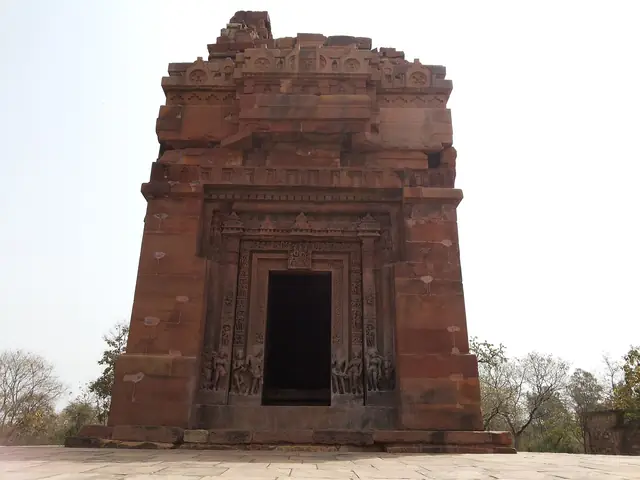
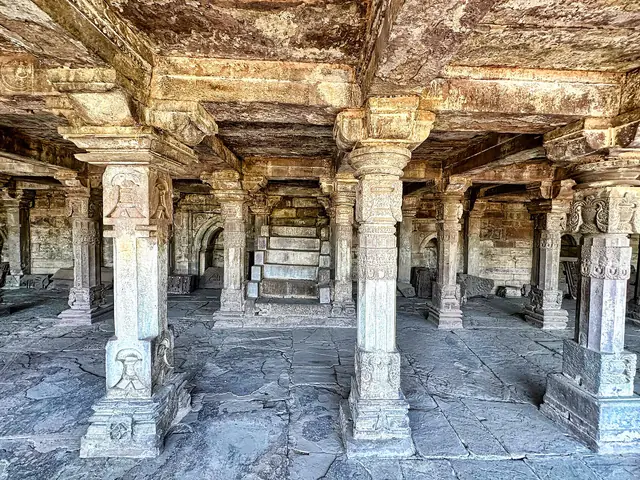
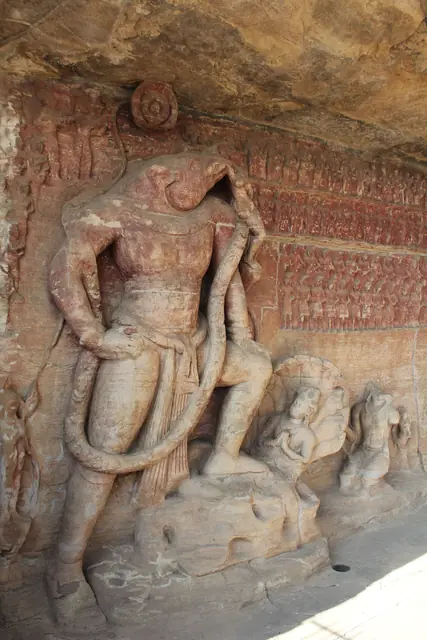
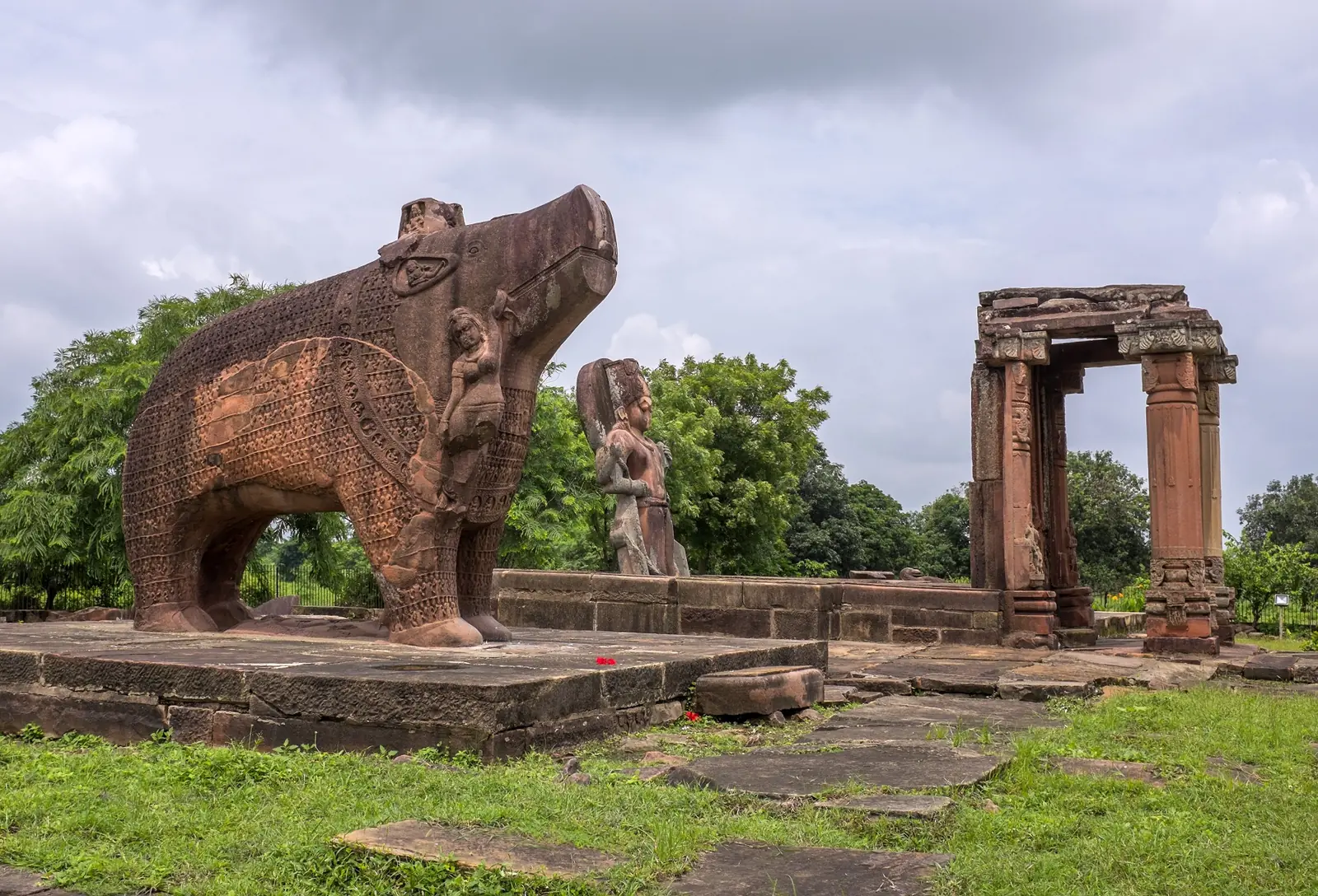
Airikina was a town long before the Guptas; excavations by Sagar University found layers going back to the Chalcolithic, and its own copper coins carry its name in Brahmi. A broken inscription of Samudragupta calls the Airikina country his pleasure-city. In 484–85 CE, under Budhagupta, two brothers, Matrivishnu and Dhanyavishnu, raised a 13-metre pillar to Janardana with a double Garuda on top; it still stands. Dhanyavishnu later dedicated the Varaha, in the first year of the Huna king Toramana: a boar more than three metres long, carved in one block, with rows of small rishis across its body and Bhudevi hanging from its tusk. Beside them are the ruined temples of Vishnu and Narasimha.
02Goparaja’s stone
A short pillar inscription of Gupta year 191, 510 CE, from the time of Bhanugupta, records that Goparaja, a chief who followed him, fell in a great battle at Eran, and that his devoted wife went with him into the fire. It is the oldest dated record of a sati in Bharat. Taken together, the stones of Eran give a run of dated Gupta history: Samudragupta, Budhagupta in 484, the Huna Toramana soon after, Bhanugupta in 510, that is hard to find anywhere else.
The life of this place
- c. 350–375 CESamudragupta’s inscription names Airikina as his pleasure-city.
- 484–85 CEMatrivishnu and Dhanyavishnu raise the Garuda pillar under Budhagupta.
- c. 500 CEDhanyavishnu dedicates the great Varaha in Toramana’s first year.
- 510 CE (Gupta year 191)Bhanugupta’s inscription records Goparaja’s death in battle and his wife’s sati.
Eran is about 75 km north-west of Sagar, by Bina. The site is open and unguarded; carry water.