01Gate of the Madurai country
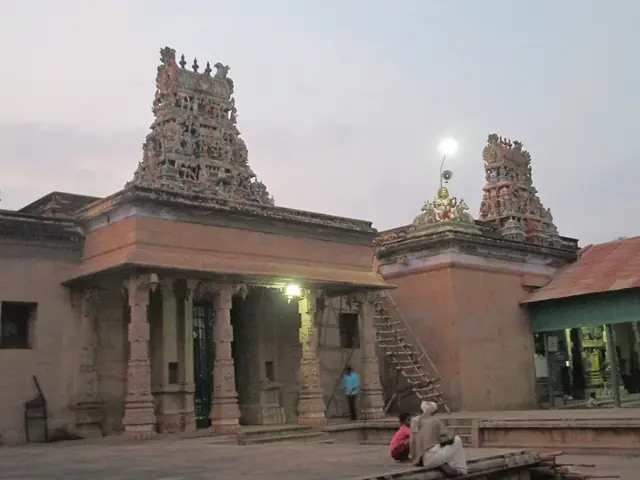
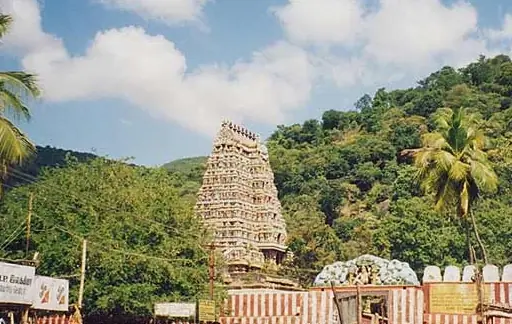
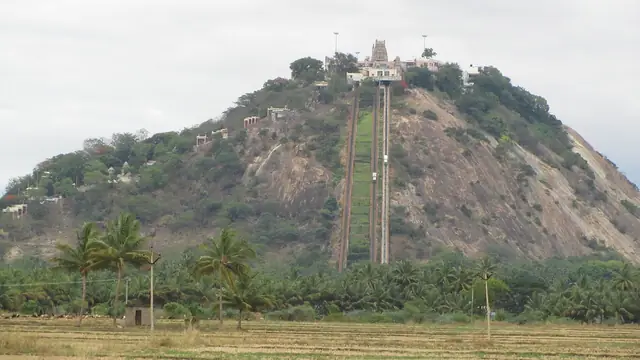
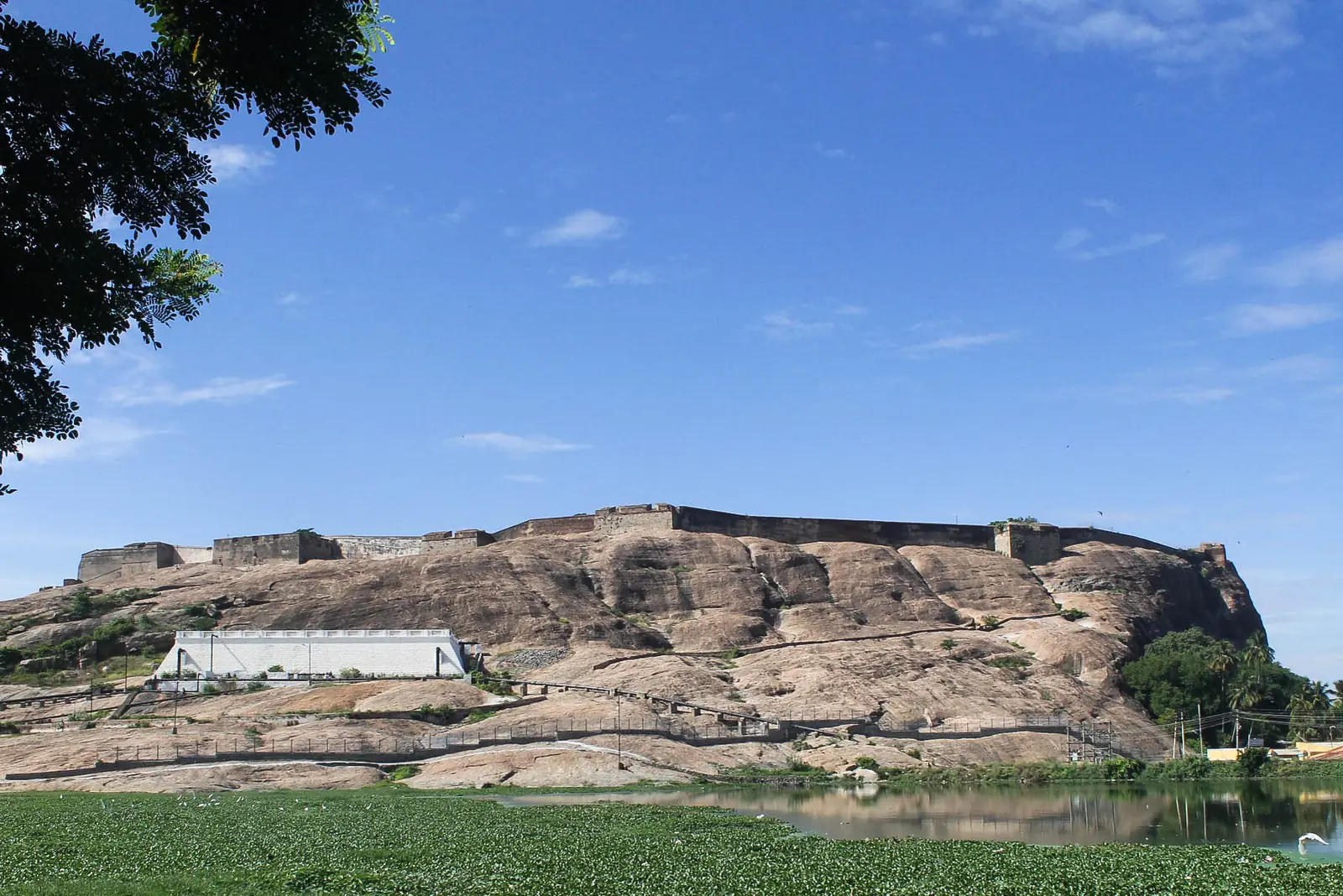
Dindigul sits where the roads from the Kongu country and Mysore come down into the Madurai plain, so whoever held the rock held the gate. Muthu Krishnappa Nayaka fortified the summit in 1605, with a second line of walls at the foot. Tirumala Nayaka kept it strong. In 1742 a Mysore army took it, and from 1755 Hyder Ali governed the Dindigul country before he became master of Mysore itself. On the top stands a temple to Abhirami and Padmagirishwarar, its carved pillars still sharp, though no worship is held there now; below are the magazines, cells and cisterns the later garrisons cut and built into the rock.
02Velu Nachiyar’s refuge
When the Company and the Nawab of Arcot killed the Raja of Sivaganga at Kalaiyar Kovil in 1772, Rani Velu Nachiyar fled with her daughter to Virupachi in the Dindigul hills. The poligar Gopala Nayakar sheltered her there with Hyder Ali’s leave, and for eight years she gathered men with the Marudhu brothers until, in 1780, she marched back and took Sivaganga. The Company wanted Dindigul too. James Stuart took the fort in 1790, Tipu Sultan ceded the district by the treaty of 1792, and a British garrison held the rock until the 1850s. The ASI now protects it.
The life of this place
- 1605Muthu Krishnappa Nayaka builds the hill fort.
- 1742A Mysore army takes Dindigul.
- 1772–80Rani Velu Nachiyar shelters at Virupachi in the Dindigul hills.
- 1790James Stuart takes the fort for the Company.
- 1792Tipu Sultan cedes Dindigul by treaty.
A short, steep climb from the town; go early, before the rock heats up.