01Madhavdev’s satra
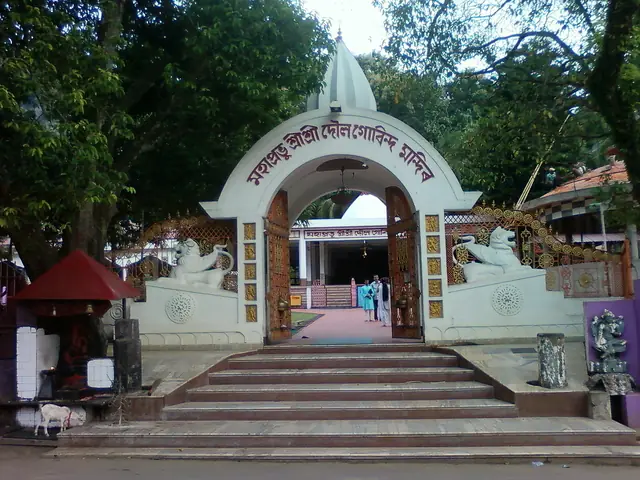
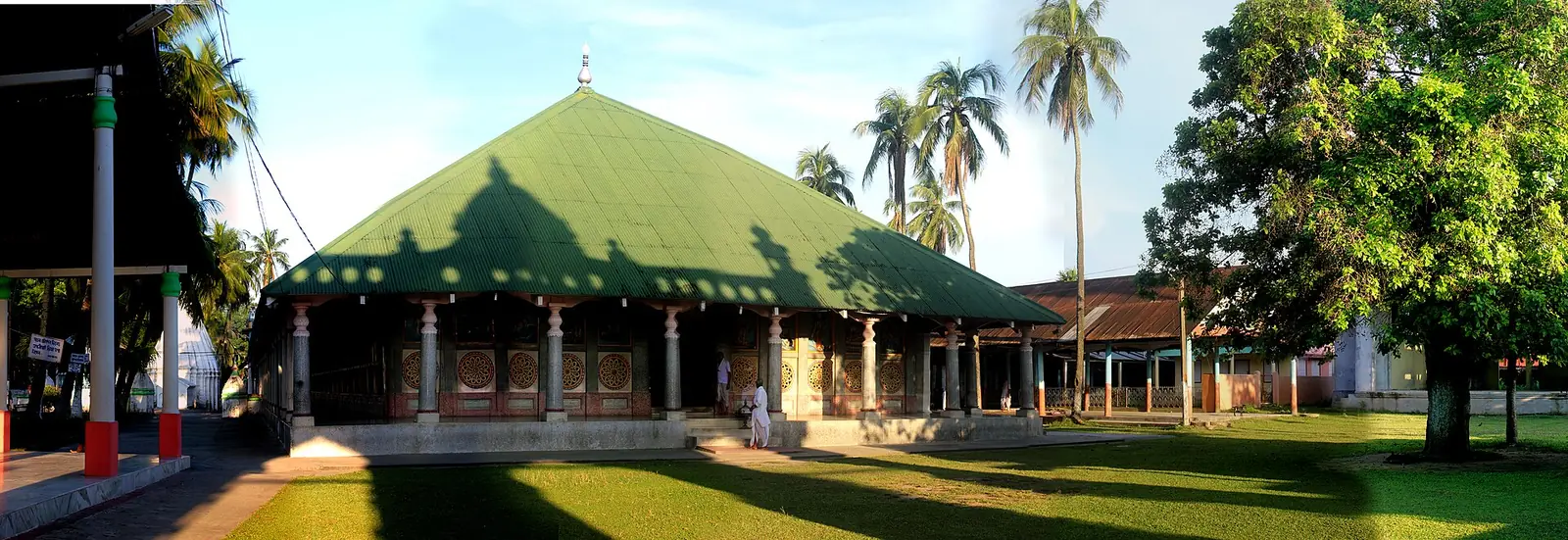
After Sankardev passed away at Cooch Behar in 1568, Madhavdev carried the Ekasarana Nama Dharma, devotion to one Lord through his Name, back into the Brahmaputra valley. At Barpeta, with the help of the devotee Mathuradas Burha Ata, he set up a kirtanghar and a satra in 1583. Mathuradas became its first satradhikar and drew up the rules by which it is still run: a council of devotees, a fixed order of daily prayer services, and duties for every family of the town. Madhavdev composed many of his Borgeets, the great songs of the tradition, and the Namghosha in these years.
02The lamp that has not gone out
In the Barpeta kirtanghar there is no murti in the sanctum; in its place stands a guru asana, a carved throne holding the Bhagavata, before which lamps burn. Devotees say one lamp, the Akhay Banti, has been kept alight since Madhavdev’s day. Prayers, nam-prasanga, are sung through the day in a fixed order. At Doul, in the month of Phagun, the festival runs for several days with colours, songs and processions of the murti of Krishna, and the whole town takes part. The satra also preserves old manuscripts, masks and the instruments of the bhaona plays.
The life of this place
- 1568Sankardev passes away at Cooch Behar; Madhavdev succeeds him.
- 1583Madhavdev founds the Barpeta satra and kirtanghar.
Barpeta is about 100 km west of Guwahati. Come at Doul (Holi) for the festival, or at dusk for the evening nam-prasanga.