01The king who wrote plays
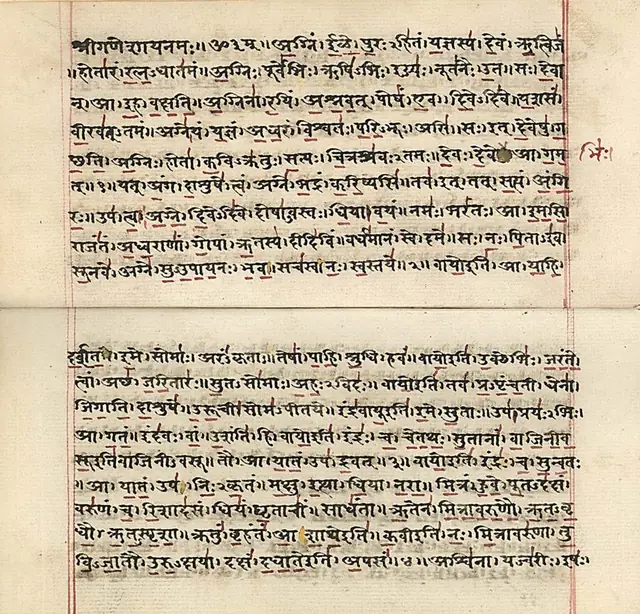
Vigraharaja IV, called Visaladeva, ruled the Chahamana kingdom from Ajmer in the 1150s and 1160s and pushed its frontier to Delhi. He wrote Sanskrit himself. His play Harakeli Nataka retells the contest of Arjuna and Bhagwan Shiva in the guise of a Kirata, and his court poet Somadeva wrote the Lalitavigraharaja Nataka in his praise. Both were cut into black stone slabs and set up in his college at Ajmer. Fragments of these slabs, the Harakeli dated 1153 CE, were recovered from the walls of the mosque and are kept today in the Ajmer government museum.
02Pillars stacked three high
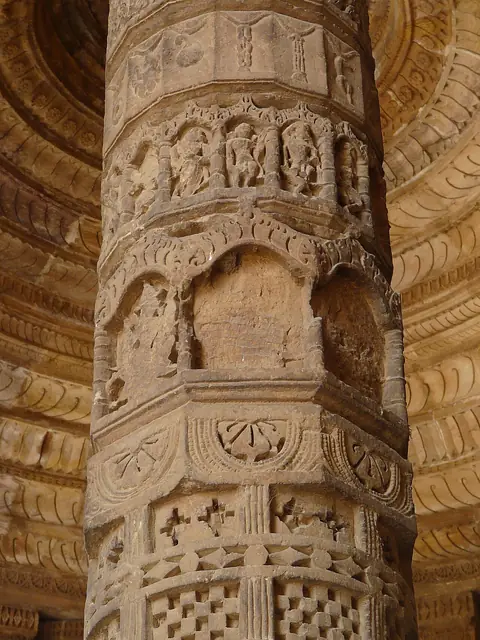
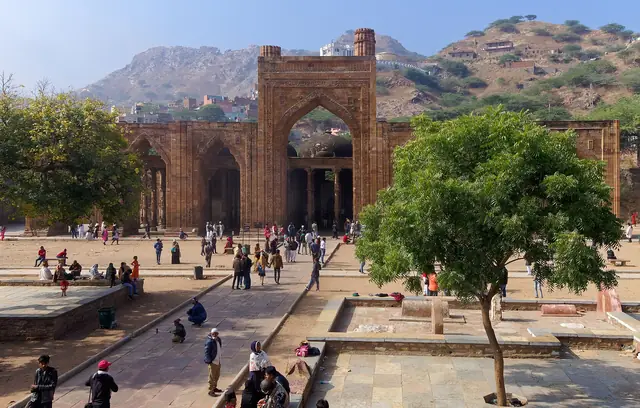
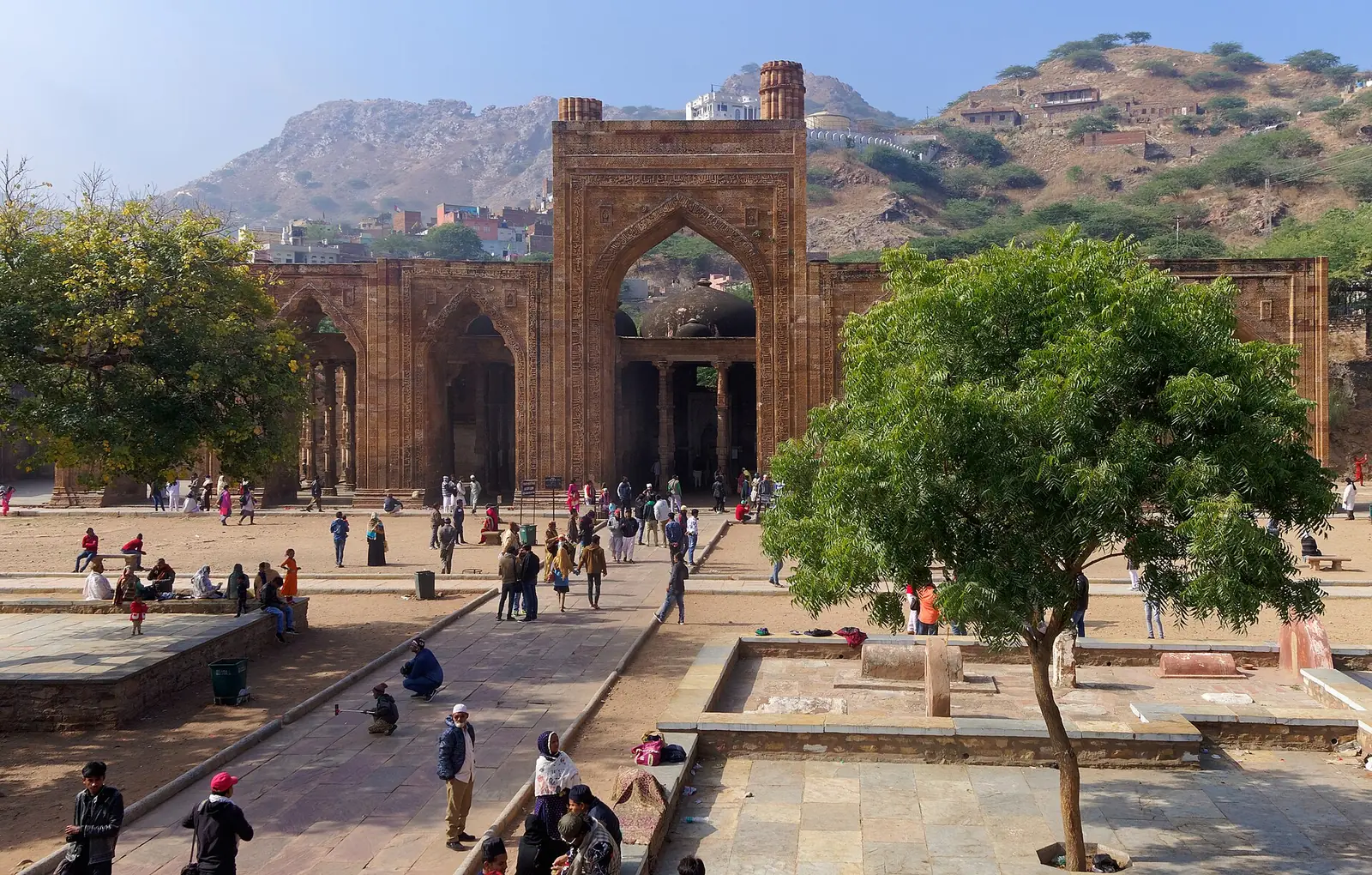
After Prithviraj III fell at Tarain in 1192, Ajmer passed to Muhammad Ghuri, and his general Qutb ud-din Aibak raised a mosque here. Its builders took carved temple pillars and stacked them, three on top of one another, to get the height of the prayer hall; the bells, chains and kirttimukha faces on the shafts are still plain to see, though many figures were chiselled off. Under Iltutmish a tall arched screen with Arabic lettering was set across the front. The name, a hut of two and a half days, is explained by a local tradition that it went up in that time, and by another that ties it to a fair once held here.
The life of this place
- 1153 CEDate on the Harakeli Nataka slabs of Vigraharaja IV, set up in his college at Ajmer.
- 1192Prithviraj III falls at the second battle of Tarain; Ajmer is taken and the mosque begun under Qutb ud-din Aibak.
- c. 1229The arched screen is added across the front under Sultan Iltutmish.
- 1875–76The inscribed play slabs are recovered from the structure and later moved to the Ajmer museum.
It stands a few minutes’ walk beyond the Ajmer Sharif dargah, up the lane towards Taragarh hill. The Harakeli slabs are in the Government Museum in Akbar’s palace, Ajmer.