01The pillars at Sondani
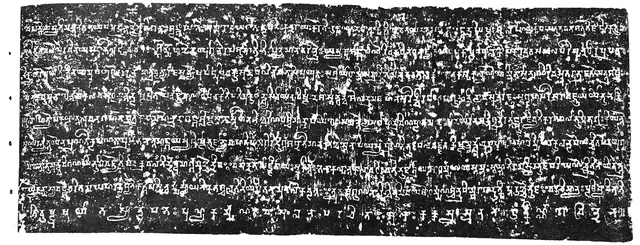
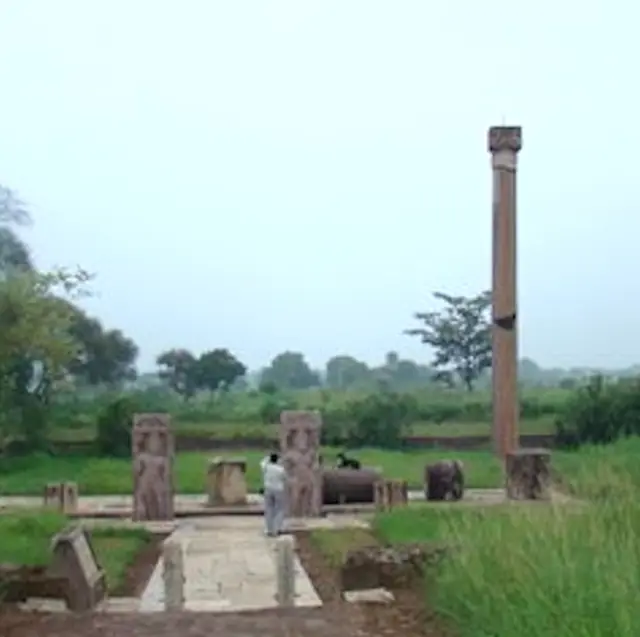
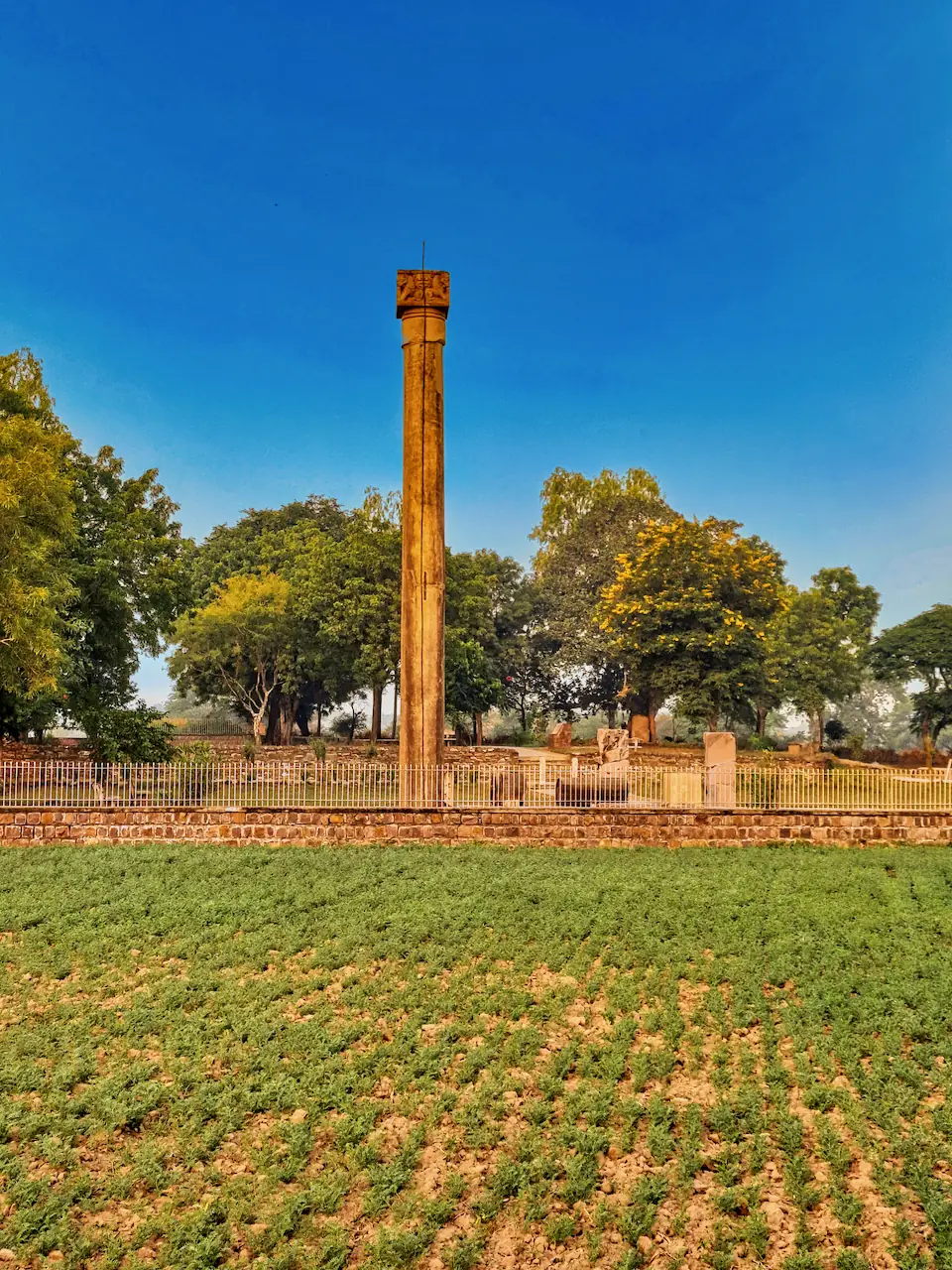
Two monolithic sandstone columns, each once about 12 metres high with a bell capital, lie in the fields at Sondani, a few kilometres from Mandsaur. One carries the inscription that names him. It says Yashodharman ruled lands the Guptas and even the Hunas had never held, from the Lauhitya river, the Brahmaputra, to the western ocean, and from the Himalaya to Mount Mahendra, and that the famous king Mihirakula, whose head had bowed to no one but Bhagwan Shiva, did homage at his feet.
02A dated stone and a short blaze
A second Mandsaur inscription, recording a well dug by a minister’s family, is dated Malava year 589, which is 532 CE, and names Yashodharman with the epithet Vishnuvardhana. Xuanzang credits the defeat of Mihirakula to the Gupta king Baladitya instead, and both may have fought him. No successor of Yashodharman is known; his power rose and vanished within one reign, but after him the Hunas never again held the heart of India.