01The signet ring
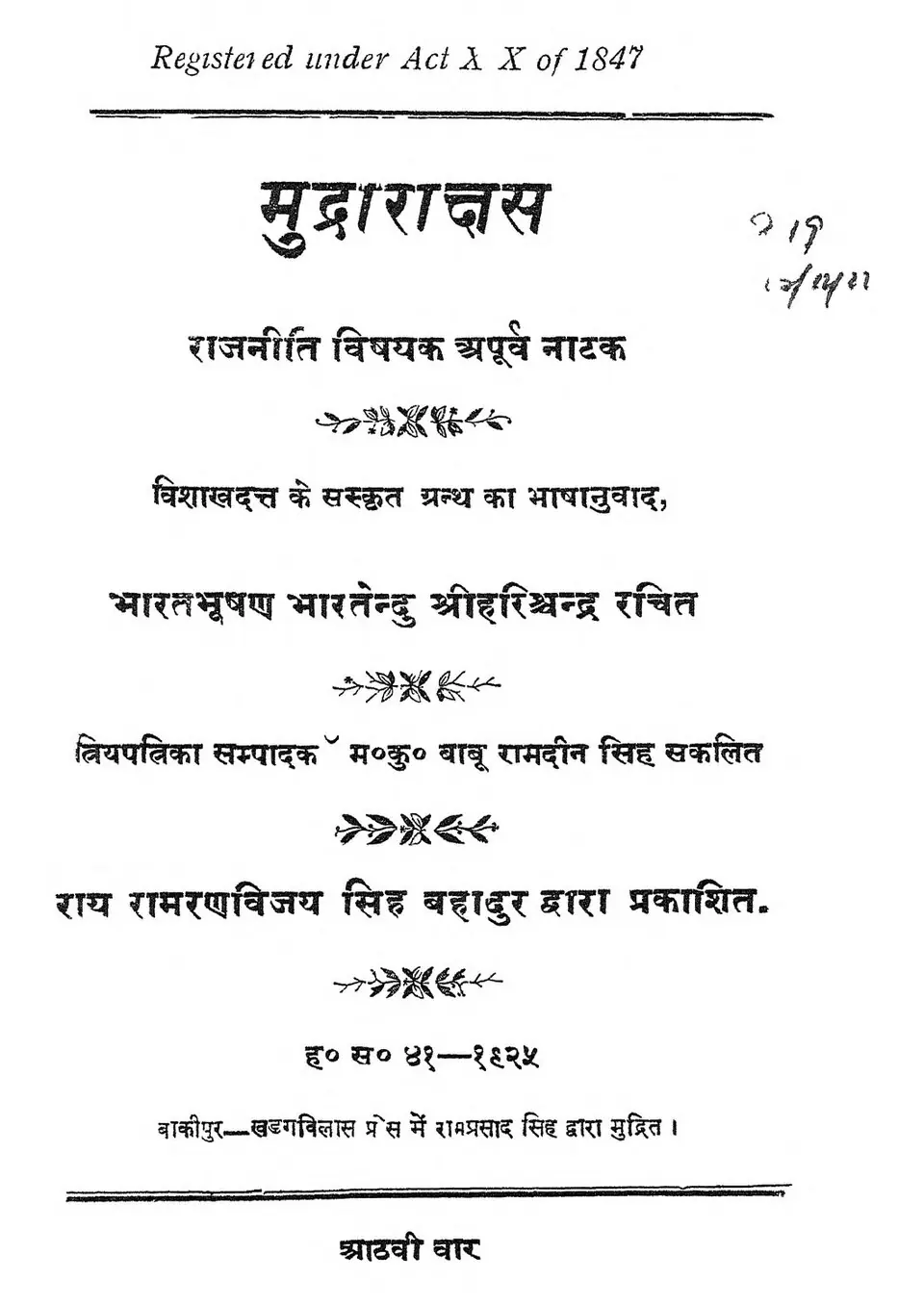
The prologue says the author was the son of Maharaja Bhaskaradatta and grandson of the samanta Vateshvaradatta, so he came of a family of rank. The Mudrarakshasa, in seven acts, has no love story at all, which is rare in Sanskrit drama. The Nandas are gone and Chandragupta is on the throne, but Rakshasa still plots for their cause. Chanakya does not want him dead; he wants him as minister. With spies, a forged letter sealed with Rakshasa’s own signet ring, the mudra of the title, and a friend’s life placed in danger, he leaves Rakshasa no honourable choice but to accept office under Chandragupta.
02Devichandraguptam and Ramagupta
His other play survives only in passages quoted by later critics, such as Ramachandra and Gunachandra in the Natyadarpana and Bhoja in the Shringaraprakasha. In it the weak king Ramagupta agrees to hand his queen Dhruvadevi to a Shaka king; his younger brother Chandragupta goes to the enemy camp disguised as the queen and kills the Shaka. Historians long doubted Ramagupta existed. Then copper coins bearing his name, and Jain image inscriptions from Durjanpur near Vidisha naming Maharajadhiraja Ramagupta, were found. Vishakhadatta’s own date is still argued, partly because manuscripts of the closing benediction name different kings.