
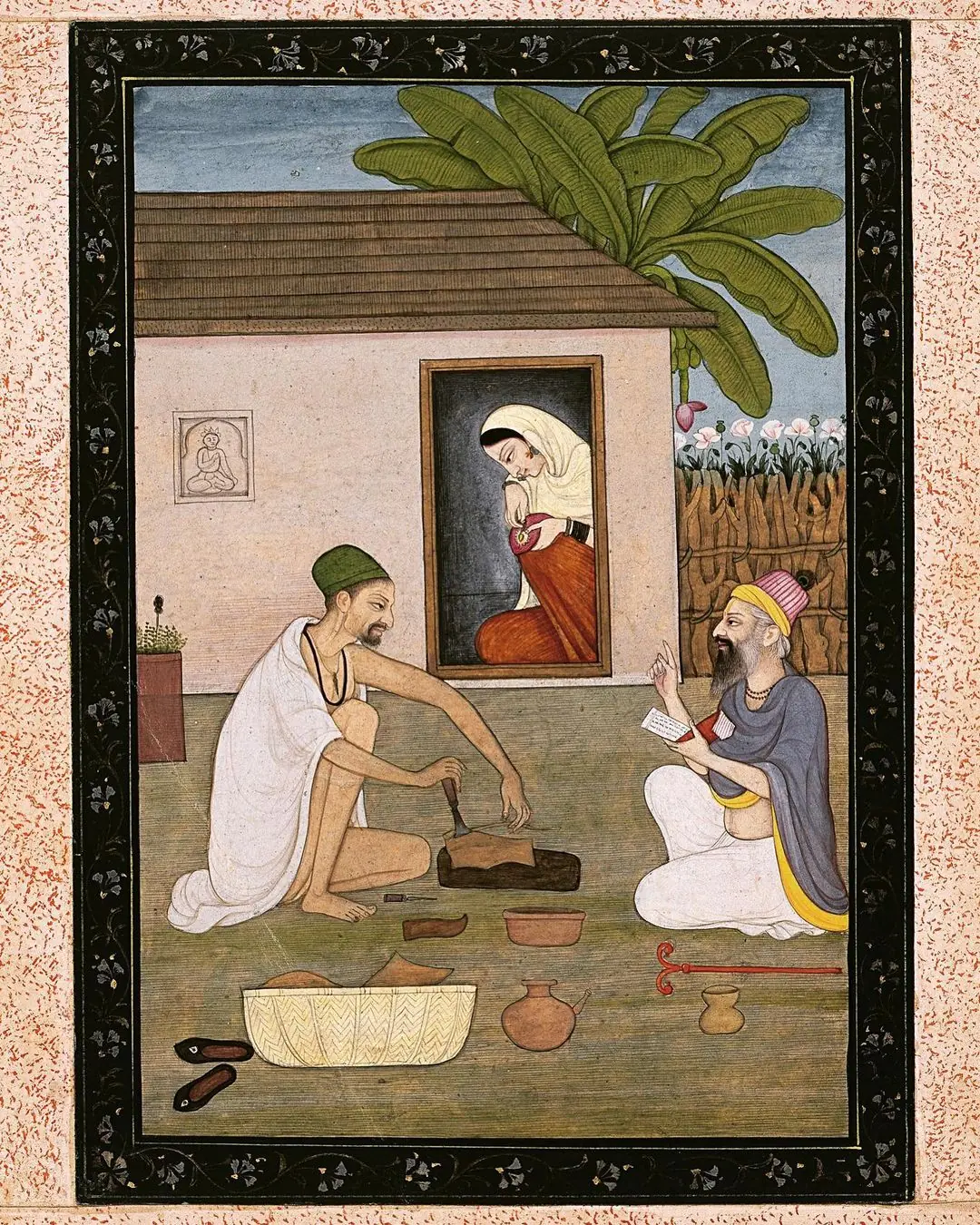
01The Ganga in a tanner’s bowl
He worked at mending shoes all his life and gave freely to sadhus. Tradition makes him a disciple of Swami Ramananda, like Kabir. The saying everyone in the Hindi lands knows, “man changa to kathauti mein Ganga”, if the mind is pure the Ganga is in the tanner’s water-bowl, comes from a katha about him: a Brahmin going to bathe in the Ganga offered to carry his gift, and the Mother herself is said to have reached out of the water for it. Meerabai and, by tradition, the queen Jhali of Chittor called him guru.
02Begampura
When Guru Arjan compiled the Adi Granth in 1604, he included forty shabads and one shalok of Ravidas. The best known is Begampura, the city without grief, where there is no tax and no fear, no second or third class, and all walk where they please. His followers, the Ravidassia, and devotees of every background gather at the Guru Ravidas Janmasthan temple at Seer Govardhanpur on Magha Purnima.
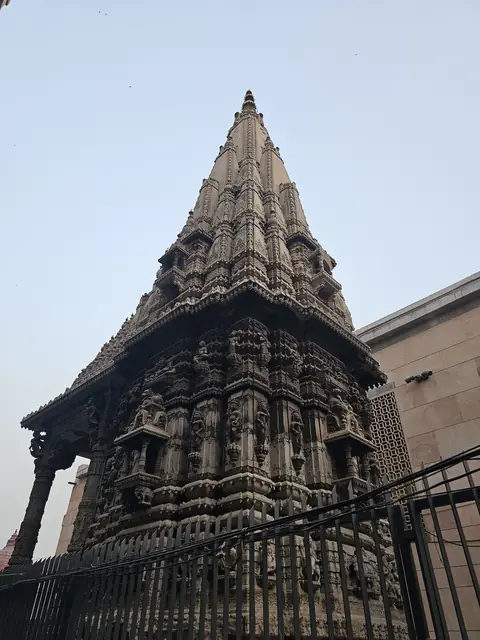
“Begampura, the city without sorrow, is its name; no grief or anxiety dwells in that place.”
Guru Granth Sahib, Raag Gauri, Ang 345 (Bhagat Ravidas)