
The Vaimanika Shastra was dictated by Pandit Subbaraya Shastry in the early 20th century and first printed in 1973. Aeronautical engineers at the Indian Institute of Science studied it in 1974 and found its craft could not fly.
The proof
- G. R. Josyer published the text with an English translation from Mysore in 1973.
- H. S. Mukunda and colleagues, "A critical study of the work Vyamanika Shastra", Scientific Opinion (1974), judged its designs unworkable.
01Keep the Itihasa apart
The Pushpaka vimana in which Shri Ram returned to Ayodhya belongs to the Ramayana, and devotees honour it as the Itihasa tells it. That is a different matter from a modern text that claims to be engineering. The Vaimanika Shastra names Maharshi Bharadvaja as its source, but no manuscript of it older than the 20th century has been found, and its machines fail every test of aerodynamics. Bharat’s real science, Aryabhata’s astronomy, Sushruta’s surgery, the Kerala school’s infinite series, is strong enough without it.
Read on
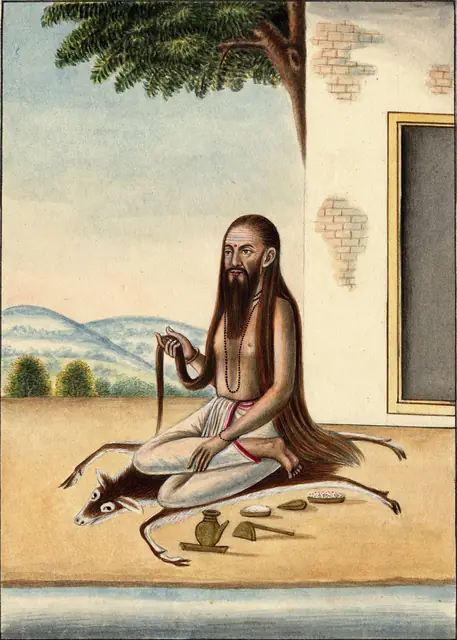
Maharshi Bharadvaja
Bharadvaja, son of Brihaspati and one of the Saptarishi, is the seer of the sixth Mandala of the Rigveda. His ashram at Prayag, where the Ganga and Yamuna meet, received Shri Rama on the way into exile.
Madhava of Sangamagrama
Madhava of Sangamagrama in Kerala found infinite series for π, sine, cosine and arctangent about 250 years before Gregory, Newton and Leibniz. He calculated π correct to eleven decimal places.
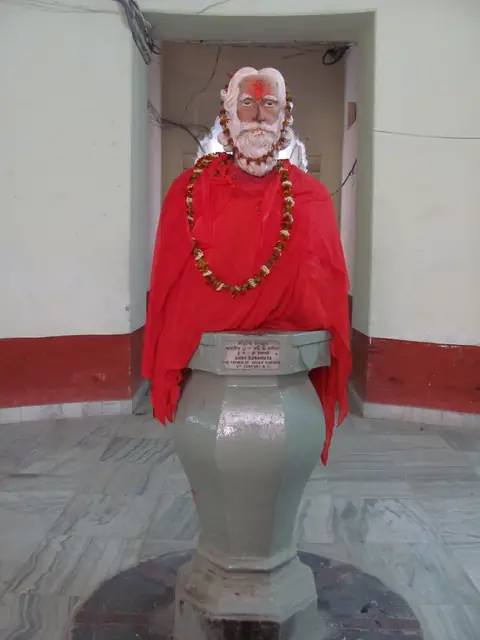
Acharya Sushruta
Sushruta learned surgery at Kashi from Divodasa Dhanvantari and set it down in the Sushruta Samhita. The work describes rebuilding a nose with a flap of living skin, couching of cataract, and over a hundred surgical instruments.