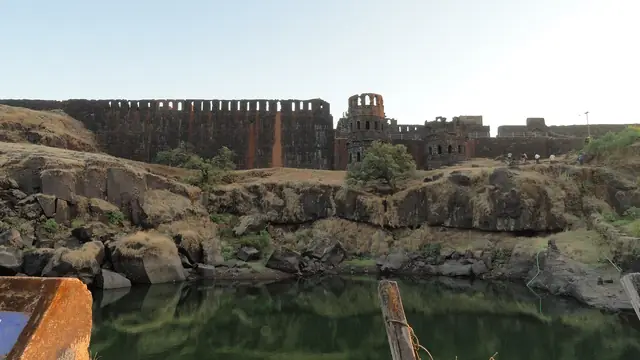
The Taj Mahal is the tomb Shah Jahan built for Mumtaz Mahal from 1632, on land he took from Raja Jai Singh of Amber in exchange for other property. No record of a temple on the site has ever been produced.
The proof
- Mumtaz Mahal died at Burhanpur in June 1631; work on the tomb at Agra began in 1632.
- Abdul Hamid Lahori’s Badshahnama, the court chronicle, says the site was a mansion of Raja Man Singh, then held by his grandson Jai Singh, who gave it in exchange for a royal property.
- Shah Jahan’s farmans to Jai Singh asking for Makrana marble survive in the Jaipur City Palace archive.
- In July 2000 the Supreme Court dismissed P. N. Oak’s petition to declare the Taj a Hindu building.
01Where the idea came from
The Tejo Mahalaya story comes from P. N. Oak, whose book Taj Mahal: The True Story (1989) argued that a Rajput palace-temple stood there first and Shah Jahan only dressed it up. Oak never produced an inscription, a grant, a temple record or a pre-1632 drawing of such a building. There is a true kernel that the story twists. The land did belong to a Hindu family, the Kachhwahas of Amber, and the Mughal chronicle says so openly. It was a haveli, a residence. The marble tomb that stands on it was raised by Shah Jahan’s workmen over some two decades.
02Why it matters to get this right
Bharat has a long, documented record of temples that really were pulled down, at Kashi, Mathura, Somnath and Martand, written down by the chroniclers who reported them. Each false claim like Tejo Mahalaya makes the true ones easier to wave away. Honour the real losses by naming them with their sources, and let the Taj be what its own papers say it is: a Mughal tomb built on a Kachhwaha mansion bought by exchange.
Read on
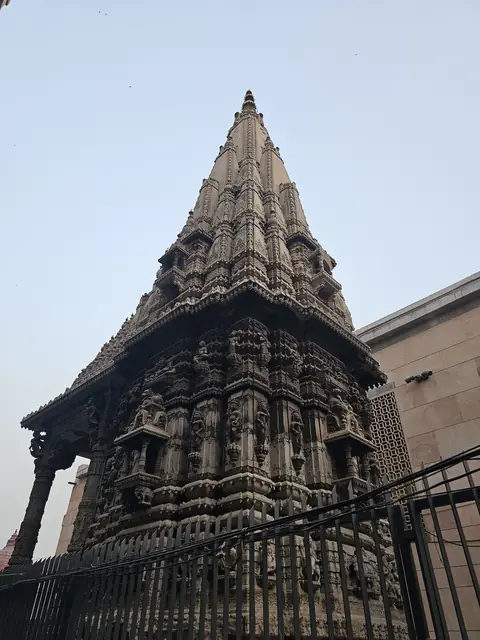
Kashi Vishwanath
The Jyotirlinga of Kashi, the city Shiva never leaves, where death on the ghats is said to bring moksha. The temple was destroyed in 1194 and 1669 and stands today beside the mosque built on its old plinth.
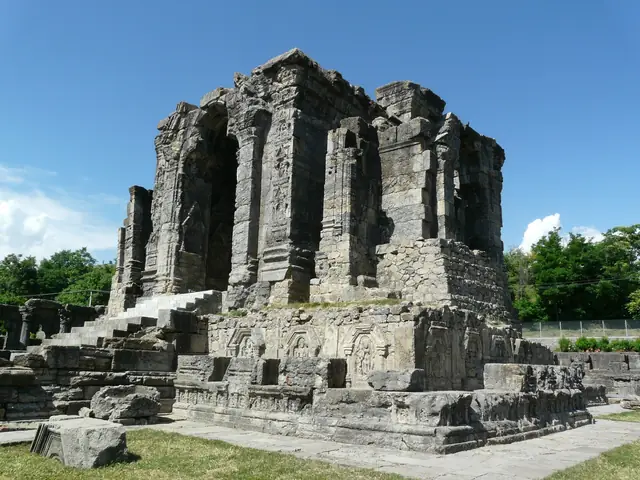
Martand Sun Temple
The great Surya temple of Kashmir on the Mattan plateau, built by the Karkota emperor Lalitaditya Muktapida and destroyed on the orders of Sultan Sikandar in the late 14th or early 15th century.