
The Koh-i-Noor was surrendered under Article III of the Treaty of Lahore of 29 March 1849, imposed on the ten-year-old Maharaja Duleep Singh after the British defeated the Sikh army and annexed Punjab.
The proof
- Treaty of Lahore, 1849, Article III: the gem called the Koh-i-Noor, taken from Shah Shuja by Maharaja Ranjit Singh, shall be surrendered by the Maharaja of Lahore to the Queen of England.
- It was presented to Queen Victoria in July 1850 and cut down in 1852 from about 186 carats to about 105.6.
01A child signs away a jewel
Duleep Singh was a boy when Lord Dalhousie’s treaty was put before his council after the second Anglo-Sikh war. The same treaty took his kingdom. He was later sent to England, and his mother Rani Jind Kaur was kept from him for years. A gift is given freely by someone free to refuse. That was not the case at Lahore in 1849.
Read on
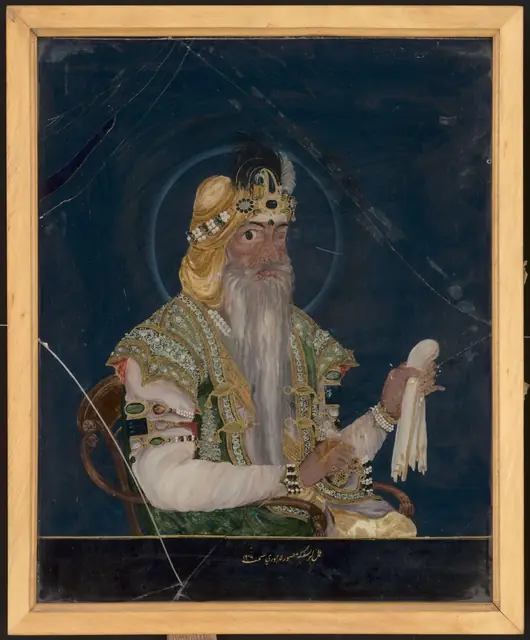
The Sikh Empire (Sarkar-i-Khalsa)
Ranjit Singh took Lahore in 1799 and was proclaimed Maharaja of the Punjab in 1801. He united the Sikh misls into one state, pushed the Afghans back beyond the Khyber, and built the last great Indian army to face the British; ten years after his death the empire was annexed in 1849.
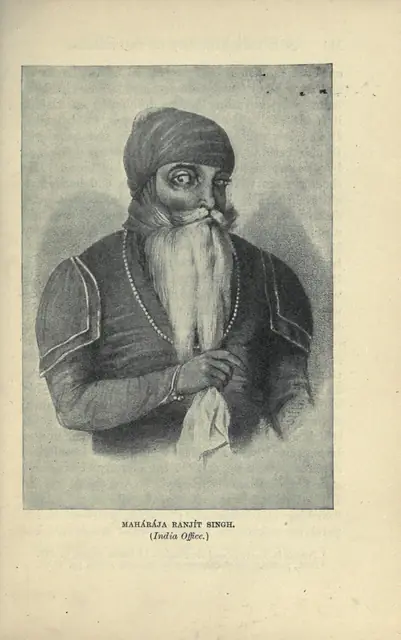
Maharaja Ranjit Singh
A misl chief’s son who lost an eye to smallpox as a child, Ranjit Singh took Lahore in 1799 and made one kingdom out of the Punjab, Multan, Kashmir and Peshawar. He covered the Harmandir Sahib in gilded copper and held the Khyber against the Afghans for forty years.
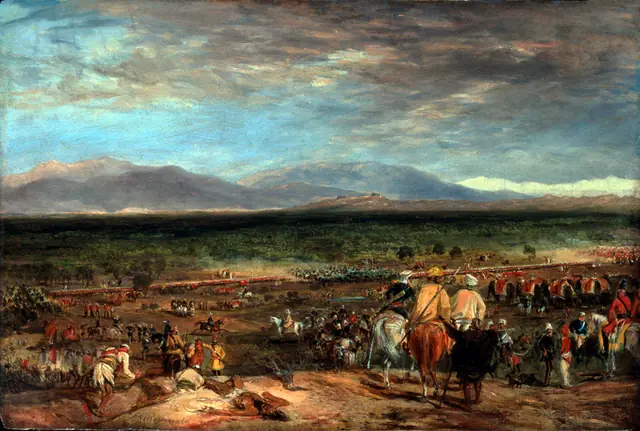
Second Anglo-Sikh War
A rising at Multan in April 1848 grew into a second war; at Chillianwala the Khalsa gave the Company one of its bloodiest days in India, but Gujrat ended the Sikh empire.