The pillar resists rust remarkably well, and the reason has been worked out: its iron is rich in phosphorus and was made by forge-welding lumps of bloomery iron, which lets a thin protective film form on the surface. It is a real achievement of Gupta-era smiths, and it is known, not lost.
The proof
- The pillar stands about 7.2 m high and weighs about 6 tonnes; its inscription names King Chandra, generally identified with Chandragupta II.
- R. Balasubramaniam of IIT Kanpur showed in Corrosion Science (2000) that its high phosphorus content helps a protective layer (misawite) form.
01Rust-resistant, not rust-proof
Look closely and you will see some rust, especially near the base, which was once buried and where visitors used to hug the pillar. The surface everywhere else carries a dark, thin film that slows further corrosion. Metallurgists who studied it found the smiths worked bloomery iron, heated and hammered piece by piece, leaving slag particles and phosphorus in the metal. Delhi’s fairly dry air helps too. The phrase "lost secret" undersells the smiths. Their method can be described in a laboratory report today, and that is the stronger claim.
Read on
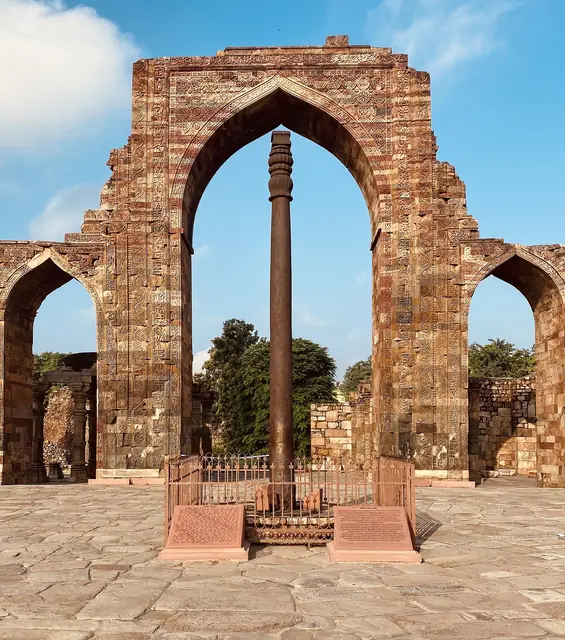
Iron pillar of Delhi
A 7.2-metre wrought-iron column of about six tonnes, forged as a dhvaja of Vishnu and still almost free of rust after sixteen centuries.
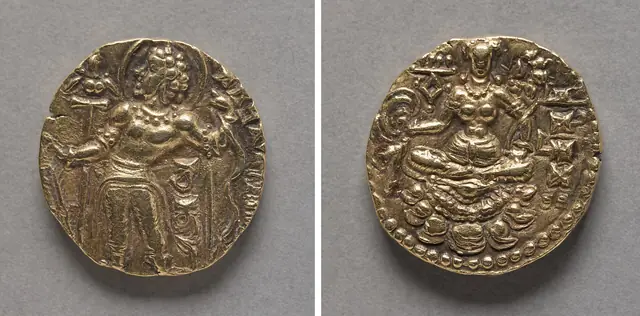
Chandragupta II Vikramaditya
Chandragupta II ended three centuries of Shaka rule in Malwa and Gujarat, brought the western ports into the Gupta realm and took the title Vikramaditya. His reign is the high noon of the Gupta age that Faxian walked through.