
From the 1560s Akbar lifted the pilgrim tax and the jizya and later let Hindu nobles build great temples. But his own victory letter after Chittor in 1568 calls the war a holy war against infidels, and the massacre there is recorded by his own historian.
The proof
- Abul Fazl’s Akbarnama records the end of the pilgrim tax (1563) and of the jizya (1564).
- The Fathnama of Chittor, issued from Ajmer in March 1568 and preserved in the Munshat-i-Namakin, frames the siege as jihad, cites the Quran’s verses of holy war and calls the defenders infidels.
- The Akbarnama puts the dead at Chittor after its fall at about 30,000.
- Raja Man Singh built the Govind Dev temple at Vrindavan in 1590, in Akbar’s reign.
01Two Akbars in one record
Both pictures come from Mughal papers, and both are true at different times. The young Akbar who stormed Chittor in 1567–68 wrote like any conquering sultan of his day. The older Akbar debated with pandits, Jain munis and Jesuits at the Ibadat Khana, married Rajput princesses without forcing conversion, and made Rajput rajas pillars of his empire. His Din-i-Ilahi of 1582 was a small circle of courtiers around the emperor, with Birbal the one Hindu among its named members, and it ended with him.
02Read Mewar alongside
The fairest way to judge Akbar is from both sides of the wall. Inside Chittor in 1568, Jaimal Rathore and Patta Sisodia fell defending the fort and the women performed jauhar. Maharana Pratap refused Akbar’s terms for the rest of his life, fought at Haldighati in 1576 and won back most of Mewar by the time he died in 1597. A ruler can be tolerant in policy and ruthless in conquest at once. Akbar was both.
Read on
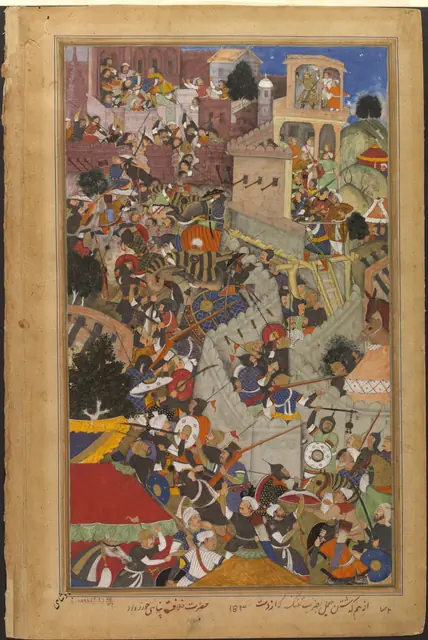
Third siege of Chittorgarh
Rana Udai Singh withdrew to the hills and left Chittor in the hands of Jaimal and Patta. Akbar besieged it himself for four months with mines and covered approaches.
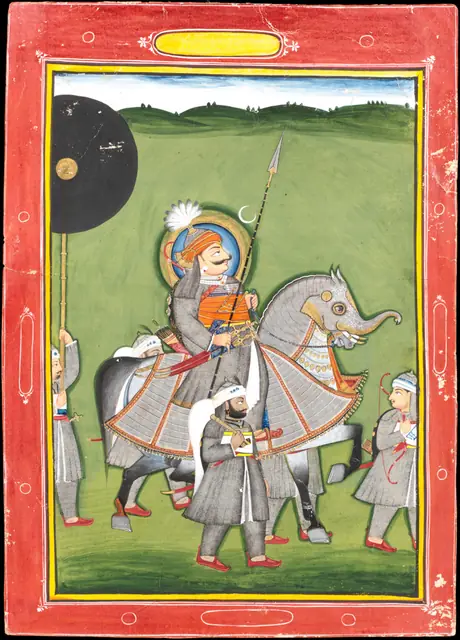
Maharana Pratap
Pratap Singh refused every Mughal embassy, fought Man Singh’s army at Haldighati on 18 June 1576, and spent the next twenty years winning Mewar back from the hills; by his death at Chavand in 1597 only Chittor and Mandalgarh remained in Mughal hands.
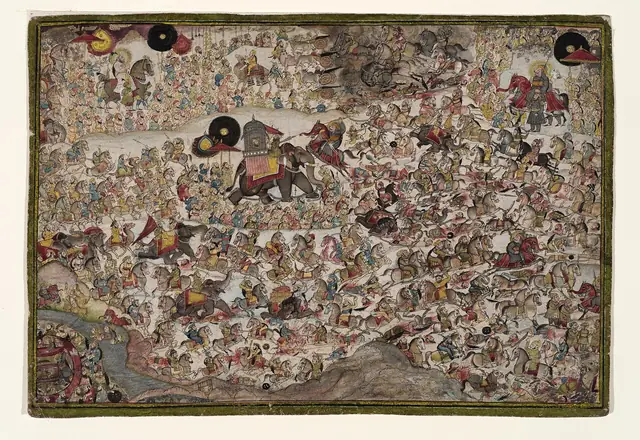
Battle of Haldighati
Akbar sent Man Singh with a large army to bring Maharana Pratap to submission. They met at the mouth of the yellow-earthed Haldighati pass.
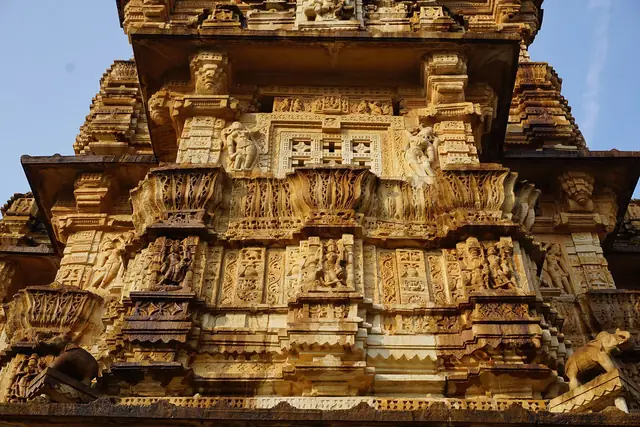
Chittorgarh
The hill fortress of Mewar, 180 m above the plain and some 13 km round. It was besieged and taken three times, in 1303, 1535 and 1568, and each time the women chose jauhar. The Vijay Stambh still stands over it.
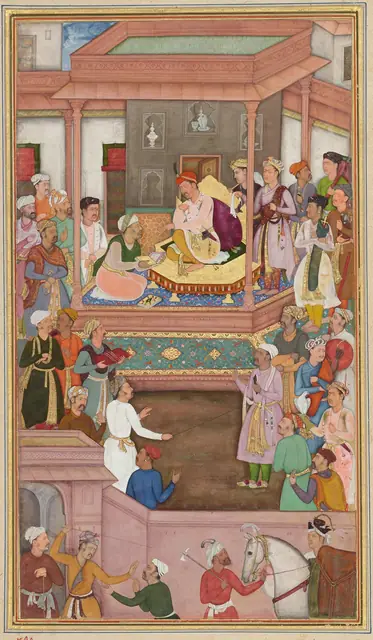
Ain-i-Akbari of Abul Fazl
A gazetteer of Akbar’s empire: its provinces, revenue, army, mints, prices and peoples.