
Kerala
Kerala and Tulu Nadu · 8th century to today
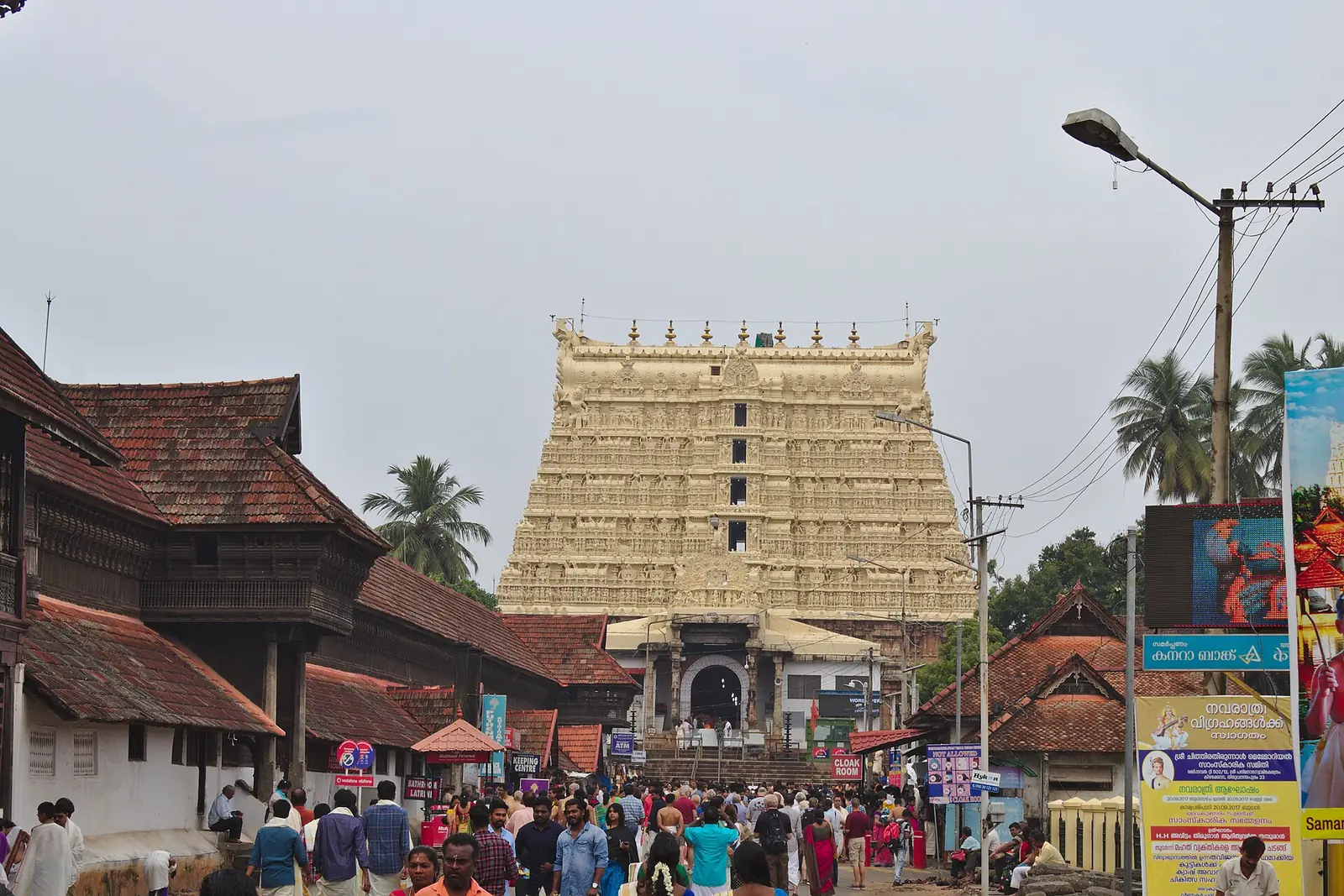
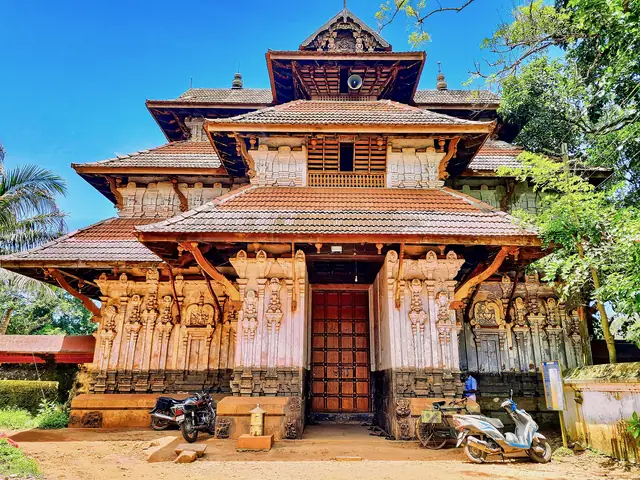
Kerala’s heavy rain shaped its temples. The sanctum, the sreekovil, is often round or apsidal as well as square, and it is roofed with timber and sheathed in copper sheets under steep, sloping eaves, sometimes in two tiers. Around it runs the nalambalam, a low cloistered building enclosing the inner court, and in front stands the namaskara mandapam, a square pavilion where the priests chant. Outside are the balikkal, the great balipitha, and the tall kodimaram, the flagstaff. Walls of laterite are plastered and, in many temples, painted with murals; Vaikom, Ettumanoor and the Padmanabhaswamy are famous for them.
The Tantrasamuccaya of Chennas Narayanan Namboodiripad, composed in the 15th century, governs both the rituals and the building rules in Kerala’s temples, and each temple has its hereditary tantri family. Many great temples are counted among the Divya Desams or sung in the Tevaram: Thiruvananthapuram, Thiruvalla, Aranmula and Thiruvanchikulam among them. Non-Hindus are not admitted in most old Kerala temples, and men enter bare-chested.
How to recognise it
- Round, apsidal or square sreekovil
- Timber roofs sheathed in copper, steep eaves
- Nalambalam cloister and namaskara mandapam
- Murals on plastered walls
- Rites by the Tantrasamuccaya
Great examples
 Rebuilt
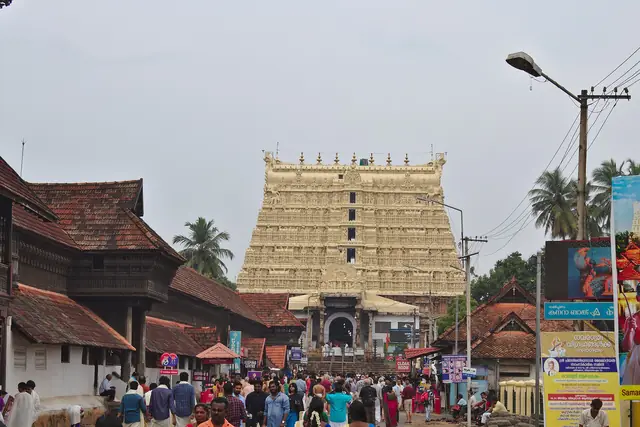
Sree Padmanabhaswamy Temple, Thiruvananthapuram
One of the 108 Divya Desams, sung by Nammalvar, where Bhagwan Vishnu lies on Ananta with a lotus rising from his navel. In 1750 Marthanda Varma laid his sword before the deity and the kings of Travancore ruled thereafter as Padmanabhadasa, servants of Padmanabha.
 Rebuilt
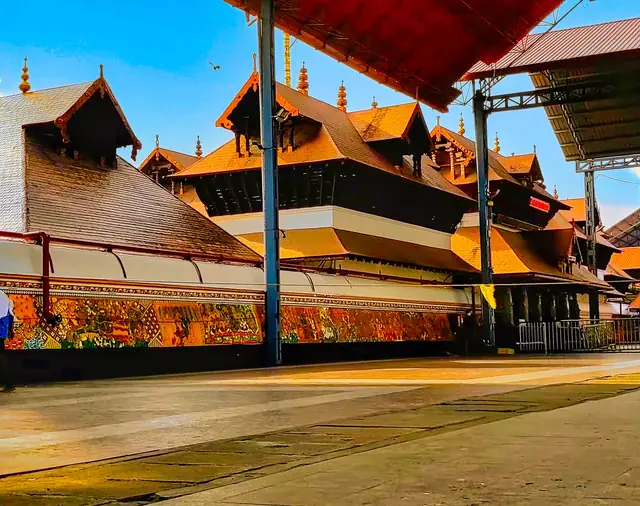
Guruvayur Sri Krishna Temple
The four-armed Vishnu of Guruvayur is worshipped as the child Krishna, and the temple is called the Dwarka of the south. Here Melpathur Narayana Bhattathiri finished the Narayaniyam in 1586.
 Standing
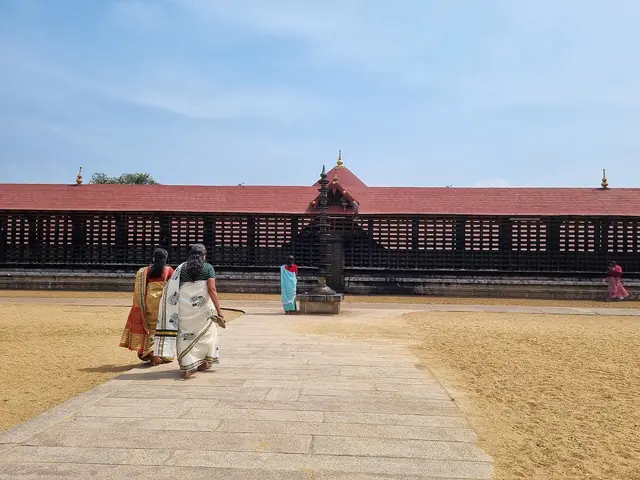
Vaikom Mahadeva Temple
A great Shiva temple on the shore of Vembanad lake, famous for its feeding of pilgrims and for Vaikom Ashtami. The satyagraha of 1924–25 over the roads around it led, in 1936, to every Hindu in Travancore gaining entry to its temples.
 Standing
Thiruvanchikulam Mahadeva Temple
The only temple in Kerala sung in the Tevaram. From here, the Periya Puranam says, Sundaramurti Nayanar rose to Kailash on a white elephant, with his friend King Cheraman Perumal riding after him.
 Rebuilt
Sabarimala Sree Dharma Sastha Temple
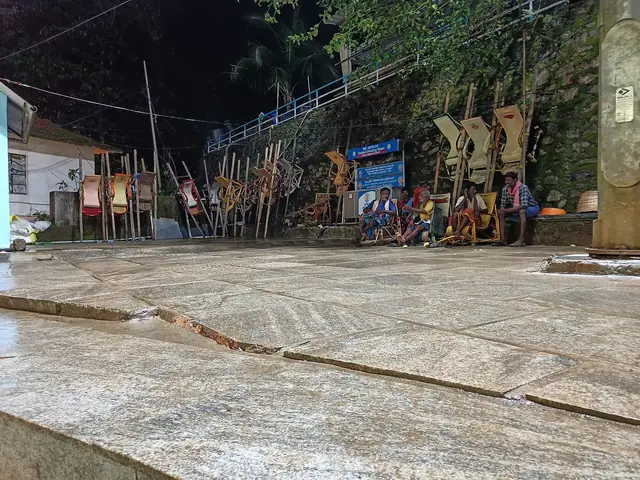
A forest shrine on a hill in the Periyar reserve, reached on foot after a 41-day vrata. Crores of pilgrims climb its eighteen holy steps each season, each calling the other ‘Swami’.