
Early temples: Gupta and Vakataka
Central India and the Ganga plain · 4th–6th century
The first free-standing stone temples of Bharat that still stand were built under the Guptas. They are small: a flat-roofed square cell with a pillared porch, as in Temple 17 at Sanchi of the early 5th century, or the Parvati temple at Nachna. The doorway is already the place of richest carving, with Ganga and Yamuna on the jambs, a form every later northern temple kept.
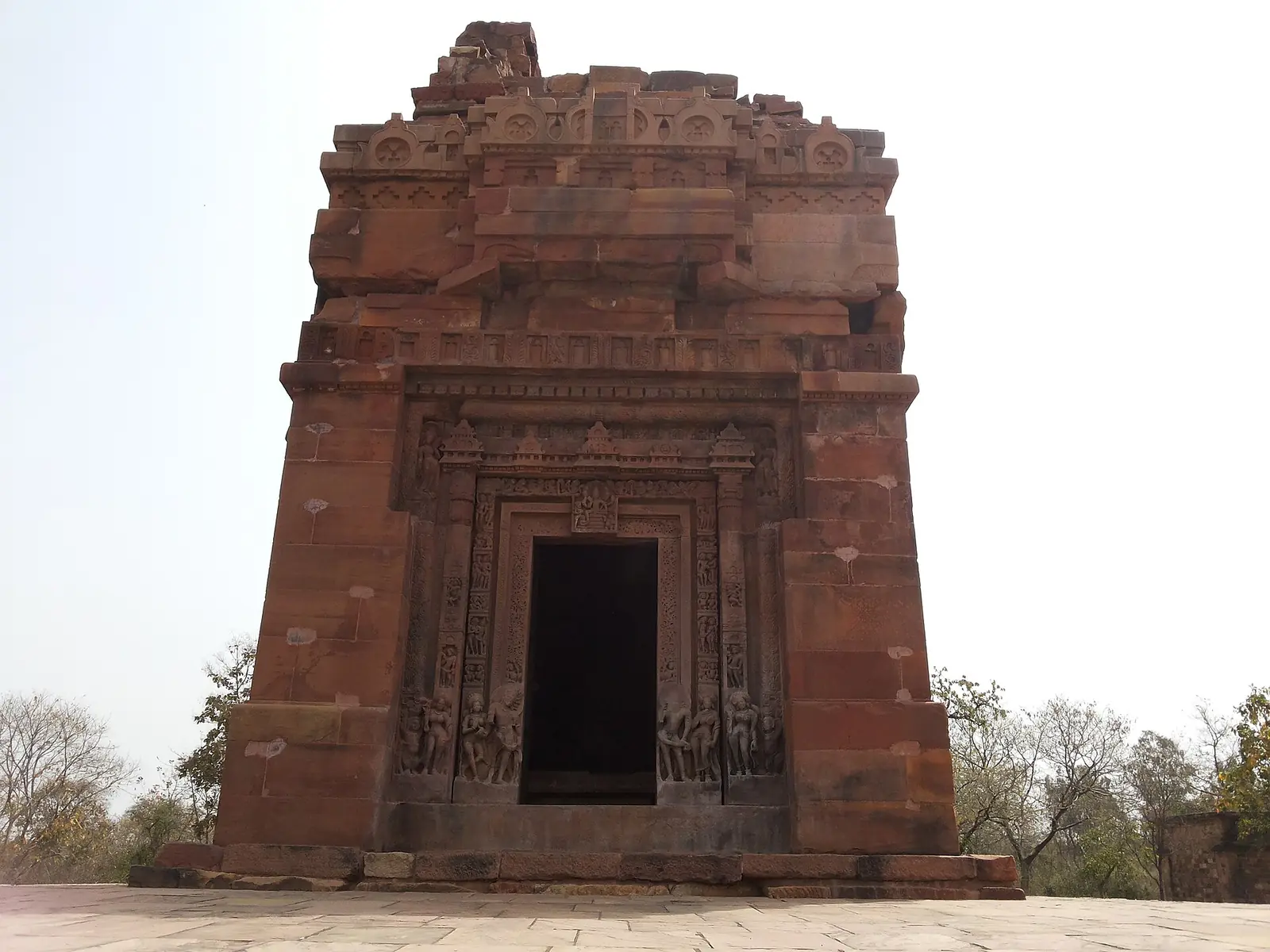
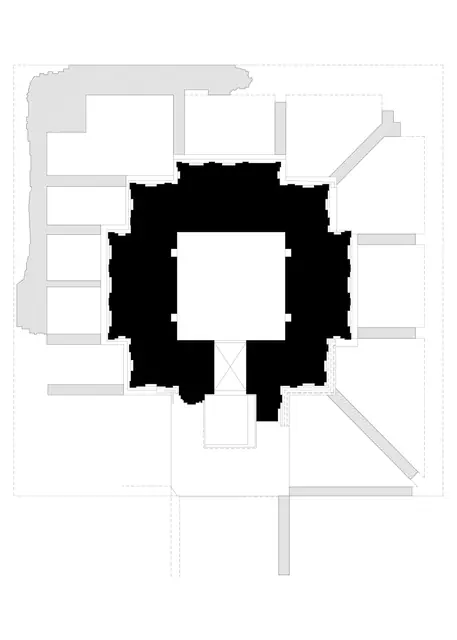
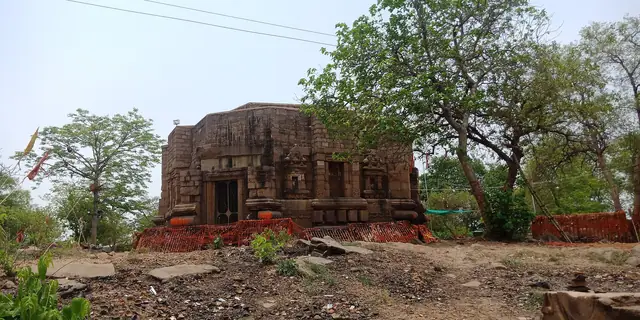
Around 500 CE the tower appears. The Dashavatara temple at Deogarh stands on a raised plinth with steps on all four sides and carries panels of Vishnu on Shesha, Gajendra Moksha and Nara-Narayana; its tower has fallen. The brick temple at Bhitargaon near Kanpur, of the 5th or 6th century, keeps its tall stepped tower and terracotta panels. At Mundeshwari in Bihar an octagonal shrine dated by an inscription to 636 CE (some read 108 CE) has been worshipped without a break.
How to recognise it
- Flat-roofed square cell with porch
- Richly carved doorway with Ganga and Yamuna
- First towers, on raised plinths
- Brick and terracotta in the Ganga plain
Great examples
 Standing
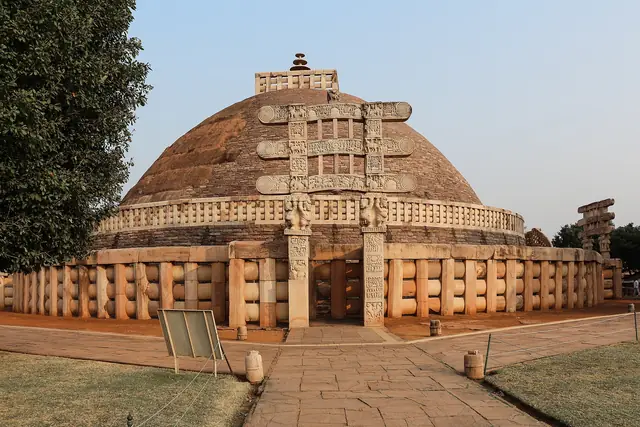
Sanchi
The Buddhist hill of Sanchi, a few km from Vidisha, with the Great Stupa begun by Ashoka and four carved gateways of the 1st century BCE. It is the most complete early Buddhist site in Bharat.
 Ruined
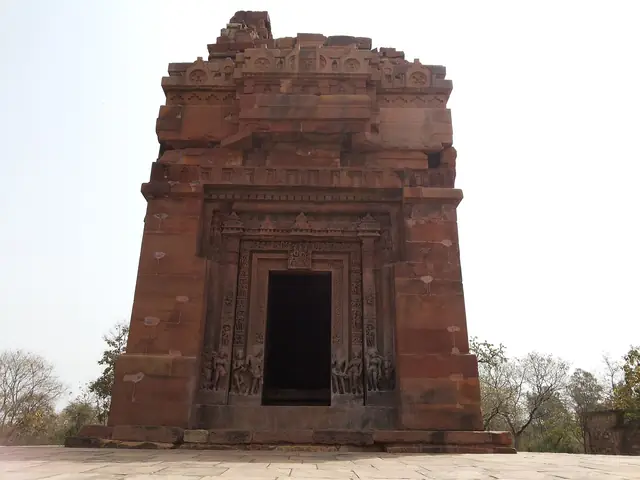
Dashavatara Temple, Deogarh
A Gupta stone temple of Vishnu on the Betwa, one of the earliest Hindu temples built to the panchayatana plan. Its three relief panels are among the masterpieces of Indian sculpture.
 Ruined
Bhitargaon Brick Temple
The oldest surviving brick temple of the Hindus with a tall shikhara, built under the Guptas and covered with terracotta panels.
 Standing
Mundeshwari Devi Temple
An octagonal stone temple on Pawra hill in Kaimur district, counted among the oldest temples in Bharat where worship has never stopped. Its Devi accepts a bloodless offering: the goat brought to her is released alive.
 Standing
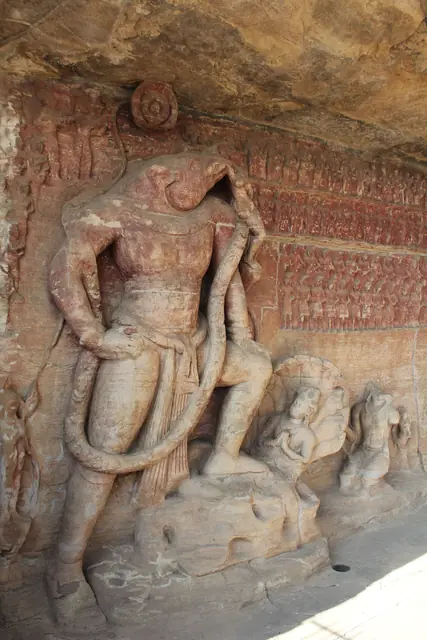
Udayagiri Caves, Vidisha
Twenty rock-cut shrines in a sandstone hill near Vidisha, the oldest securely dated Hindu cave temples. The great Varaha panel of Cave 5 shows Vishnu lifting Bhudevi out of the ocean.
 Excavated
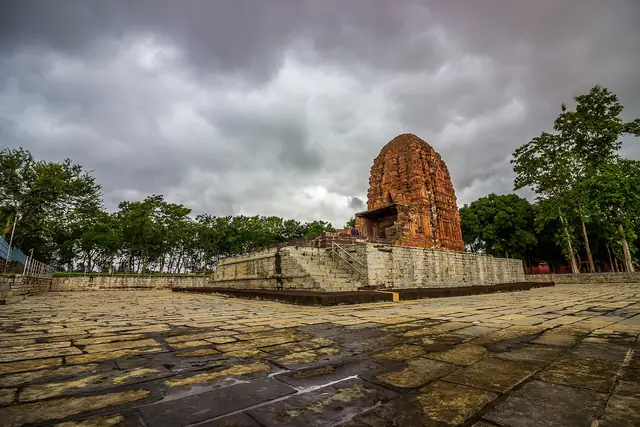
Sirpur (Shripura) and the Lakshmana Temple
Shripura on the Mahanadi, capital of Dakshina Kosala under the Panduvamshi kings. Its brick Lakshmana temple, raised by a widowed queen, is the finest brick temple surviving in India.