
Dravida
Tamil Nadu, Kerala’s eastern edge, south Karnataka and Andhra · 7th century to today
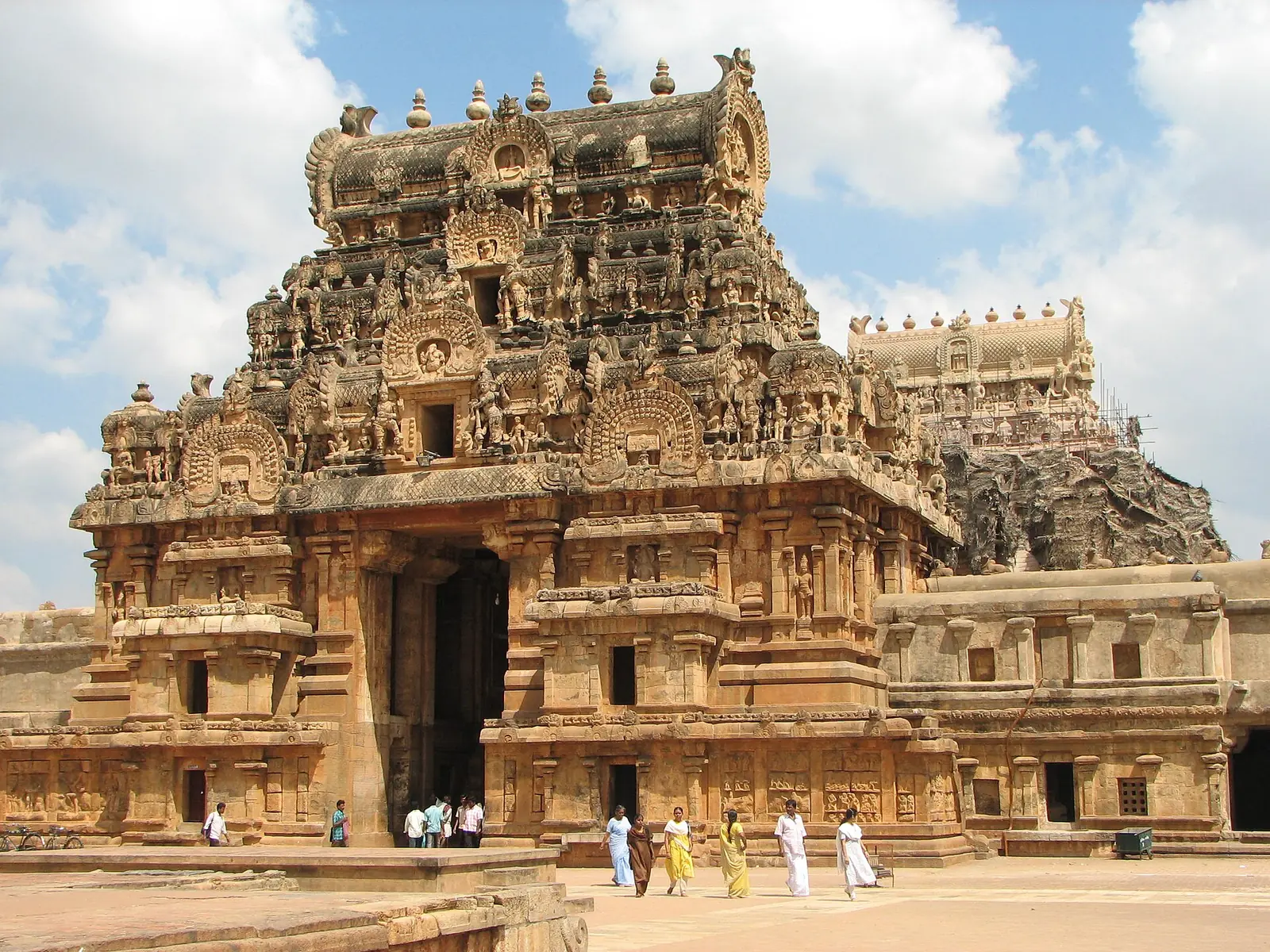
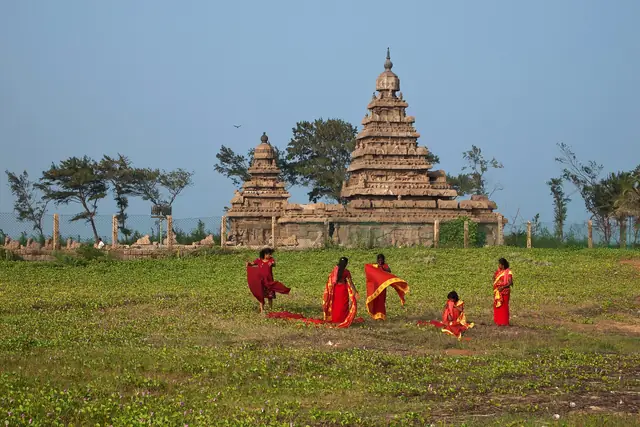
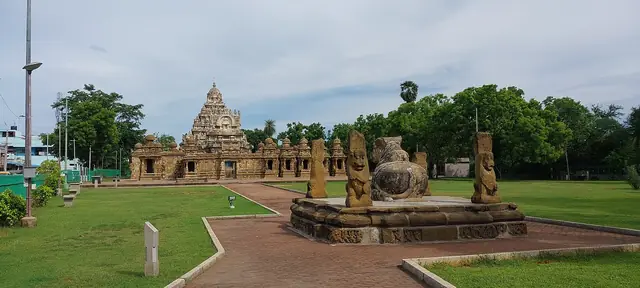
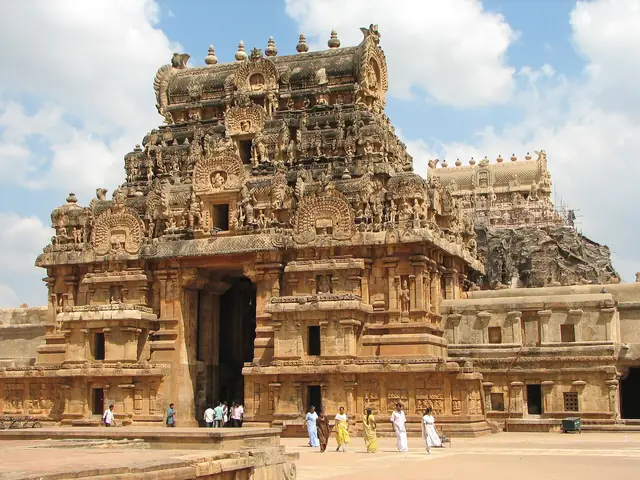
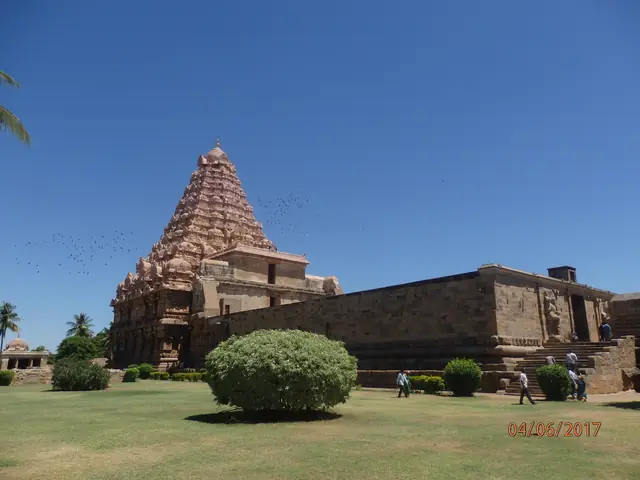
The southern temple raises over its sanctum a vimana of diminishing storeys, each lined with miniature shrines, ending in a single dome-shaped cap, the shikhara of the southern texts, with the kalasha above. The Pallavas worked out the form first in cut rock, in the rathas of Mamallapuram in the 7th century, then in built stone at the Shore Temple and the Kailasanathar at Kanchipuram around 700. The Cholas carried it to its height: Rajaraja I’s Brihadeeswara at Thanjavur, completed in 1010, has a vimana of about 66 metres with a granite capstone of some 80 tonnes, and his son Rajendra built a second at Gangaikonda Cholapuram.
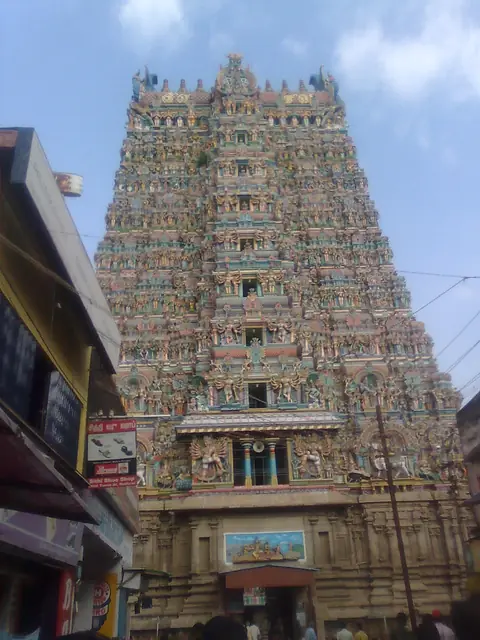
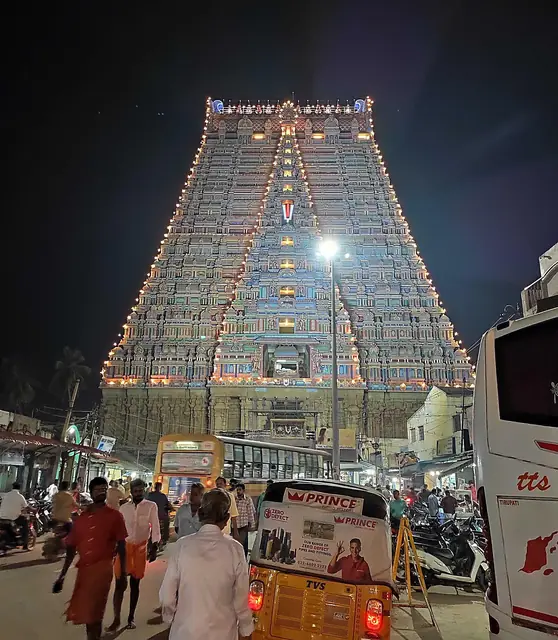
After the Cholas the emphasis moved outward. The Pandyas, Vijayanagara and the Nayakas of Madurai and Thanjavur ringed the old shrines with walls and gave the gates, the gopurams, towers taller than the sanctum, so that a temple like Madurai or Srirangam reads from outside as a skyline of painted gateways. Inside came pillared halls carved with rearing horses and yalis, long corridors such as the one at Rameswaram, and the temple tank. The Agamas govern the worship and the Mayamata and Manasara the building, and the sthapatis of Swamimalai and Mamallapuram still work to them.
How to recognise it
- Stepped pyramidal vimana with a domed cap
- Towering gopurams over the gates
- Concentric prakara walls and temple streets
- Pillared halls, including thousand-pillar mandapas
- Temple tank within the walls
Great examples
 Standing
Shore Temple, Mahabalipuram
Rajasimha’s granite temple on the sea at the Pallava port of Mamallapuram, with two Shiva shrines and a reclining Vishnu between them. It has faced the waves for thirteen centuries.
 Standing
Kailasanathar Temple, Kanchipuram
The oldest standing structural temple in Kanchipuram, built in sandstone by the Pallava king Rajasimha. A Chalukya conqueror who took the city left it gifts instead of ruin.
 Standing
Brihadeeswara Temple, Thanjavur
Rajaraja Chola’s Rajarajeshvaram, finished in the 25th year of his reign, with a granite vimana about 66 m high. A thousand years on, its walls still carry the king’s own record of every gift and every servant of the temple.
 Standing
Gangaikonda Cholapuram
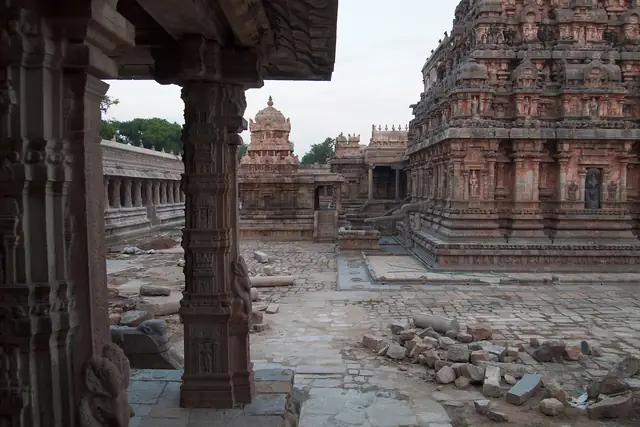
The capital and temple Rajendra I built after his army reached the Ganga, the seat of the Chola empire for some 250 years. Only the temple survives of the city.
 Standing
Airavatesvara Temple, Darasuram
A smaller, jewel-like Chola temple near Kumbakonam, where Indra’s white elephant Airavata worshipped Shiva. Its front hall is carved as a chariot drawn by horses.
 Rebuilt
Meenakshi Sundareswarar Temple, Madurai
The temple of the fish-eyed Devi who ruled Madurai as a Pandya princess and married Shiva. Plundered in 1311, it was raised again by the Nayaks into the city of fourteen gopurams that stands today.
 Standing
Sri Ranganathaswamy Temple, Srirangam
The first of the 108 Divya Desams, on an island between the Kaveri and Kollidam, with seven concentric walls and 21 gopurams. Ramanujacharya lived and taught here.
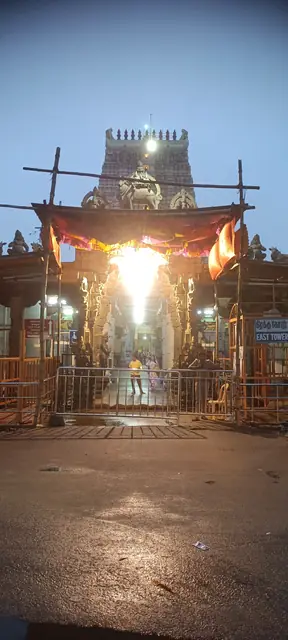 Standing
Ramanathaswamy Temple, Rameswaram
The southern Jyotirlinga, installed by Shri Rama on the island at the head of the setu before the war in Lanka. It is also the southern dham of the Char Dham.
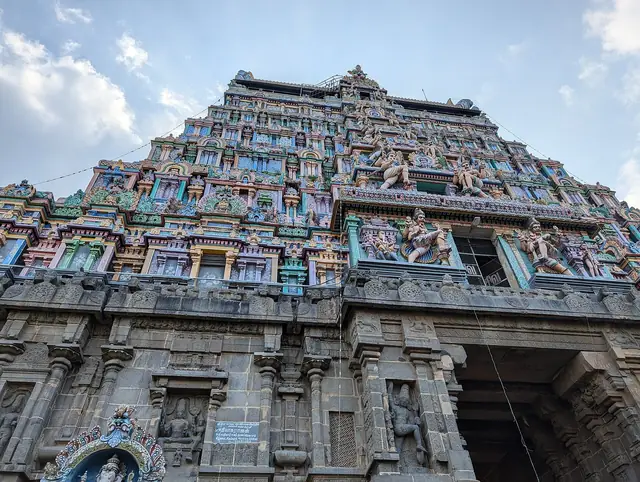 Standing
Thillai Nataraja Temple, Chidambaram
Where Shiva danced the Ananda Tandava in the Thillai forest, and the Akasha (space) sthala of the Pancha Bhuta lingas. The sanctum’s ‘Chidambara Rahasyam’ is an empty space hung with a golden garland.
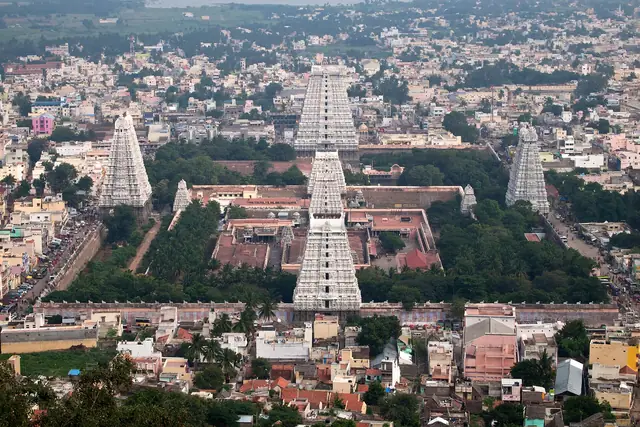 Standing
Arunachaleswara Temple, Tiruvannamalai
The fire sthala of the Pancha Bhuta lingas, at the foot of Arunachala, the hill that is itself worshipped as Shiva. On Karthigai Deepam a great flame is lit on its summit.