01Taragarh on the hill
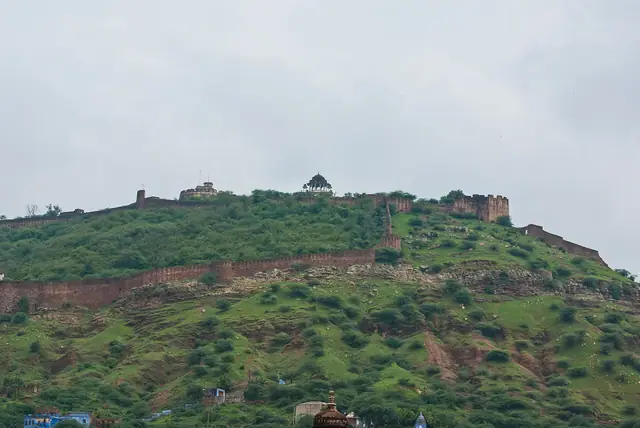
The Hadas were a branch of the Chauhans who settled in the hills by the Chambal. Rao Deva took Bundi from the Mina chiefs in 1342. Taragarh, the "star fort", rose on the ridge above in the following years, and the palace below it was built in stages for three centuries. Its Chitrashala, added by Rao Umaid Singh in the eighteenth century, is painted floor to ceiling with Krishna leela, Ragamala and court scenes in the Bundi style.
02Surjan and Ranthambore
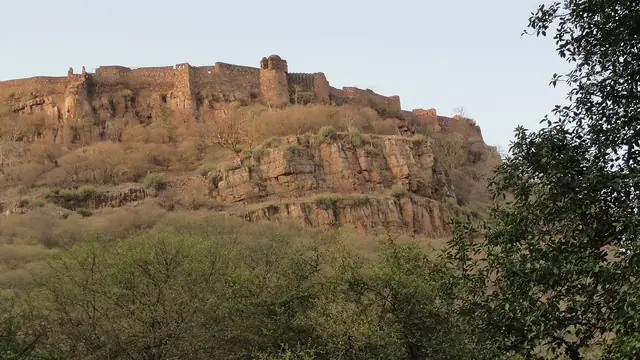
Rao Surjan Hada held Ranthambore for Mewar when Akbar besieged it in 1569. He surrendered the fort on terms: the Hadas would not send daughters to the Mughal harem, would not cross the Indus, and would keep their temples untouched. The Hadas then served the Mughals with distinction. Rao Ratan Singh’s son Madho Singh received Kota as a separate state in 1631. In 1658 Rao Chhatrasal of Bundi died at Samugarh fighting for Dara Shikoh against Aurangzeb.
03Stepwells and the Kota school
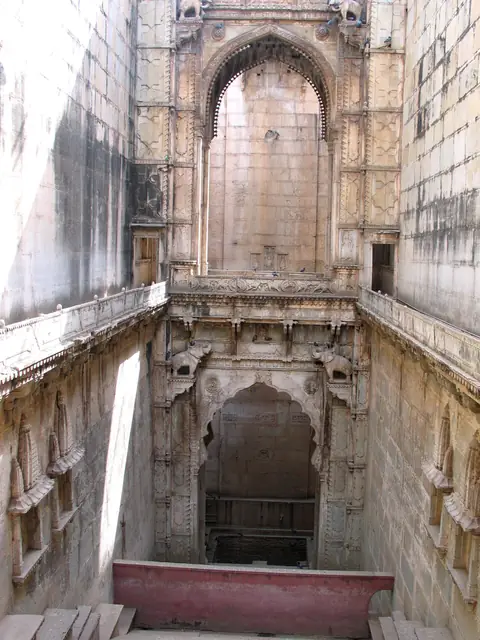
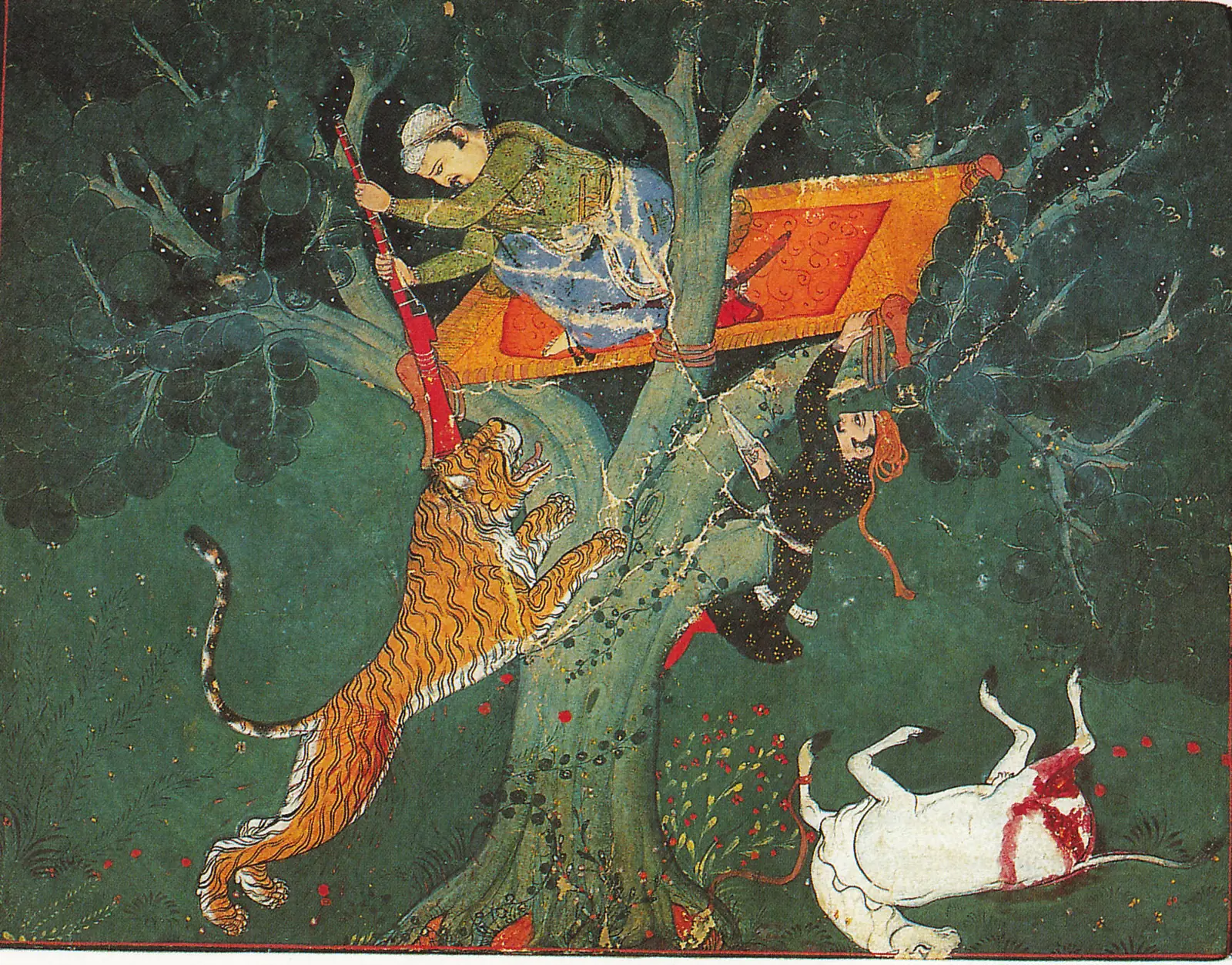
Bundi is a town of stepwells; Raniji ki Baori, built in 1699 by Rani Nathavati, goes down nearly forty-six metres through carved gateways. Kota grew into a strong state on the Chambal under the regent Zalim Singh in the late eighteenth century, and its painters became known for hunting scenes in the jungle. Both states came under British treaties in 1818 and joined the Rajasthan Union in 1948–49.
The rulers
- 1Rao DevaTook Bundic. 1342–1343
- 2Rao BarsinghTaragarh fort raisedc. 1354–1413
- 3Rao SurjanSurrendered Ranthambore on terms, 15691554–1585
- 4Rao Bhoj1585–1607
- 5Rao Ratan Singh1607–1631
- 6Rao ChhatrasalKilled at Samugarh1631–1658
- 7Rao Bhao Singh1658–1682
- 8Rao Budh Singh1695–1739
- 9Rao Umaid SinghChitrashala muralsc. 1748–1770
- 10Bahadur SinghLast ruler of Bundi1945–1949
What they left
- Taragarh fort and Bundi palace with its Chitrashala
- Raniji ki Baori, Bundi (1699)
- The Bundi and Kota schools of painting
- Kota’s Garh palace on the Chambal