01Guardians of the tirthas
Ghaznavid raids had left the Ganga plain without a master. Chandradeva filled the gap. His copper plates say he protected the holy places of Kashi, Kushika (Kannauj), Uttara Kosala (Ayodhya) and Indrasthana, and his heirs issued hundreds of land grants from the ghats of Varanasi. The Gahadavalas also collected a tax called the Turushkadanda, which most historians read as a levy raised to fight or to buy off the Turks.
02Govindachandra’s long reign
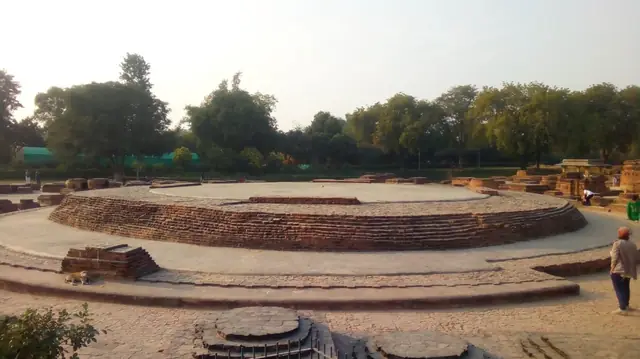
Govindachandra ruled about forty years and more of his grants survive than of almost any king of the age. His minister Lakshmidhara compiled the Krityakalpataru, a fourteen-part digest of dharma, from vows to pilgrimage to the duties of kings. His queen Kumaradevi, a Buddhist, built the Dharmachakra Jina vihara at Sarnath, and her inscription was found in its ruins. The poet Shriharsha, author of the Naishadhiyacharita, wrote under Jayachandra.
03Chandawar, 1194
Two years after Tarain, Muhammad of Ghor and Qutb ud-Din Aibak marched down the Yamuna. Jayachandra met them at Chandawar, near Etawah, and was killed in the battle, struck by an arrow according to the Persian chroniclers. Kashi was then plundered. The Prithviraj Raso, written much later, tells of an enmity between Jayachandra and Prithviraj over Samyogita; no contemporary record confirms it. A son, Harishchandra, held some land for a few years more.
The rulers
- 1ChandradevaTook Kannauj; protector of the tirthasc. 1089–1103
- 2Madanapalac. 1104–1113
- 3GovindachandraLongest reign; Lakshmidhara his ministerc. 1114–1155
- 4Vijayachandrac. 1155–1169
- 5JayachandraKilled at Chandawarc. 1170–1194
- 6HarishchandraHeld a remnantc. 1194–1197
What they left
- Lakshmidhara’s Krityakalpataru
- Hundreds of copper-plate grants issued from Varanasi
- Kumaradevi’s inscription and vihara at Sarnath
- Shriharsha’s Naishadhiyacharita