
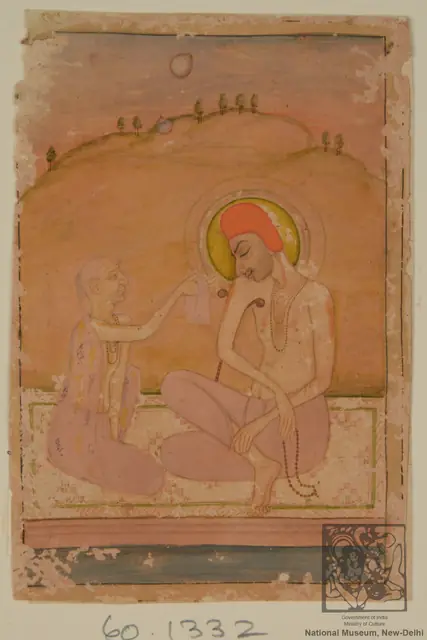
मेरो मन अनत कहाँ सुख पावै।
जैसे उड़ि जहाज की पंछी फिरि जहाज पै आवै॥
कमल-नैन को छाँड़ि महातम और देव को ध्यावै।
परम गंग को छाँड़ि पियासो दुरमति कूप खनावै॥
जिहिं मधुकर अंबुज-रस चाख्यो क्यों करील-फल भावै।
सूरदास प्रभु कामधेनु तजि छेरी कौन दुहावै॥
Mero man anat kahan sukh pavai,
jaise udi jahaj ki panchhi phiri jahaj pai avai.
Kamal-nain ko chhandi mahatam aur dev ko dhyavai,
param Gang ko chhandi piyaso duramati kup khanavai.
Jihin madhukar ambuj-ras chakhyo kyon karil-phal bhavai,
Surdas prabhu Kamadhenu taji chheri kaun duhavai.
Meaning
Where else could my mind find happiness? Like a bird on a ship that flies off and comes back to the ship again.
Leaving the glory of the lotus-eyed one, who would meditate on anyone else? Only a foolish thirsty man would leave the holy Ganga and dig a well.
How can the bee that has tasted the nectar of the lotus like the fruit of the thorny karil bush? Surdas says: who would leave the wish-fulfilling cow, the Lord, and go to milk a goat?
About this bhajan
The first image is the one people remember: a bird on a ship at sea flies off in every direction and, finding no land, always returns to the deck. So the mind wanders and comes back to Krishna. The rest of the pada piles up homely comparisons (the Ganga and a dug well, the lotus and karil berries, Kamadhenu and a goat) in the plain speech of Braj villages. It is quoted widely in Hindi textbooks and sung in Vaishnava satsangs.
Sursagar, vinaya padas; text as on Kavita Kosh