
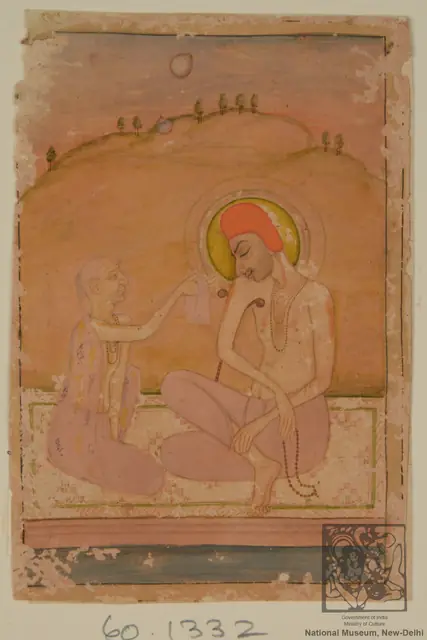
हमारे प्रभु, औगुन चित न धरौ।
समदरसी है नाम तुहारौ, सोई पार करौ॥
इक लोहा पूजा में राखत, इक घर बधिक परौ।
सो दुबिधा पारस नहिं जानत, कंचन करत खरौ॥
इक नदिया इक नार कहावत, मैलौ नीर भरौ।
जब मिलि गए तब एक-बरन ह्वै, सुरसरि नाम परौ॥
तन माया, ज्यौ ब्रह्म कहावत, सूर सु मिलि बिगरौ।
कै इनकौ निरधार कीजियै, कै प्रन जात टरौ॥
Hamare prabhu, augun chit na dharau,
samadarasi hai nam tuharau, soi par karau.
Ik loha puja mein rakhat, ik ghar badhik parau,
so dubidha paras nahin janat, kanchan karat kharau.
Ik nadiya ik nar kahavat, mailau nir bharau,
jab mili gae tab ek-baran hvai, Surasari nam parau.
Tan maya, jyau Brahma kahavat, Sur su mili bigarau,
kai inkau nirdhar kijiyai, kai pran jat tarau.
Meaning
My Lord, do not keep my faults in your mind. Your name is “the one who sees all equally”: by that name, carry me across.
One piece of iron is kept in the puja; another lies in the butcher’s house. The philosopher’s stone does not know this difference; it turns both into pure gold.
One stream is called a river, another a drain full of dirty water. When they meet the Ganga they become one colour and both are called the Ganga.
The body is maya and the soul is called Brahman; joined together, says Sur, they have been spoiled. Either separate them, or your vow to save the fallen will be broken.
About this bhajan
Surdas argues with his Lord here, with great tenderness and some cheek. A philosopher’s stone does not ask which iron it is touching; the Ganga does not ask which stream it is taking in. If God is really samadarshi, the sinner should be saved as surely as the saint. The famous popular version, “Prabhu mere avagun chit na dharo”, sung on stage and in films, follows this pada with small changes in wording. Kavita Kosh notes that the last two lines are also found as “ik jiv ik Brahma kahavat, Sur Syam jhagarau; abki ber mohi par kijai, kai pran jat tarau”.
Sursagar, vinaya padas; text as on Kavita Kosh (with the noted variant)