
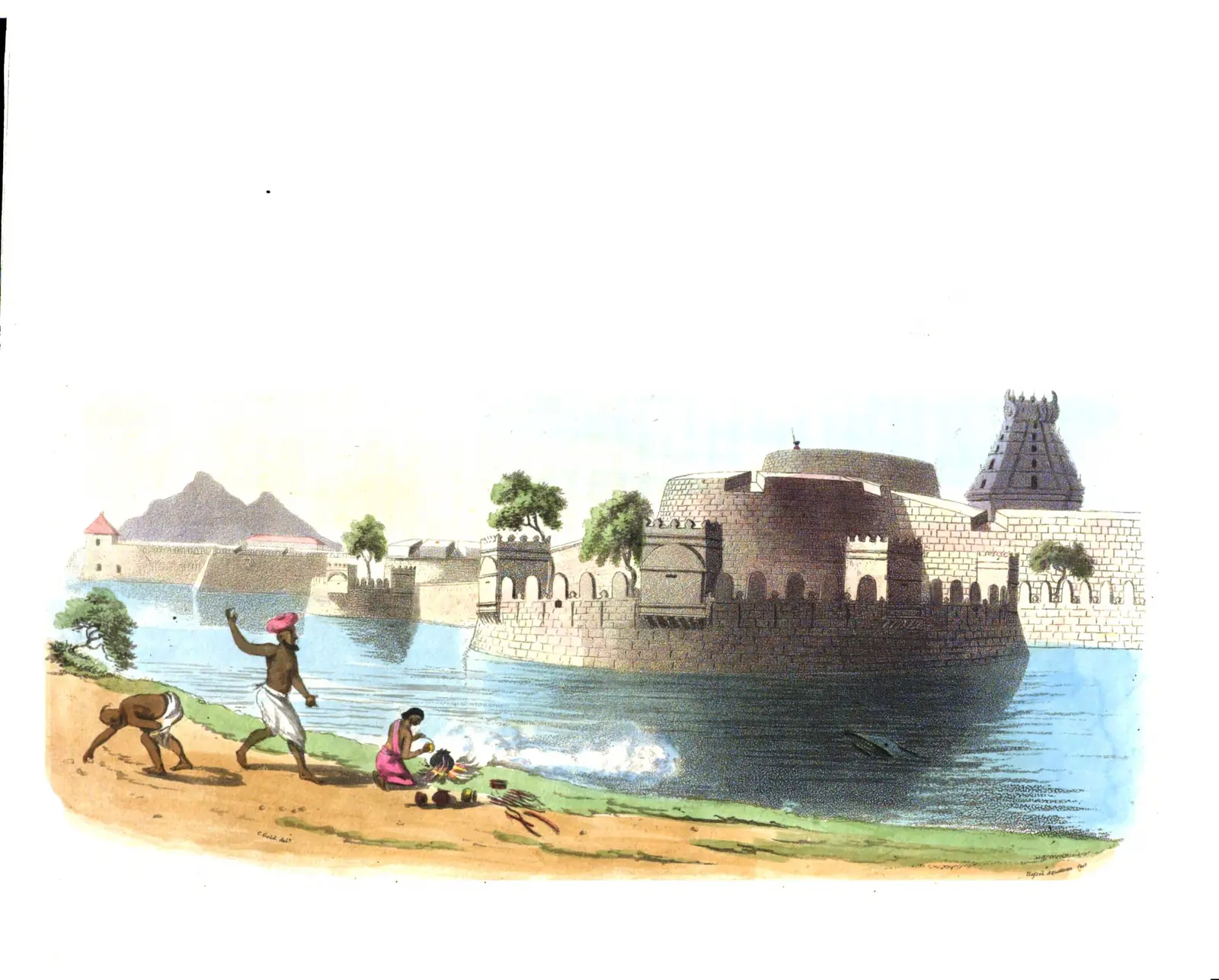
The sepoys held the fort for a few hours before Gillespie’s cavalry from Arcot stormed it and crushed the rising the same day.
01The new dress code
In 1805 the Madras Army issued regulations under its commander-in-chief, Sir John Cradock. Sepoys were forbidden to wear the tilak or other marks on the forehead, told to trim their beards to one pattern, and given a round turban that many believed carried leather. Hindu and Muslim sepoys alike read it as an attack on their dharma. Men who protested were flogged. Inside Vellore Fort lived the sons of Tipu Sultan, kept there as state prisoners since 1799, and their household added to the unrest.
02The night and the morning
Before dawn on 10 July 1806 the sepoys turned on the British garrison of the 69th Regiment, killing more than a hundred officers and soldiers, and raised a flag over the fort. A rider got word to Arcot, sixteen miles away. Colonel Rollo Gillespie came at the gallop with the 19th Light Dragoons, blew in the gate with galloper guns and retook Vellore by mid-morning. Several hundred sepoys were killed in the fort or executed afterwards. The Madras government withdrew the dress orders, and the governor, Lord William Bentinck, was recalled.
Vellore was the first large sepoy rising against the Company, and it showed early how interference with dharma and custom could turn the Company’s own army against it.