
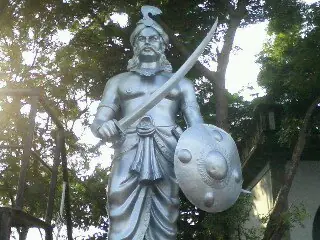
After a long bombardment Yusuf Khan took Puli Thevar’s forts in 1761; the chief escaped and fought on for some years.
01The western league
From the 1750s the Nawab of Arcot, backed by Company troops, tried to collect tribute from the palaiyakkarars of the Tirunelveli country. Puli Thevar of Nerkattumseval refused, and joined the chiefs of the western blacklands in a league; an expedition under Colonel Heron and Mahfuz Khan in 1755 failed to bring him to heel. His forts at Nerkattumseval, Vasudevanallur and Panayur, of mud and stone set among palmyra and thorn, became the centre of resistance in the south.
02Yusuf Khan’s guns
Muhammad Yusuf Khan, the Company’s commandant for Madurai and Tirunelveli, brought heavy guns against the forts in the autumn of 1760 and battered them for months. Nerkattumseval and the other forts fell in May 1761. Puli Thevar escaped. He came back to his country when Yusuf Khan himself rebelled against the Nawab and was hanged in 1764, and he held out until 1767, after which he disappears from the record. Tamil tradition and ballads honour him as the first to raise arms against the Company in the south.
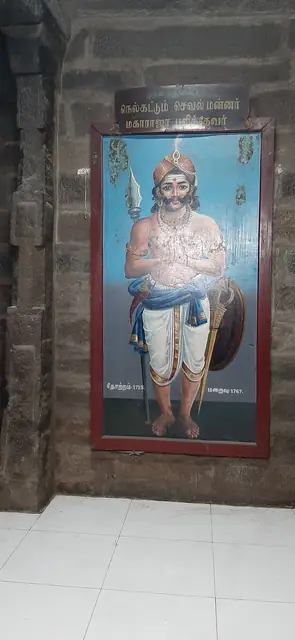
Nerkattumseval was the opening chapter of the palaiyakkarar resistance that ran on through Kattabomman and the Marudhu brothers to 1801.