
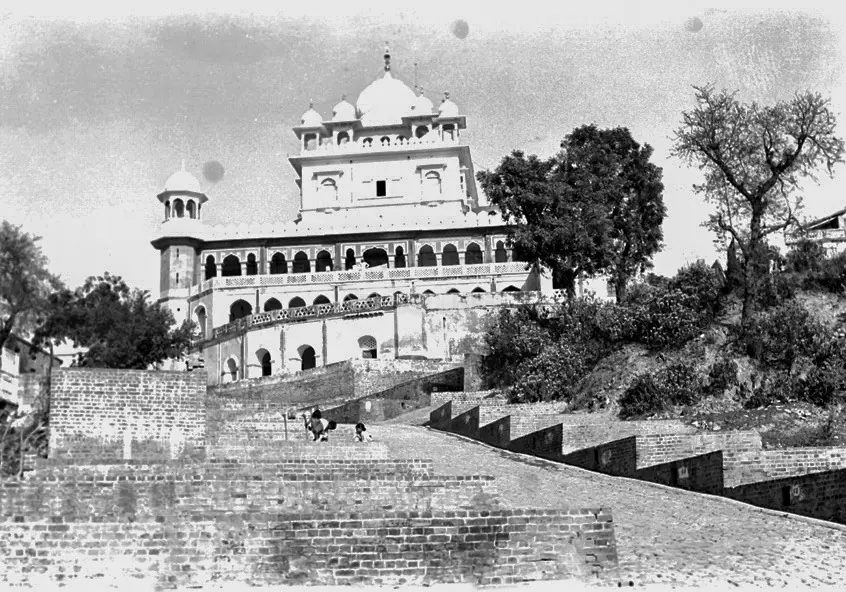
Starved but untaken, the Guru left Anandpur under sworn promises of safe passage; the promises were broken at once and his family was scattered at the Sarsa.
01The long siege
After the Khalsa was created at Anandpur in 1699, the hill rajas around it, led by Ajmer Chand of Kahlur, came to see the Guru’s armed town as a threat, and fought him several times. In 1704 they joined the Mughal faujdar of Sirhind, Wazir Khan, and troops from Lahore, and closed in on Anandpur and its ring of small forts. The Sikhs beat back the assaults, but the blockade cut off food. Sikh accounts tell of the garrison living on leaves and bark, and of some men leaving after signing a disclaimer that they were no longer the Guru’s Sikhs.
02Oaths broken at the Sarsa
At last the besiegers offered safe passage, the rajas swearing by the cow and the Mughal officers by the Quran. In December 1704 the Guru left Anandpur by night with his family and Sikhs. They were attacked almost at once and caught at the Sarsa stream, swollen with winter rain. In the fighting and the crossing the party broke apart: Mata Gujri and the two younger Sahibzade went one way, toward Sirhind and their martyrdom; the Guru, his elder sons and a few Sikhs reached Chamkaur. In the Zafarnama, his letter to Aurangzeb, the Guru reproaches the emperor for the broken oaths.
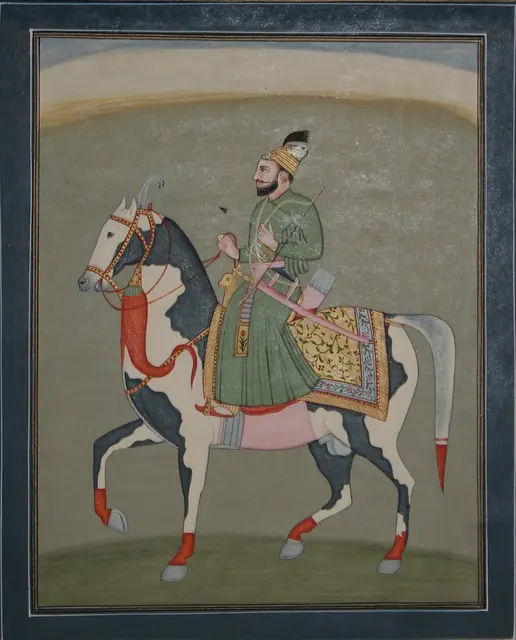
The fall of Anandpur led straight to Chamkaur and the martyrdom of all four Sahibzade, and the memory of those weeks hardened the Khalsa for the wars Banda Singh Bahadur would soon lead.