
Over sixty thousand were jailed; the campaign ended with the Gandhi–Irwin Pact of March 1931 and Gandhi’s attendance at the Second Round Table Conference.
01The march
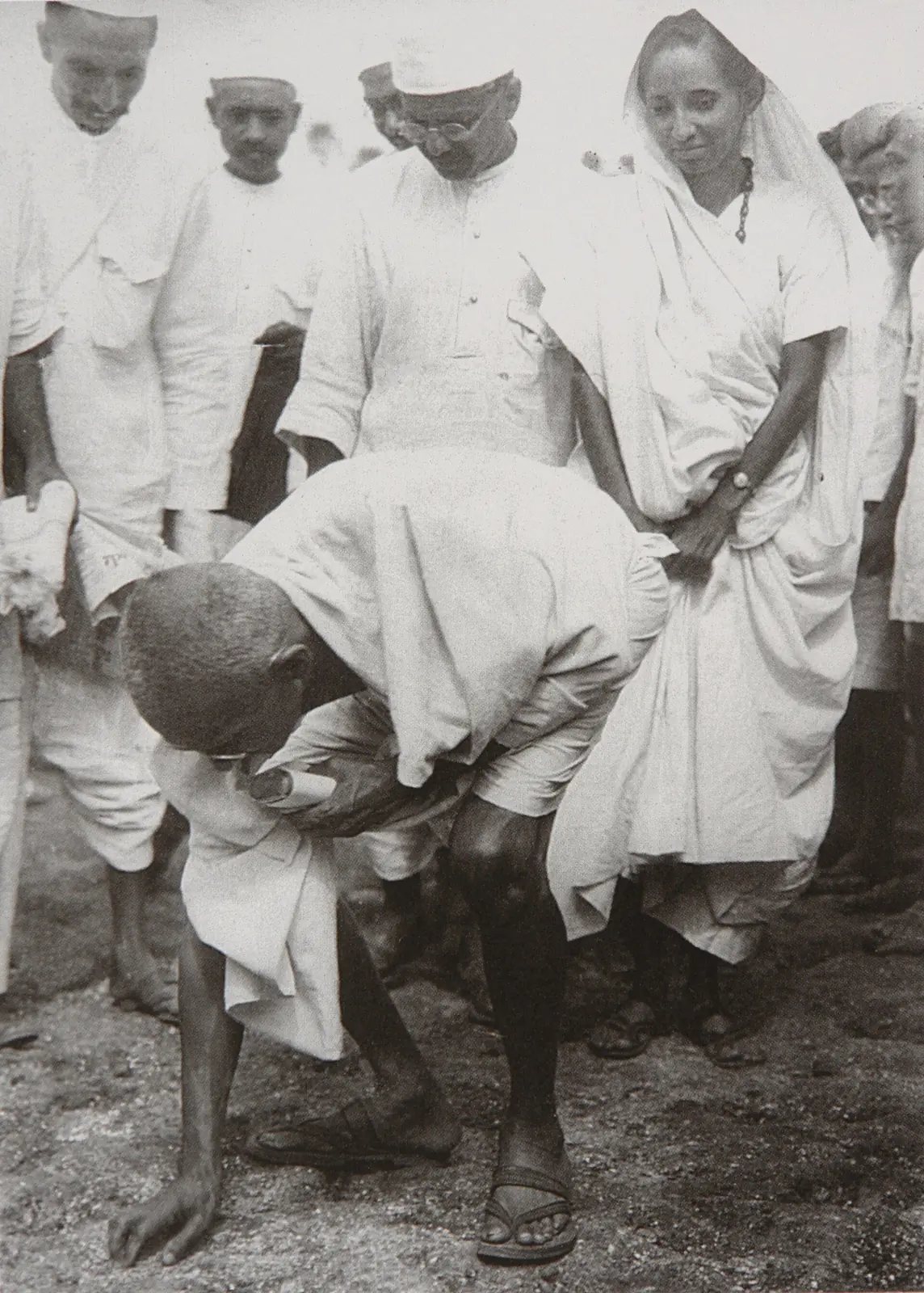
Salt was taxed by the government, and Indians were forbidden to make their own. Gandhi chose it because every household used it. On 12 March 1930 he set out from the Sabarmati Ashram with seventy-eight companions, walking through the villages of Gujarat and speaking each evening. Crowds lined the road. He reached Dandi on 5 April and early the next morning picked up a lump of natural salt from the shore, breaking the law. Across Bharat people made salt, boycotted foreign cloth and refused taxes; C. Rajagopalachari led a salt march to Vedaranyam on the Tamil coast.
02Dharasana and the pact
Gandhi was arrested on the night of 4–5 May. On 21 May, with Sarojini Naidu leading, column after column of satyagrahis walked up to the Dharasana salt works and were beaten down by police with steel-tipped lathis without raising a hand. The American journalist Webb Miller’s report of it went round the world. By the end of the year over sixty thousand were in prison. In March 1931 Gandhi and Irwin signed a pact: prisoners were freed, coastal villagers could make salt, and the Congress went to the Round Table in London.
The salt march turned the demand for Purna Swaraj into a mass movement and showed the world the moral force of non-violent defiance.