
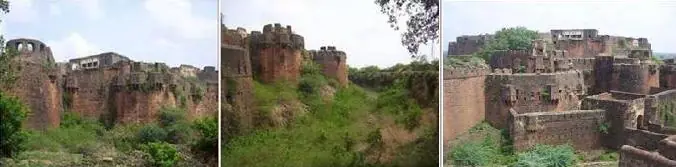
The Chola army reached and burnt the Chalukya capital; Rajadhiraja took the title Vijayarajendra and was crowned in the enemy city, but Kalyani was not held.
01Into the Chalukya heartland
Rajadhiraja I had fought beside his father for years before he became sole king in 1044. His records list a run of victories over Someshvara I in the Raichur doab and beyond, and then the climax: the Chola army entered Kalyanapura, the Chalukya capital, and set it on fire. There, in his enemy’s city, Rajadhiraja performed a virabhisheka, the anointing of a conqueror, and took the name Vijayarajendra. No Chola king had gone so deep into the Deccan.
02Trophies and a reckoning
Among the spoils were sculptures. One stone dvarapala, a door guardian, still carries a short Tamil label saying it was brought by Vijayarajendra after he burnt Kalyanapuram. The Chola army did not stay; the Chalukyas rebuilt their capital, and Someshvara I struck back into Chola country. In 1054 the two kings met again at Koppam on the Krishna, where Rajadhiraja was killed on his elephant and his brother Rajendra II took up the crown on the field and won the day. Kalyani, now Basavakalyan, later became the city of Basavanna.
The sack of Kalyani was the deepest Chola strike into the Deccan and set up the fatal rematch at Koppam.