
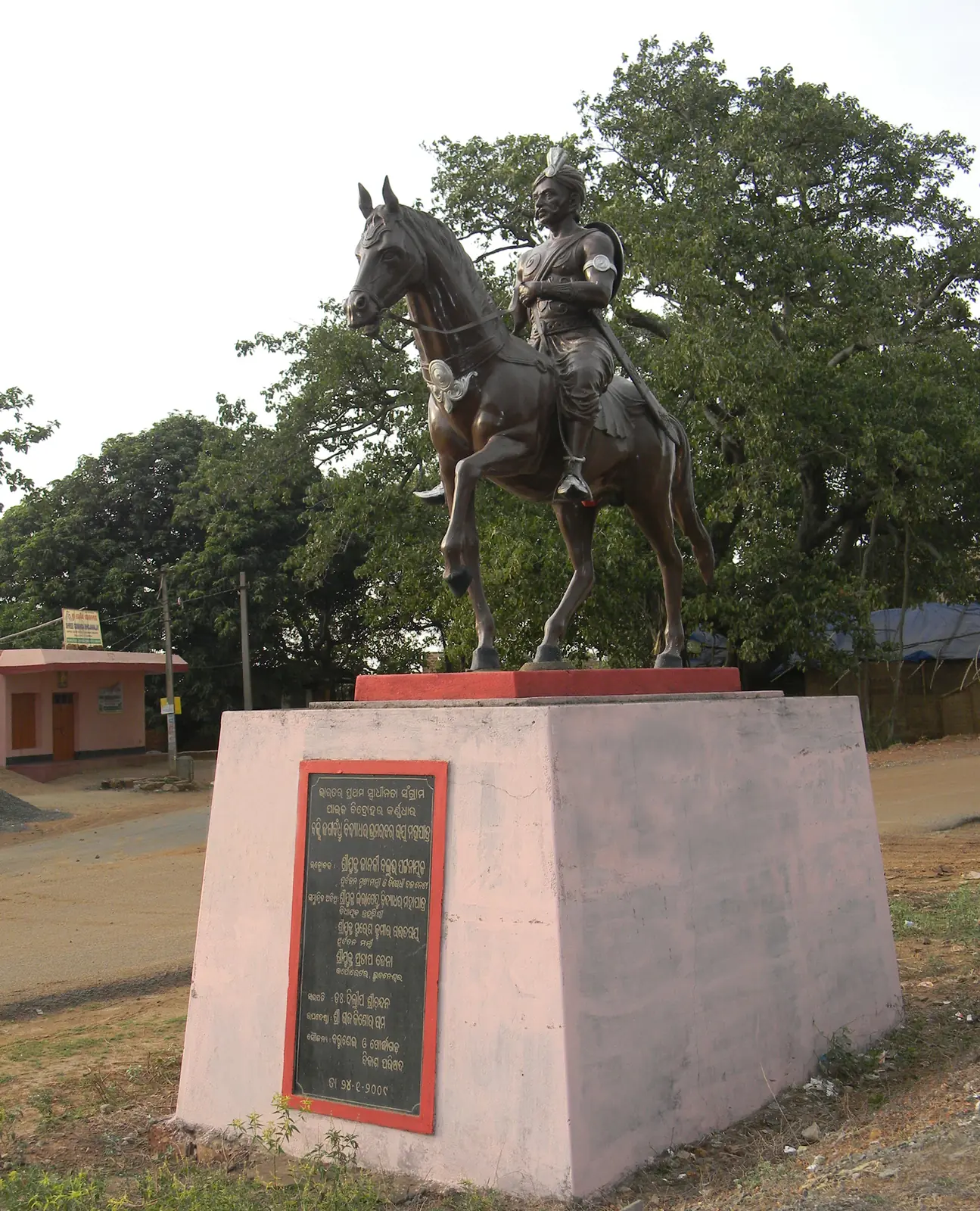
The Paikas held Khurda and entered Puri before martial law and troops crushed the rising; Jagabandhu held out in the jungles until 1825.
01Land, salt and the king of Khurda
The Paikas were the fighting men of the Gajapati kings of Khurda, who held rent-free land in return for service. When the Company took Odisha in 1803 it deposed Raja Mukunda Deva II, resumed the Paika lands, and raised the land revenue. Its salt monopoly ruined the coast, and the change from cowrie shells to silver for paying revenue drove cultivators into debt. Jagabandhu, hereditary bakshi or commander of the Khurda army, lost his own estate of Rorang to a Bengali officer’s intrigue.
02The rising
In March 1817 a band of Kandh tribesmen from Ghumusar came into Khurda, and the Paikas joined them. They burnt the police post and government buildings at Banapur, looted the treasury and drove the Company’s men out of Khurda. In April they entered Puri and declared the Raja their ruler. The Company declared martial law and sent troops; the Raja was taken, and by 1818 the rising was broken. Jagabandhu kept to the forests until he surrendered on terms in 1825, and died in Cuttack in 1829.
The Paika rising forced the Company to lower revenue and reform its Odisha administration, and Odisha remembers it as an early war of freedom; its bicentenary was marked nationally in 2017.